

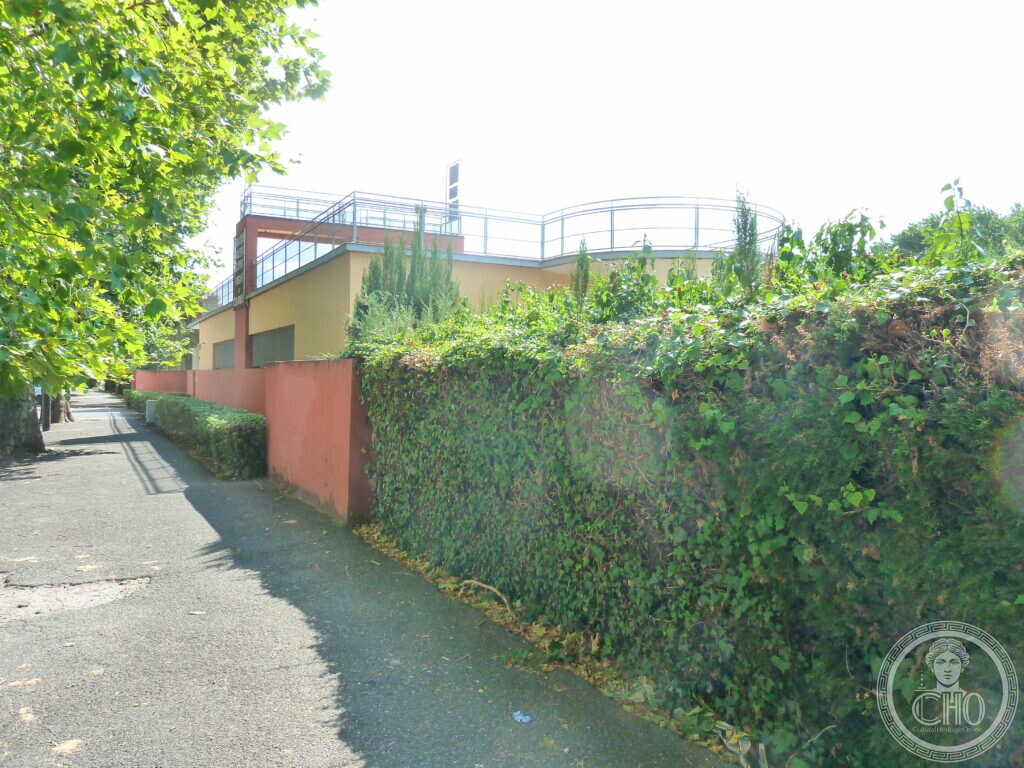
A riverside sports complex at Lungotevere Flaminio 87, Rome, built for the Knights of Columbus and still in use for football and tennis.
At a glance
Standing on the bank of the Tiber just downstream of Ponte Duca d’Aosta, this yellow clubhouse and its grounds form the sports centre known as Pastor Angelicus. The sources describe it as a project of the Knights of Columbus, designed by Ernesto Bruno Lapadula in 1934 and blessed that year by Cardinal Eugenio Pacelli, the future Pope Pius XII. The site is listed variously as a sports facility and as the seat of the Fondazione Cavalieri di Colombo.
Key facts
- Where: Lungotevere Flaminio 87, Roma
- What: Structure
- When: 1934
- GPS: 41.9295, 12.4613 · Open in Google Maps
History
The Knights of Columbus, a Catholic fraternal organisation founded in the United States at the end of the nineteenth century, were received in audience by Pope Benedict XV in 1920. The pope encouraged them to extend their charitable activity to Rome, and the order decided to build recreational grounds and make them available free of charge to the young people of the city. The complex on Lungotevere Flaminio was designed by Ernesto Bruno Lapadula in 1934 as a connection between the riverside road and the bank of the Tiber. In the same year, Cardinal Eugenio Pacelli, then Vatican Secretary of State, blessed the building. In 1944 the centre was renamed Pastor Angelicus in his honour. The site had initially been known as Casina Nautica, and in its early years it offered swimming and rowing as well as football; over time the activities were reduced mainly to football and tennis.
What you see
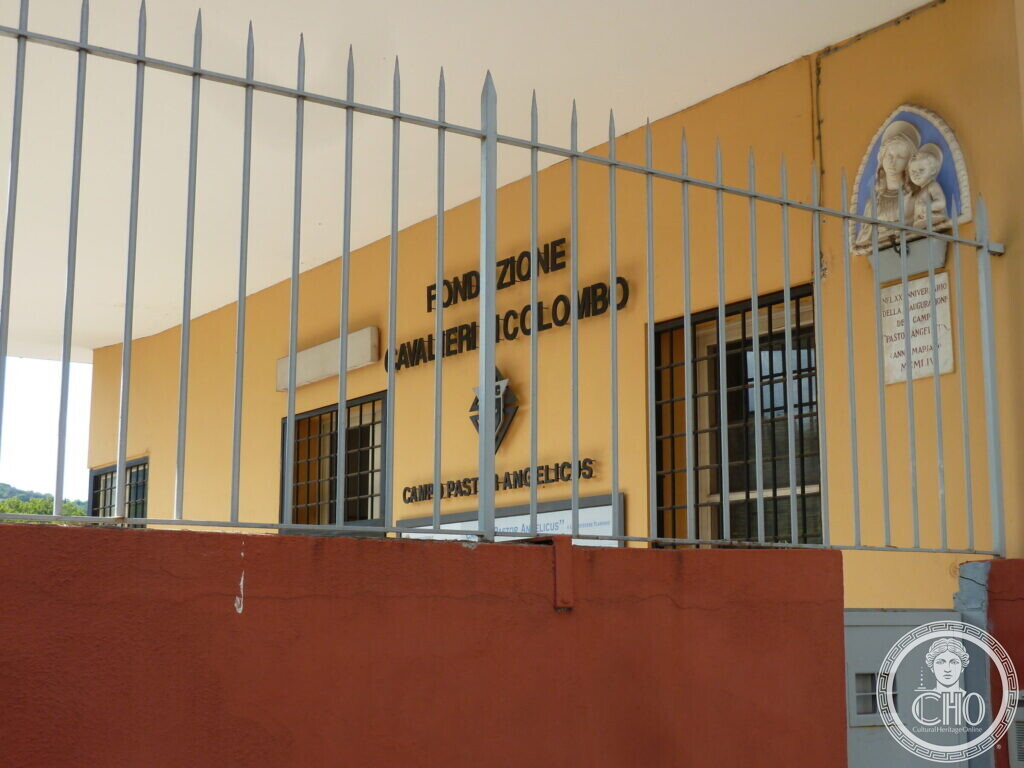
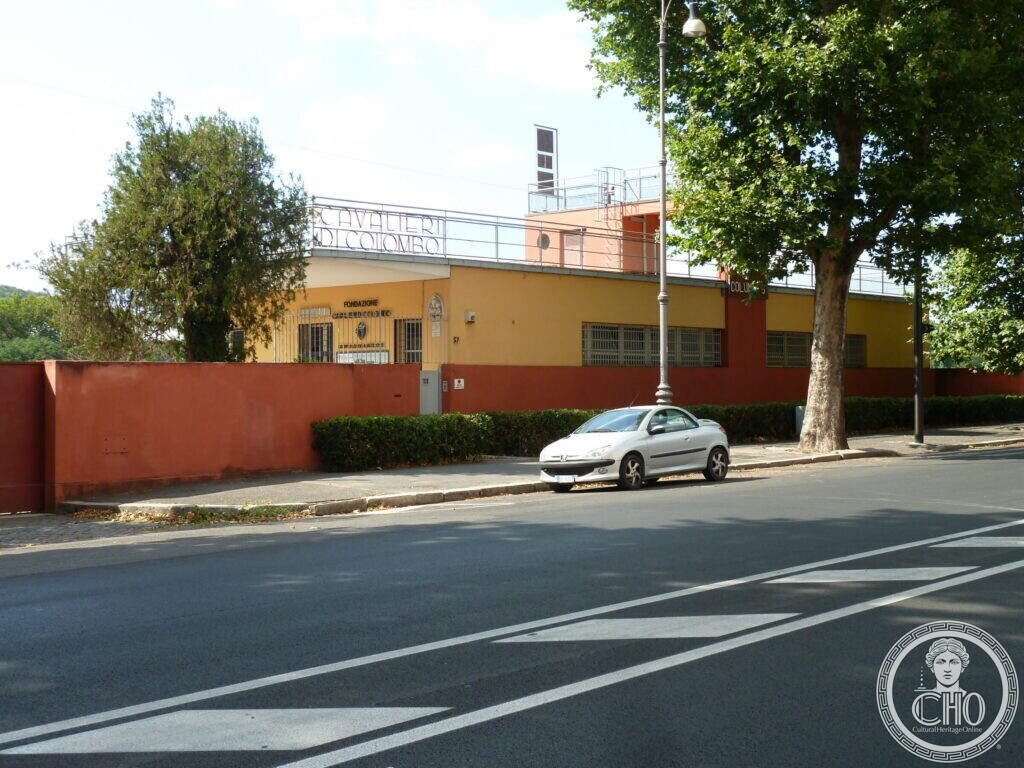
The yellow clubhouse stands behind an iron railing and a long terracotta boundary wall, with a hedge running along the street side. The facade carries black lettering reading Fondazione Cavalieri di Colombo, and above the roofline a metal sign spells out Cavalieri di Colombo. A framed religious image is mounted on the wall. The building has a flat roof and a projecting terrace; documents describe its nautical imagery, its golden-section geometry, and its symmetrical plan softened by the overhang of the roof terrace, along with rounded canopies and metal railings.
Do you know more about this place?
If you know a date, a name, a document, a plaque or a photograph that tells its story, write to Sofia at sofia@culturalheritageonline.com or through the contact page. What arrives with a source goes into this page, with your name as the contributor.
Nearby
- Rome Cavalieri, A Waldorf Astoria Hotel — A hotel on Monte Mario sharing the Cavalieri name, a short distance to the north-west
- Centro Culturale Don Orione Artigianelli — Another religiously affiliated cultural and sports centre in Rome
Gallery
Sources
- Roma2pass, Centro Sportivo Cavalieri di Colombo: architect, date, location, nautical imagery, geometry, plan, roof terrace, canopies, railings, and earlier name Casina Nautica
- VignaClaraBlog.it, Flaminio – Al Cavalieri di Colombo “tutti sono benvenuti”: audience with Benedict XV, renaming to Pastor Angelicus in 1944, blessing by Eugenio Pacelli in 1934, early swimming and rowing, later reduction to football and tennis, location downstream of Ponte Duca d’Aosta
- Info.roma.it, Centro sportivo Pastor Angelicus: chronology of the Knights of Columbus in Rome, project date 1934, architect Ernesto Lapadula, blessing by Eugenio Pacelli, category and period
- Playtomic, Prenota un campo in Centro Sportivo Lungotevere Flaminio Tennis: address, two clay tennis courts, services
- Stefano Vigolo, photographs and notes to the editorial staff (2026): identification of the subject and the inscriptions on the facade and rooftop. Not a published source
Find it on the map
See this place and what’s around it →📷 Become a Cultural Heritage Online photographer
Share your photos of places: they stay published under your name as the author. The more they're seen, the more you get noticed — and soon a contest will reward the most appreciated photos.
Log in or sign up free to add a photoIs this page about you?
This page is read by travellers and heritage enthusiasts who find it on Google. Tell us how you are connected to this place and we will take it from there.