
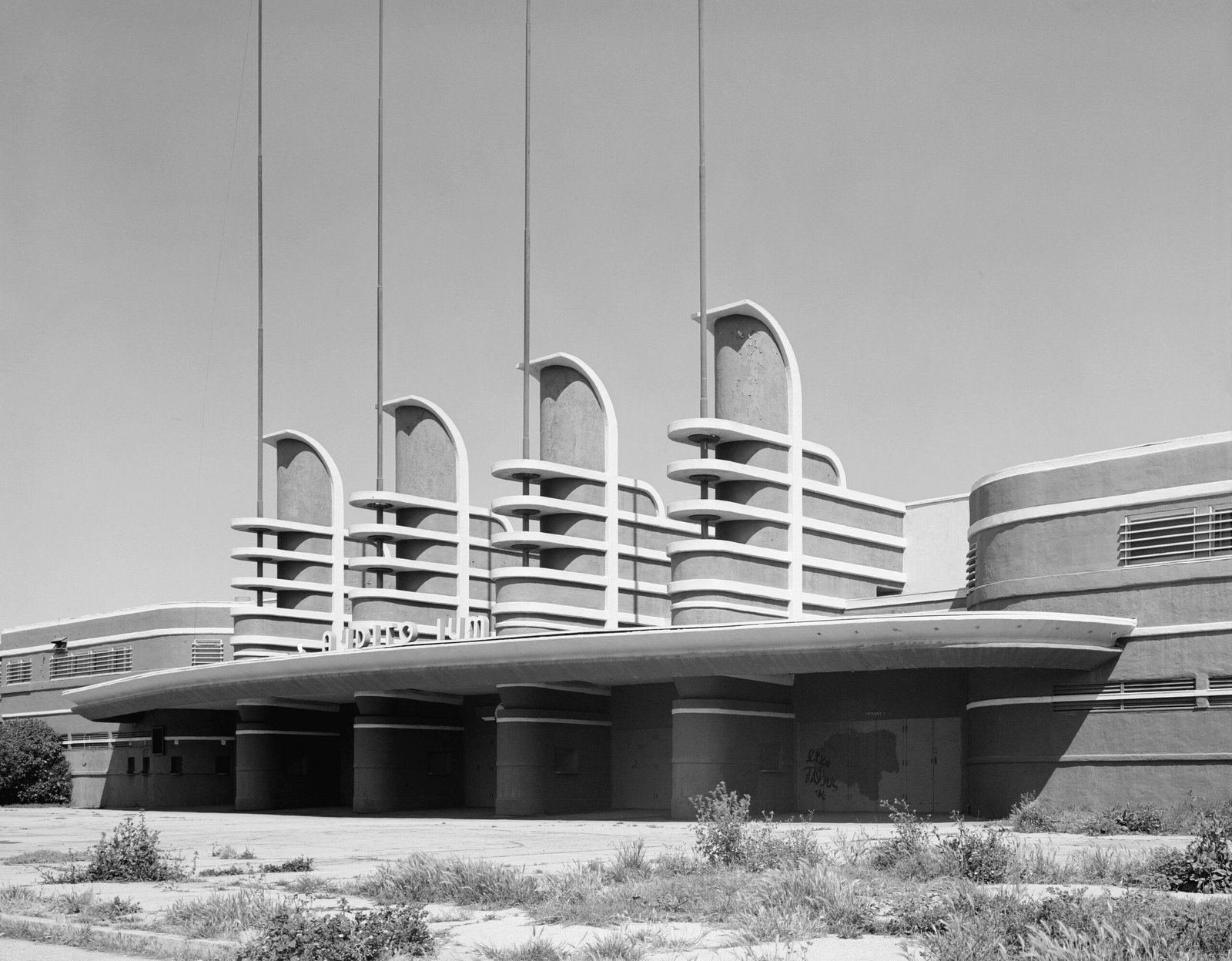
A landmark modernist auditorium that served as Los Angeles’s premier indoor venue for over three decades, before its destruction by fire in 1989.
At a glance
The Pan-Pacific Auditorium was a privately owned facility in the Fairfax District that dominated Los Angeles’s cultural landscape from its opening in 1935 until its closure in 1972. Built near the site of Gilmore Field, an early baseball venue predating Dodger Stadium, the auditorium hosted major indoor public events for more than thirty-five years.
History
Constructed in 1935, the Pan-Pacific Auditorium quickly established itself as the premier location for indoor events in Los Angeles during the mid-twentieth century. The facility operated successfully for over three decades before closing in 1972. What followed was a seventeen-year period of neglect and deterioration. In 1978, despite its decline, the auditorium was recognized for its historical importance and added to the National Register of Historic Places. This designation proved insufficient protection: eleven years later, in 1989, the sprawling wooden structure was destroyed by fire.
What you see
Information about the auditorium’s architectural style and distinctive features is not currently available.
Cultural significance
The Pan-Pacific Auditorium holds an important place in Los Angeles’s cultural history as the city’s leading indoor entertainment venue during the mid-twentieth century. Its location in the Fairfax District connected it to the broader urban fabric of Los Angeles during a transformative period. The building’s inclusion on the National Register of Historic Places acknowledged its architectural and historical merit, though preservation efforts ultimately proved unsuccessful.
Key facts
- Country: United States
- City: Los Angeles
- Built: 1935
- Closed: 1972
- Destroyed: 1989 (fire)
- National Register of Historic Places: 1978
- Coordinates: 34.0753, -118.3542
Practical information & getting there
The Pan-Pacific Auditorium no longer stands. The site is located in Los Angeles’s Fairfax District. For historical research and archival information, consult the sources listed below.
Sources & resources
Find it on the map
See this place and what’s around it →📷 Become a Cultural Heritage Online photographer
Share your photos of places: they stay published under your name as the author. The more they're seen, the more you get noticed — and soon a contest will reward the most appreciated photos.
Log in or sign up free to add a photoIs this page about you?
This page is read by travellers and heritage enthusiasts who find it on Google. Tell us how you are connected to this place and we will take it from there.