
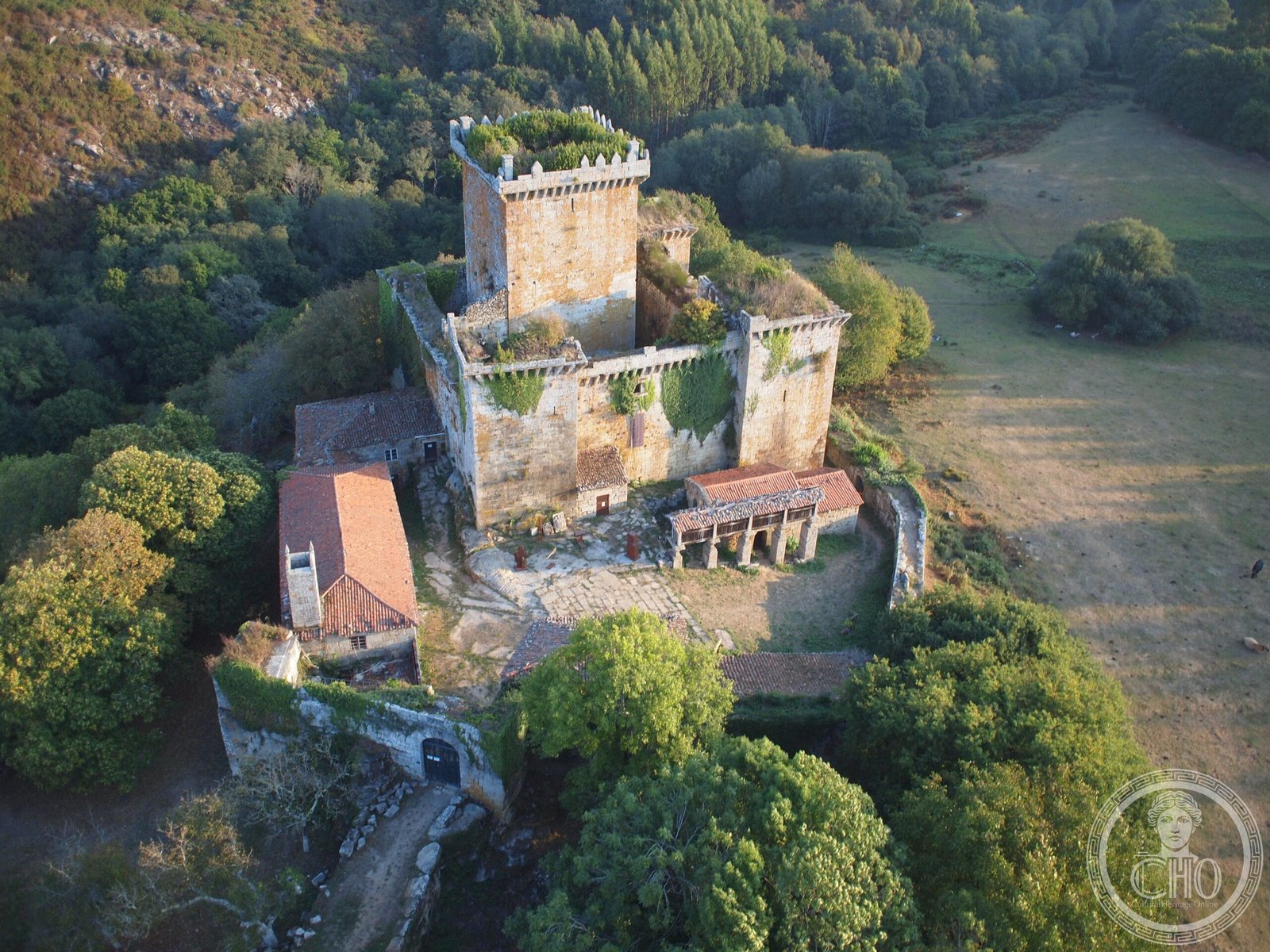
A formidable medieval fortress in Galicia that resisted the tumultuous Irmandiño revolts, standing as one of Spain’s finest examples of period military design.
At a glance
Pambre Castle crowns a rocky hill above the Pambre River in northwestern Spain. Built in the medieval period, this stone fortress exemplifies the defensive architecture of Galicia during an era of regional upheaval and warfare.
History
The castle endured one of medieval Galicia’s most significant crises: the Irmandiño revolts of the 15th century. While many fortresses fell during these popular uprisings against the nobility, Pambre Castle proved exceptionally resilient. Few fortresses withstood the onslaught with such success, cementing its reputation as a stronghold of genuine military capability.
What you see
The fortress demonstrates sophisticated medieval military engineering. Its strategic position on elevated terrain provided command of the surrounding landscape and river valley. The castle’s stone construction and defensive layout reflect the practical requirements of 15th-century warfare and territorial control in Galicia.
Cultural significance
Pambre Castle stands as one of Galicia’s finest examples of medieval military architecture. Its survival through the Irmandiño revolts marks it as a landmark of regional history, representing both the power of the medieval nobility and the fortress-building traditions that shaped northwestern Spain.
Key facts
- Location: Pambre parish, Palas de Rei municipality, Lugo province, Galicia, Spain
- Coordinates: 42.85988, −7.94831
- Period: Medieval
- Resisted the Irmandiño revolts (15th century)
Practical information & getting there
Pambre Castle is located in the municipality of Palas de Rei in Lugo province. It sits on a hillside overlooking the Pambre River valley. For current access information and visiting hours, contact local tourism authorities in Palas de Rei.
Sources & resources
Find it on the map
See this place and what’s around it →📷 Become a Cultural Heritage Online photographer
Share your photos of places: they stay published under your name as the author. The more they're seen, the more you get noticed — and soon a contest will reward the most appreciated photos.
Log in or sign up free to add a photoIs this page about you?
This page is read by travellers and heritage enthusiasts who find it on Google. Tell us how you are connected to this place and we will take it from there.