
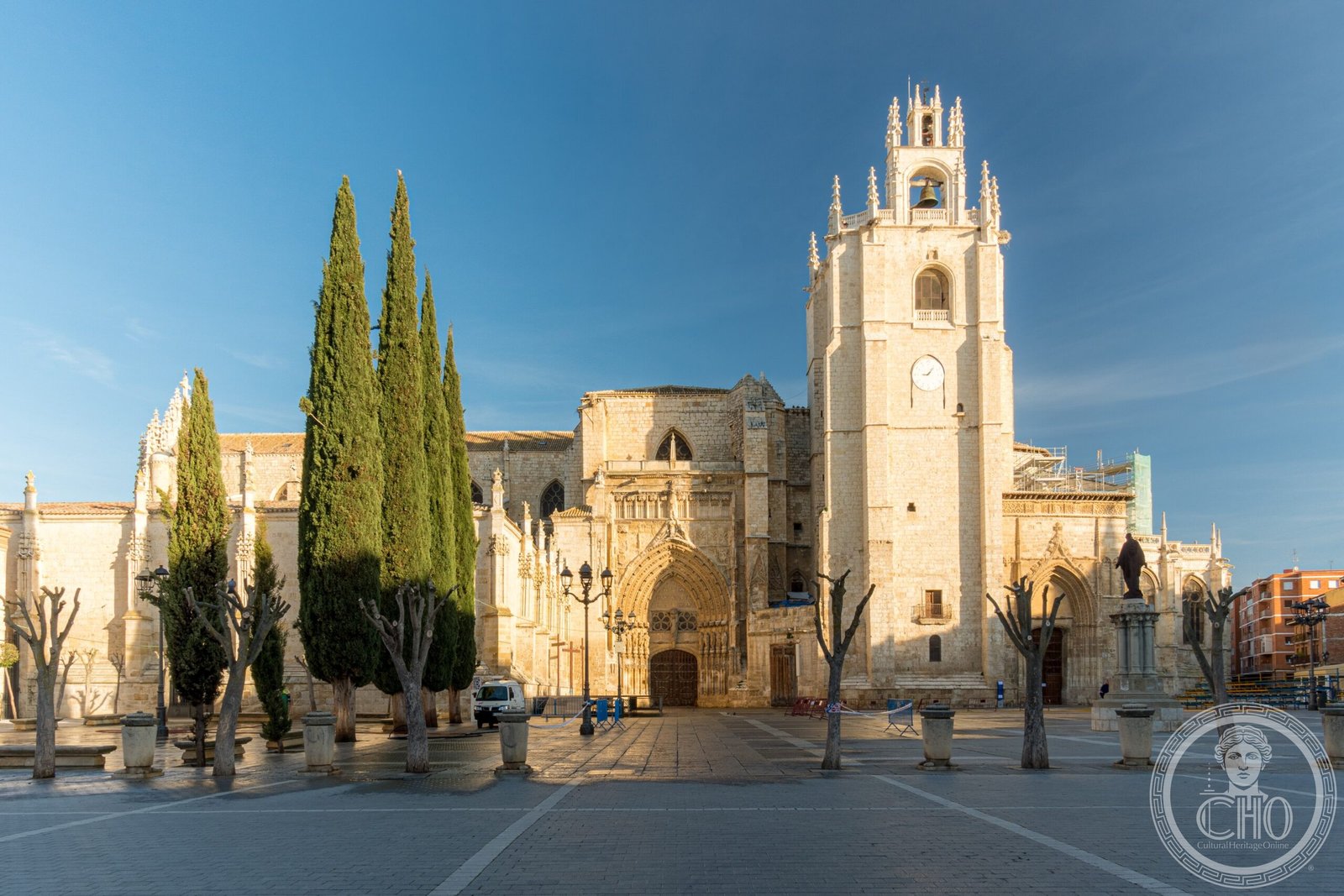
A Roman Catholic cathedral in central Spain, dedicated to Saint Antoninus of Pamiers and serving as a major religious landmark in the city of Palencia.
At a glance
Palencia Cathedral stands as a significant ecclesiastical structure in the Castilian city of Palencia. The Cathedral Basilica of Saint Antoninus serves both as a place of worship and as a testament to centuries of religious devotion in the region.
History
The cathedral is dedicated to Saint Antoninus of Pamiers, reflecting the deep Christian heritage of medieval Spain. Further details about the cathedral’s construction and development are available through primary historical sources.
What you see
As a cathedral basilica, the structure represents an important category of Catholic religious architecture. Visitors will find the building reflects its status as both cathedral and basilica, designations that carry significance within ecclesiastical hierarchy and design traditions.
Cultural significance
The cathedral holds importance as a religious center in Palencia and represents the architectural and spiritual heritage of Catholic Spain. Its basilica designation underscores its role in the broader landscape of Spanish ecclesiastical monuments.
Key facts
- Location: Palencia, Spain
- Coordinates: 42.0111, −4.5369
- Dedication: Saint Antoninus of Pamiers
- Status: Cathedral Basilica of the Roman Catholic Church
Practical information & getting there
Palencia Cathedral is located in the city center of Palencia in the autonomous community of Castile and León. For current visiting hours, entry fees, and guided tour availability, consult local tourism information or the cathedral’s official website.
Sources & resources
Find it on the map
See this place and what’s around it →📷 Become a Cultural Heritage Online photographer
Share your photos of places: they stay published under your name as the author. The more they're seen, the more you get noticed — and soon a contest will reward the most appreciated photos.
Log in or sign up free to add a photoIs this page about you?
This page is read by travellers and heritage enthusiasts who find it on Google. Tell us how you are connected to this place and we will take it from there.