

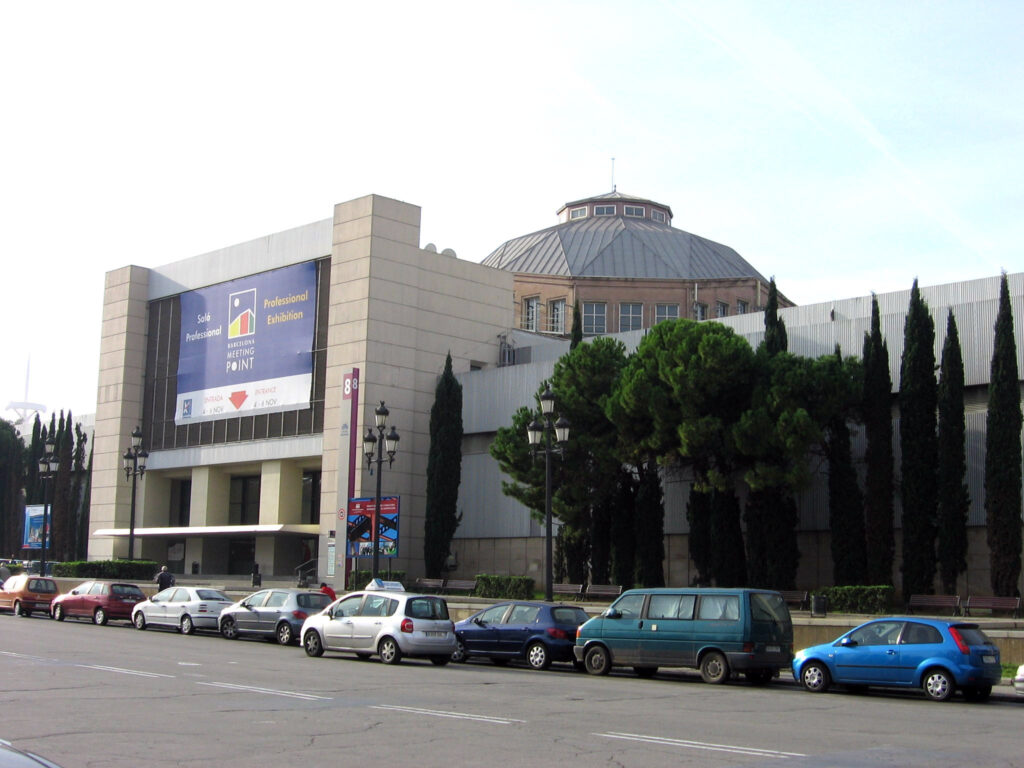
A modernist venue built for Barcelona’s 1929 International Exposition, this palace later served as an Olympic venue for fencing and pentathlon competitions during the 1992 Summer Games.
At a glance
The Palau de la Metal·lúrgia (Metallurgical Palace) stands on Montjuïc, the cultural hill that dominates Barcelona’s skyline. Designed as part of the 1929 International Exposition, the building exemplifies the grandeur of early-twentieth-century exhibition architecture.
History
Constructed for the 1929 International Exposition, the palace was conceived as a showcase for industrial and metallurgical innovation. Nearly seven decades later, the structure proved adaptable to new purposes when Barcelona hosted the 1992 Summer Olympics. The building hosted fencing events and the fencing component of the modern pentathlon, cementing its role in Olympic history.
What you see
The palace reflects the modernist sensibilities of its era. Its design speaks to the ambitions of early-twentieth-century Barcelona, when the city sought to position itself as a forward-thinking industrial center on the European stage.
Cultural significance
The Palau de la Metal·lúrgia bridges two pivotal moments in Barcelona’s history: the optimistic industrial exposition of 1929 and the global spotlight of the 1992 Olympics. It stands as testimony to the city’s capacity to repurpose its heritage for contemporary achievement.
Key facts
- Location: Montjuïc, Barcelona, Spain
- Coordinates: 41.3736, 2.1494
- Built: 1929 for the International Exposition
- Olympic use: 1992 Summer Games (fencing and modern pentathlon)
Practical information & getting there
The palace is situated on Montjuïc, accessible by metro, funicular, and cable car. Verify current opening hours and any restrictions before your visit to ensure access.
It was designed by the architects Alexandre Soler and Amadeu Llopart and opened for the 1929 International Exposition under the fuller name Palau de la Metal·lúrgia, Electricitat i Força Motriu; it now forms the Fira de Barcelona’s Pavelló 8, a rectangular hall of 16,000 square metres.
Sources & resources
Find it on the map
See this place and what’s around it →📷 Become a Cultural Heritage Online photographer
Share your photos of places: they stay published under your name as the author. The more they're seen, the more you get noticed — and soon a contest will reward the most appreciated photos.
Log in or sign up free to add a photoIs this page about you?
This page is read by travellers and heritage enthusiasts who find it on Google. Tell us how you are connected to this place and we will take it from there.
This entry stays online and free either way — and a free account lets you add to it yourself.