
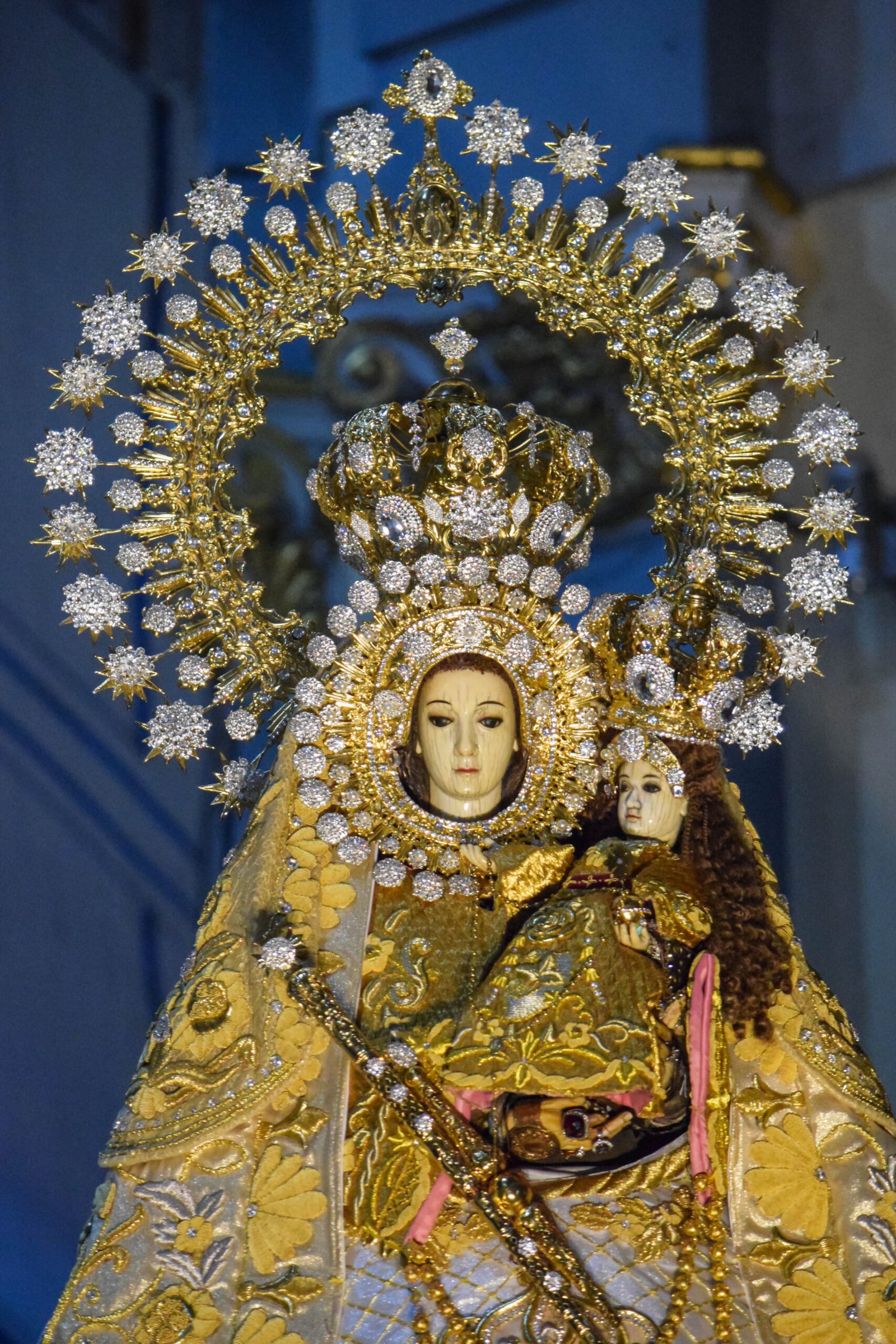
An ivory and silver image of the Madonna and Child, venerated since the sixteenth century and crowned by papal decree, draws pilgrims across the Philippines to a Minor Basilica in Manaoag.
At a glance
This sculptural representation of the Blessed Virgin Mary—locally known as Apo Baket, or “Noble Mistress”—stands as one of the country’s foremost pilgrimage destinations. The statue wears imperial regalia and is housed within a Minor Basilica administered by the Order of Preachers.
History
The ivory and silver image dates to the sixteenth century, when Filipino devotion to Mary was taking shape under Spanish influence. Pope Pius XI issued a Pontifical decree of canonical coronation on 25 August 1925. The Papal nuncio, Archbishop Guglielmo Piani, celebrated the coronation rite on 21 April 1926, formally recognizing the image’s sacred status. Pope Benedict XVI elevated the sanctuary’s indulgences to equal those of the Basilica of Saint Mary Major on 21 June 2011. Pope Francis granted the shrine Minor Basilica status through his Pontifical decree Spiritualem Fidelium Progressionem on 11 October 2014.
What you see
The Madonna and Child figure is crafted from ivory and silver, materials befitting its imperial presentation. The statue is vested in regalia that emphasizes its role as a queen of heaven, a visual language understood across centuries of Marian devotion.
Cultural significance
Our Lady of Manaoag represents a distinctly Philippine expression of Marian piety, merging Catholic theology with local reverence. The twice-yearly veneration—on the third Wednesday after Easter and the first Sunday of October—anchors the spiritual calendar for countless devotees. The papacy’s successive recognitions underscore her importance within global Catholic practice.
Key facts
- Country: Philippines
- Location: Manaoag
- Coordinates: 16.04402778°N, 120.48861111°E
- Material: Ivory and silver
- Date of origin: Sixteenth century
- Status: Minor Basilica (designated 2014)
- Feast days: Third Wednesday after Easter; first Sunday of October
Practical information & getting there
The shrine welcomes pilgrims year-round. Visit during the official feast days for the largest gatherings and liturgical celebrations. The basilica is administered by the Order of Preachers, who maintain the sanctuary and provide spiritual direction to visitors. Information on current access and visiting hours is available through the basilica’s administration.
Sources & resources
Find it on the map
See this place and what’s around it →📷 Become a Cultural Heritage Online photographer
Share your photos of places: they stay published under your name as the author. The more they're seen, the more you get noticed — and soon a contest will reward the most appreciated photos.
Log in or sign up free to add a photoIs this page about you?
This page is read by travellers and heritage enthusiasts who find it on Google. Tell us how you are connected to this place and we will take it from there.