
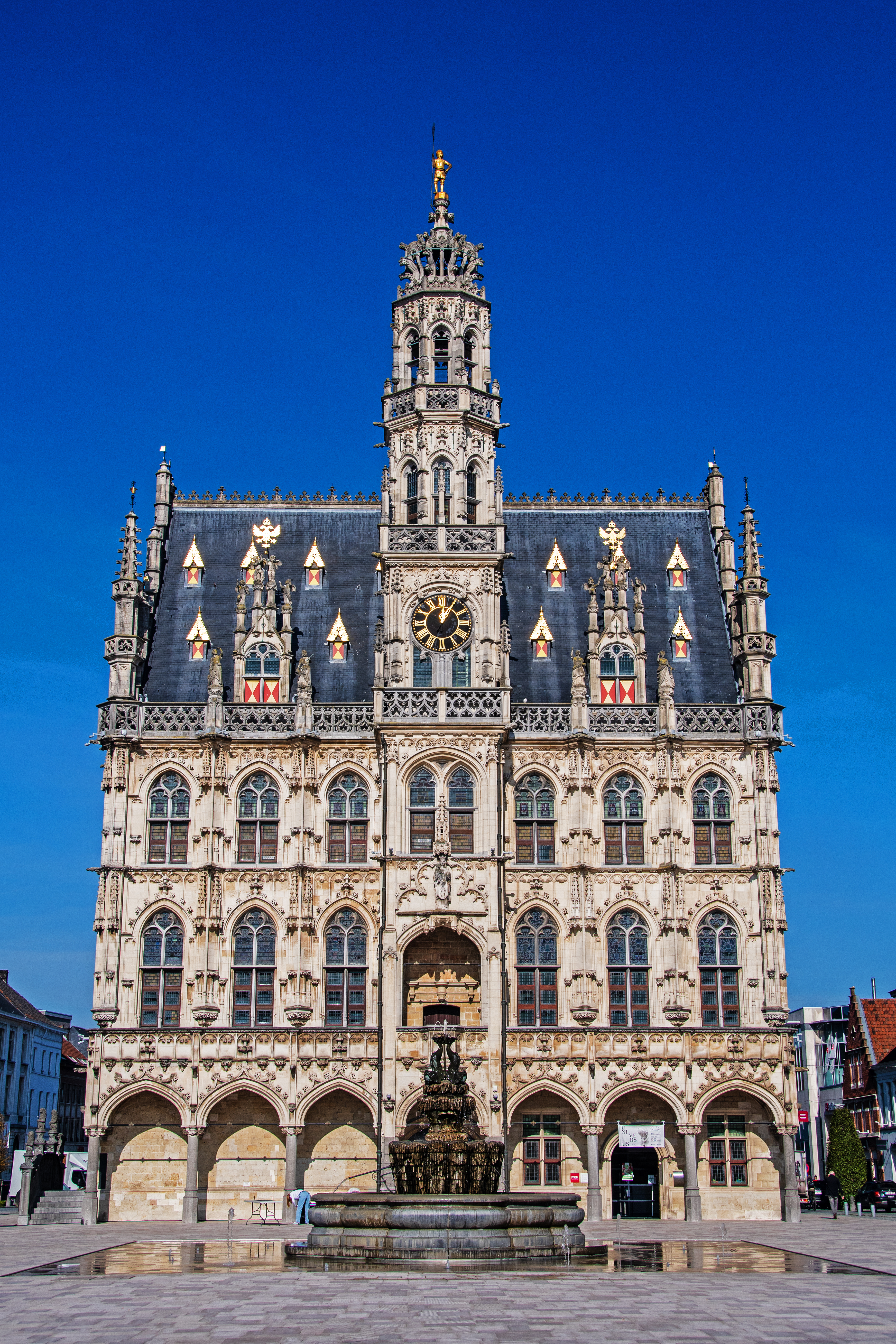
A masterpiece of Brabantine late-Gothic architecture, this civic monument has anchored Oudenaarde’s public life since the early sixteenth century and stands as a UNESCO-recognized symbol of civic pride across the Low Countries.
At a glance
Oudenaarde Town Hall ranks among Europe’s finest municipal buildings, its ornate late-Gothic façade rising above the city’s central square. The structure serves as both the seat of municipal government and a beacon of Brabantine artistic ambition during the Renaissance.
History
Construction began in 1526 and was completed in 1537, a period of considerable prosperity for Oudenaarde’s merchant class and cloth trade. The building’s creation reflects the city’s wealth and civic confidence during the reign of Charles V. It remains the administrative center of Oudenaarde to the present day.
What you see
The Town Hall exemplifies Brabantine late-Gothic style, with characteristic decorative stonework, pointed arches, and intricate sculptural details. Its façade communicates civic authority through vertical emphasis and ornamental richness typical of the period, commanding attention from the marketplace below.
Cultural significance
The building represents the pinnacle of municipal Gothic architecture in the Southern Netherlands. Its designation as part of the Belfries of Belgium and France—a UNESCO World Heritage Site—acknowledges its role as a symbol of civic autonomy and urban independence in medieval and Renaissance Europe.
Key facts
- Location: Oudenaarde, East Flanders, Belgium
- Coordinates: 50.84°N, 3.60°E
- Built: 1526–1537
- Architectural style: Brabantine late-Gothic
- UNESCO designation: Belfries of Belgium and France (World Heritage Site)
Practical information & getting there
Oudenaarde lies in East Flanders, approximately 40 kilometers southwest of Brussels. The Town Hall stands in the city center, easily accessible on foot from Oudenaarde railway station. Contact local tourism offices for current visiting hours and guided tour availability.
Sources & resources
Find it on the map
See this place and what’s around it →📷 Become a Cultural Heritage Online photographer
Share your photos of places: they stay published under your name as the author. The more they're seen, the more you get noticed — and soon a contest will reward the most appreciated photos.
Log in or sign up free to add a photoIs this page about you?
This page is read by travellers and heritage enthusiasts who find it on Google. Tell us how you are connected to this place and we will take it from there.