
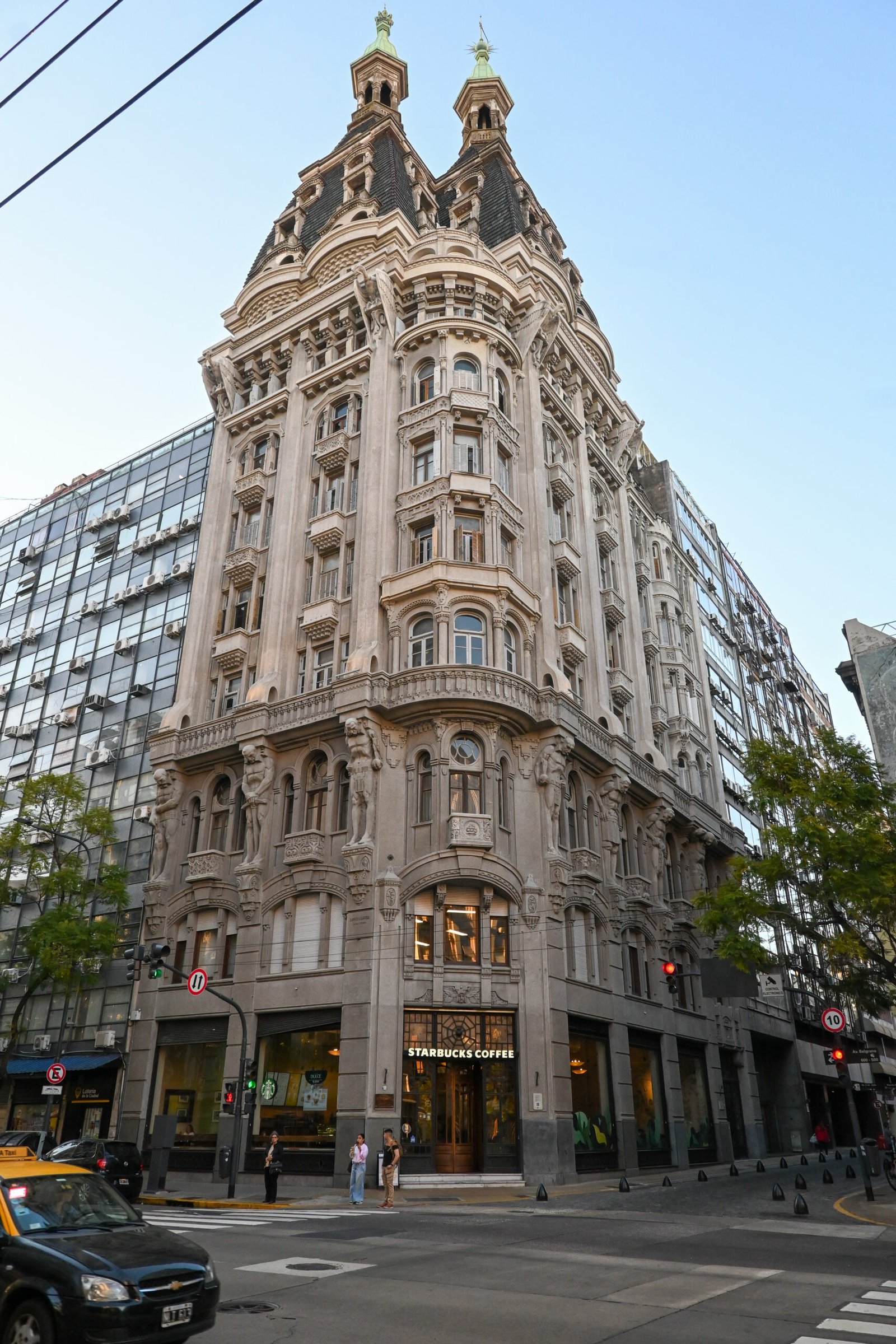
A striking Jugendstil structure in Monserrat that replaced a colonial-era viceregal residence, designed by Danish architect Morten Rönnow for Buenos Aires businessman Otto Wulff around 1910.
At a glance
This corner building stands where “La Casa de la Virreina Vieja,” a colonial house once owned by Viceroy Joaquín del Pino, formerly occupied the site. The structure exemplifies early-20th-century European modernism applied to Argentine urban development.
History
The original property held significant colonial heritage as the residence of a Spanish viceroy and his family. Around 1910, businessman Otto Wulff acquired the lands and commissioned Danish architect Morten Rönnow to design a new building on the site, replacing the old structure with a contemporary Jugendstil design.
What you see
The building displays Jugendstil characteristics, the German and Nordic variant of Art Nouveau. Morten Rönnow’s design integrated European modernist principles into Buenos Aires’ urban fabric during a period of rapid architectural transformation in the city.
Cultural significance
The Otto Wulff Building represents the shift from colonial Buenos Aires to a cosmopolitan metropolis embracing European modernism. It stands as a testament to both the city’s architectural ambitions and the influence of immigrant entrepreneurs and foreign architects in shaping its character during the early 1900s.
Key facts
- Location: Corner of Belgrano and Peru, Monserrat neighborhood, Buenos Aires
- Country: Argentina
- Coordinates: -34.6125, -58.3749
- Architect: Morten Rönnow (Danish)
- Style: Jugendstil
- Date: c. 1910
- Commissioned by: Otto Wulff, businessman
Practical information & getting there
The building is located in Buenos Aires’ historic Monserrat neighborhood at the intersection of Belgrano and Peru streets. For current visiting hours and access information, contact local tourism authorities or visit the building’s exterior in the city center.
Sources & resources
Find it on the map
See this place and what’s around it →📷 Become a Cultural Heritage Online photographer
Share your photos of places: they stay published under your name as the author. The more they're seen, the more you get noticed — and soon a contest will reward the most appreciated photos.
Log in or sign up free to add a photoIs this page about you?
This page is read by travellers and heritage enthusiasts who find it on Google. Tell us how you are connected to this place and we will take it from there.