
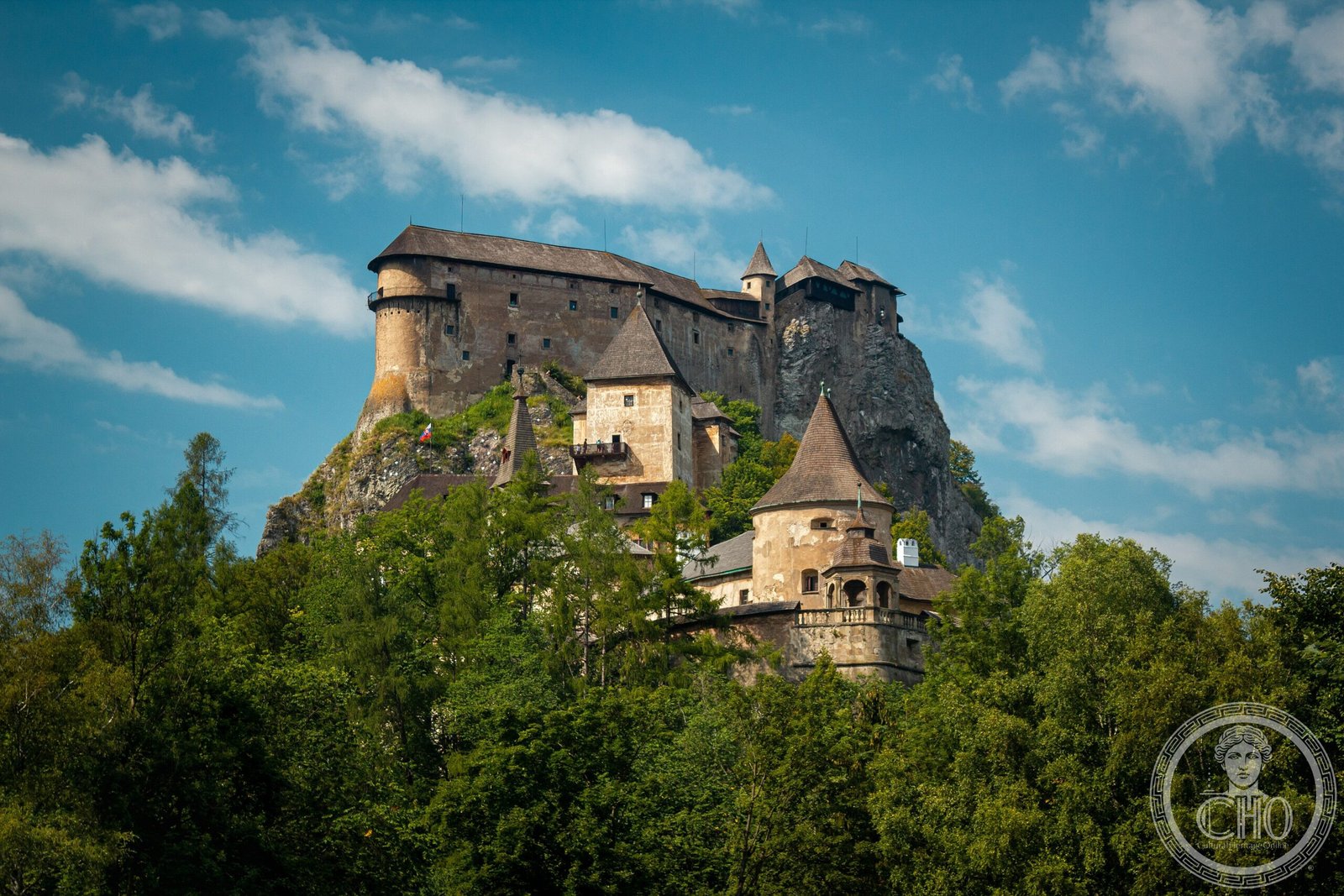
Perched on a dramatic limestone spur above the Orava River, this fortress evolved from a medieval stronghold into a Renaissance palace—and later became the imagined home of Count Orlok in the silent-film classic Nosferatu.
At a glance
Orava Castle rises 520 metres above the river in northwestern Slovakia, its layered stonework a record of eight centuries of rebuilding, fire, and reinvention. The oldest sections date to the thirteenth century; the final major works were completed in 1611. The castle’s dramatic silhouette and period rooms have made it one of Slovakia’s most photographed monuments.
History
The castle stands on the site of a wooden fortification erected after the Mongol invasion of Hungary in 1241. Medieval builders constructed the earliest stone structures in Romanesque and Gothic styles, establishing the fortress as a regional stronghold. Over subsequent centuries, ownership passed through many hands, each leaving marks of construction and destruction.
The Thurzo family, wealthy mining magnates, took control in the mid-sixteenth century and undertook substantial reconstruction, transforming the castle into a Renaissance residence. Its present form took shape gradually, reaching completion around 1611. A catastrophic fire in 1800 ended its use as a dwelling; thereafter it fell into disrepair until World War II, when it was declared a national monument and restoration began.
What you see
The castle clings to its rocky spur in an organic embrace, its layout constrained by the narrow ridge beneath. Successive rebuildings left a palimpsest of styles: Romanesque and Gothic foundations support Renaissance and Neo-Gothic upper sections. Towers, courtyards, and residential chambers reveal the evolving needs and tastes of its owners.
Interior rooms showcase period furnishings and defensive architecture. The castle’s narrow passages and defensive positions reflect its dual purpose as both stronghold and aristocratic residence.
Cultural significance
Orava Castle achieved international recognition when director F.W. Murnau filmed scenes of his 1922 expressionist masterpiece Nosferatu within its walls. The castle’s Gothic turrets and shadowed courtyards provided the perfect setting for Count Orlok’s Transylvanian fortress, cementing its place in cinema history. The film’s atmospheric imagery has made Orava iconic among enthusiasts of early horror cinema.
As a national monument, the castle now stands as a symbol of Slovak cultural heritage and medieval Central European architecture.
Key facts
- Country: Slovakia
- City: Oravský Podzámok
- Coordinates: 49.26°N, 19.36°E
- Built: 13th–17th centuries
- Notable film: Nosferatu (1922)
Practical information & getting there
Orava Castle is open to visitors during tourist season. The village of Oravský Podzámok lies in northwestern Slovakia, accessible by regional roads from the towns of Dolný Kubín and Tvrdošín. Check local tourism websites for current opening hours, admission fees, and guided-tour availability before visiting.
Sources & resources
Find it on the map
See this place and what’s around it →📷 Become a Cultural Heritage Online photographer
Share your photos of places: they stay published under your name as the author. The more they're seen, the more you get noticed — and soon a contest will reward the most appreciated photos.
Log in or sign up free to add a photoIs this page about you?
This page is read by travellers and heritage enthusiasts who find it on Google. Tell us how you are connected to this place and we will take it from there.