
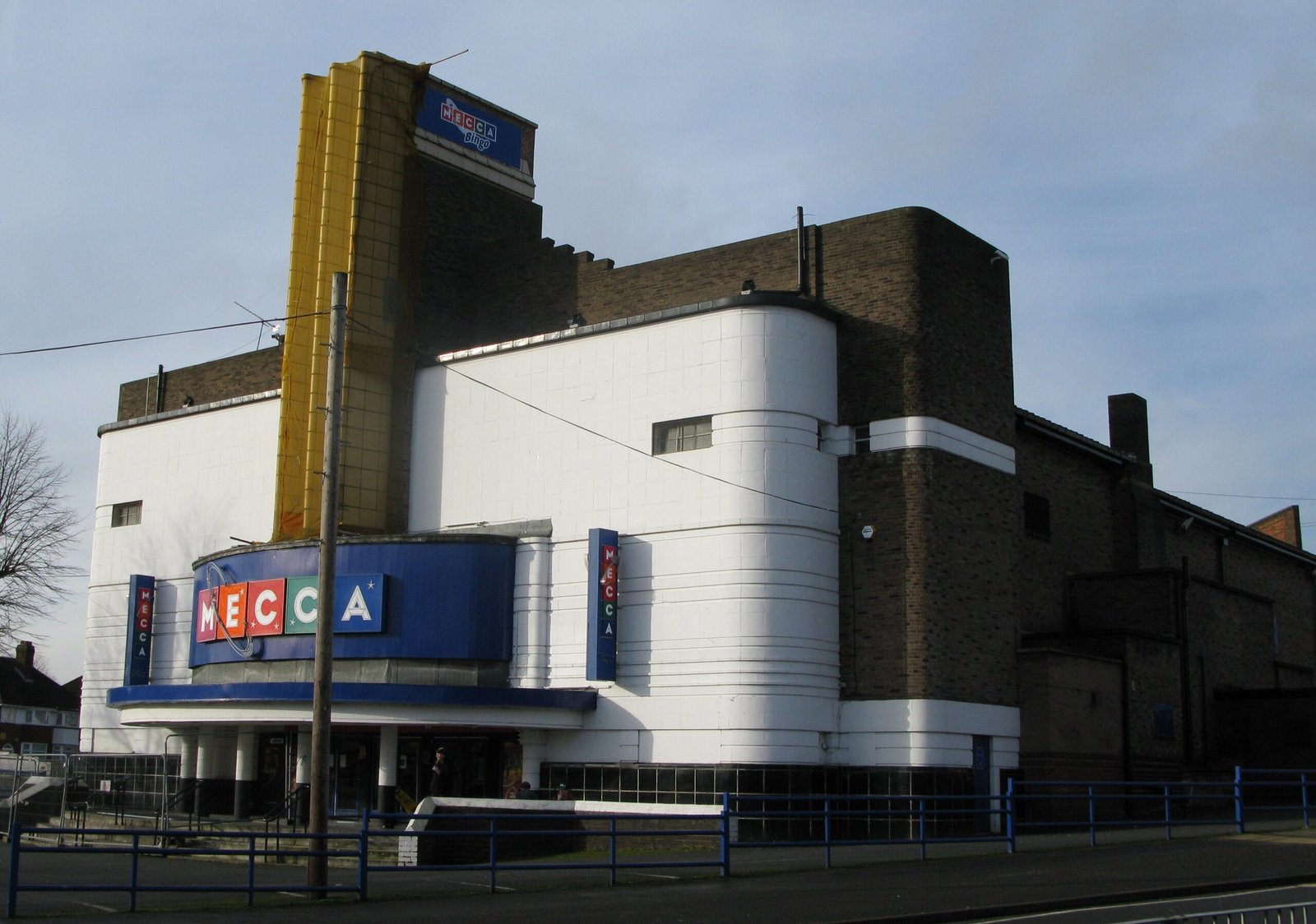
A 1930s cinema of the Odeon chain, this Grade II listed building closed its doors to filmgoers in 1962 but survives as a bingo hall, representing a common fate for mid-century British picture palaces.
At a glance
The Odeon at Kingstanding exemplifies the cinema boom of the interwar years, when multiplexes were still called picture palaces and served as temples of escape and entertainment. Though its theatrical life ended sixty years ago, the structure endures as a cultural landmark of Birmingham’s suburban character.
History
Built in the 1930s as part of the Odeon chain’s rapid expansion across Britain, the Kingstanding cinema operated through the golden age of cinema. The building closed as a cinema in 1962, a turning point for many similar venues facing competition from television and changing leisure habits. It was subsequently repurposed as a bingo hall, a common second act for redundant cinemas across the country.
What you see
The building reflects the architectural language of 1930s cinema design, characteristic of Odeon cinemas built during that era. Its Grade II listing recognizes architectural and historical merit worth preserving for future generations.
Cultural significance
The Odeon at Kingstanding stands as a physical record of Birmingham’s suburban development and the central role cinemas played in twentieth-century leisure culture. It represents the broader story of how entertainment venues adapt, survive, and transform across decades.
Key facts
- Country: United Kingdom
- City: Birmingham
- Period: 1930s
- Coordinates: 52.5536, -1.8856
- Status: Grade II listed
- Original use: Cinema (Odeon chain)
- Closed as cinema: 1962
- Current use: Bingo hall
Practical information & getting there
The Odeon is located in the Kingstanding area of Birmingham. As the building is not open to the public for tours, appreciation of its architectural character must be undertaken from the street. You can view the Grade II listed structure and its exterior details year-round.
Sources & resources
Find it on the map
See this place and what’s around it →📷 Become a Cultural Heritage Online photographer
Share your photos of places: they stay published under your name as the author. The more they're seen, the more you get noticed — and soon a contest will reward the most appreciated photos.
Log in or sign up free to add a photoIs this page about you?
This page is read by travellers and heritage enthusiasts who find it on Google. Tell us how you are connected to this place and we will take it from there.