
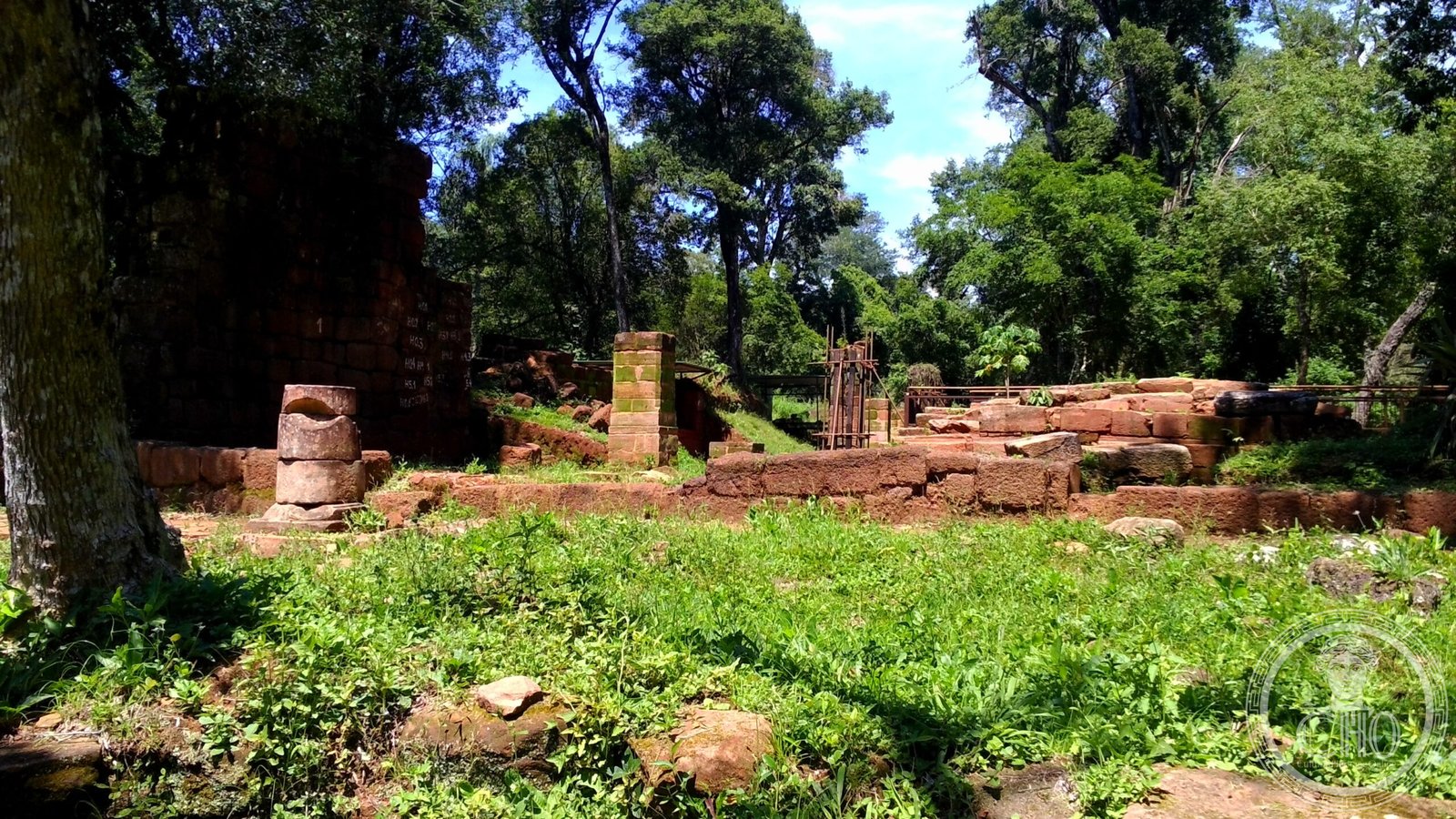
The first Jesuit reduction in Paraguay, founded in 1610, this mission became renowned for its printing press and pioneering work in translating Christian texts into indigenous languages.
At a glance
Nuestra Señora de Loreto stands as the earliest reduction established by the Jesuits in the Province of Paraguay during the Spanish colonial period. Located in Misiones Province in present-day Argentina, the site preserves the fragmentary remains of a mission that fundamentally shaped how European religious instruction met indigenous cultures in South America.
History
The reduction was founded in 1610 as the Jesuits began their systematic effort to convert and organize indigenous populations across the region. The order learned local languages and developed orthographies using the Roman alphabet—a scholarly undertaking that would define the mission’s legacy. By the late 17th century, Father Antonio Garriga, a Spanish Jesuit linguist and missionary to the Moro people, had become a leading figure at Loreto, arriving in 1696 and serving multiple terms as Superior. His Practical Instruction to Order One’s Life According to Saintly Precepts (c.1713) became the second-oldest printed work at the mission, testament to its intellectual ambitions.
What you see
Today only ruins remain at the site. Vegetation has overtaken the structures, accelerating their deterioration. The ruins are less well-preserved than those of the nearby San Ignacio Miní, also in Misiones, making Loreto a more challenging archaeological record to read.
Cultural significance
Loreto’s printing press made it celebrated across the Spanish colonial world. The Jesuits printed works in Spanish and Latin alongside translations of the Bible and Christian texts into indigenous languages, producing dictionaries that documented linguistic knowledge that might otherwise have been lost. This double mission—spiritual conversion and linguistic preservation—established a model replicated across the mission system. The reduction’s influence extended even beyond the missions: in 1760, a ship named after Loreto was built by a Filipino craftsman in Baja California.
Key facts
- Founded: 1610
- Country: Argentina
- Location: Candelaria Department, Misiones Province
- Coordinates: −27.33°S, 55.52°W
- UNESCO World Heritage Site: 1984 (as one of five Jesuit Missions in Argentina and Brazil)
Practical information & getting there
The ruins lie in Misiones Province in northeastern Argentina, near the Paraguay–Argentina border. Travel arrangements and site access conditions are best confirmed locally before visiting, as the site’s condition and facilities may be limited.
Sources & resources
Find it on the map
See this place and what’s around it →📷 Become a Cultural Heritage Online photographer
Share your photos of places: they stay published under your name as the author. The more they're seen, the more you get noticed — and soon a contest will reward the most appreciated photos.
Log in or sign up free to add a photoIs this page about you?
This page is read by travellers and heritage enthusiasts who find it on Google. Tell us how you are connected to this place and we will take it from there.