
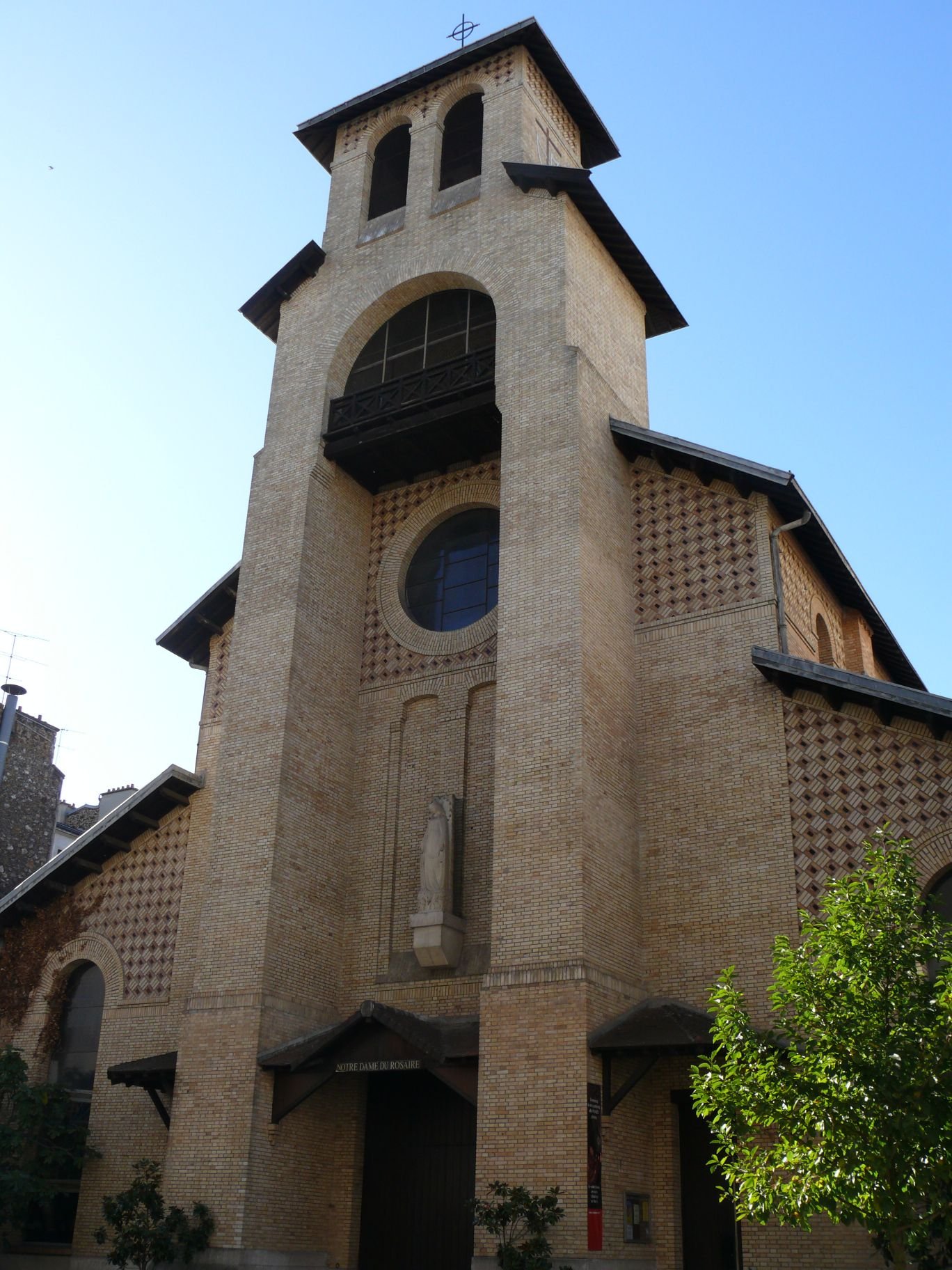
A striking neo-classical and neo-Byzantine church in Paris’s 14th arrondissement, celebrated for its architectural synthesis of early twentieth-century styles.
At a glance
Notre-Dame du Rosaire stands in the Plaisance Quarter, a testament to the eclectic tastes of 1910s Paris. Architect Pierre Sardou merged two classical vocabularies—neo-classical restraint and neo-Byzantine ornament—to create a distinctive urban landmark that earned official recognition within a decade of completion.
History
Constructed between 1910 and 1912, the church arrived during a period when Paris was reimagining its ecclesiastical architecture. Its designer, Pierre Sardou, won the Bally Prize from the Academy of Fine Arts in 1919 for the boldness of his architectural conception—a significant honor that validated the experimental blend of classical traditions he had attempted.
What you see
The building combines neo-classical proportions and restraint with neo-Byzantine decorative elements. This synthesis of styles—balancing symmetry with ornamental richness—was fashionable among architects of that era seeking to honor tradition while embracing modernity. The result is a church that reads as both solemn and elaborate.
Cultural significance
The church exemplifies early twentieth-century French religious architecture and the creative reinterpretation of historical styles. Its Academy prize underscores the period’s receptiveness to hybrid architectural languages, and it remains a notable example of how Parisian architects balanced reverence for the past with contemporary aesthetic ambitions.
Key facts
- Location: 194 Rue Raimond-Losserand, Plaisance Quarter, 14th arrondissement, Paris
- Coordinates: 48.82921, 2.30794
- Completed: 1912
- Architect: Pierre Sardou
- Award: Bally Prize, Academy of Fine Arts (1919)
Practical information & getting there
The church is located in the 14th arrondissement of Paris. For current opening hours and visiting information, consult local tourism resources or the parish directly.
Sources & resources
Find it on the map
See this place and what’s around it →📷 Become a Cultural Heritage Online photographer
Share your photos of places: they stay published under your name as the author. The more they're seen, the more you get noticed — and soon a contest will reward the most appreciated photos.
Log in or sign up free to add a photoIs this page about you?
This page is read by travellers and heritage enthusiasts who find it on Google. Tell us how you are connected to this place and we will take it from there.