
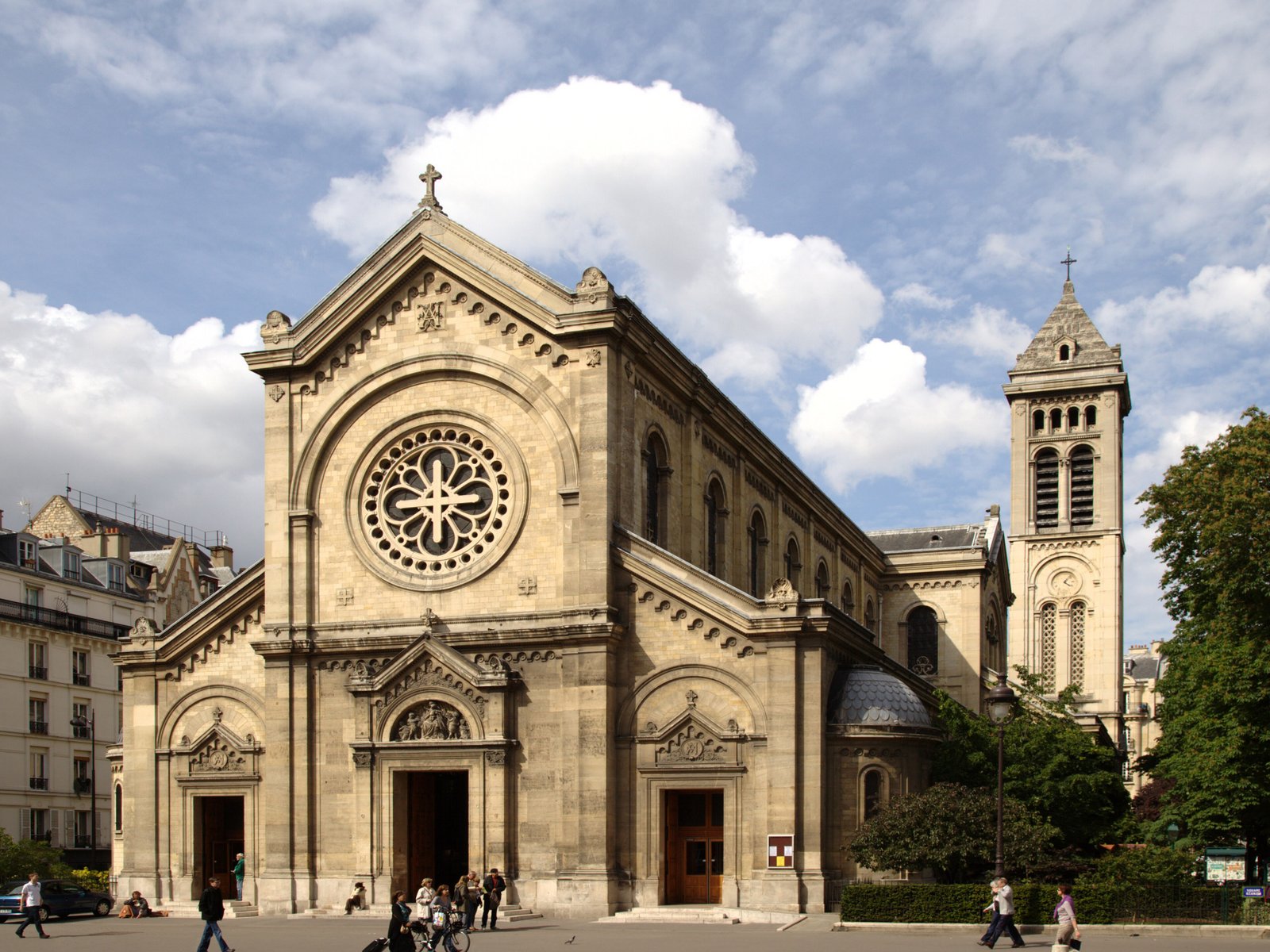
A mid-nineteenth-century parish church whose innovative iron framework was designed by Gustave Eiffel, showcasing industrial engineering in sacred architecture.
At a glance
Notre-Dame-des-Champs stands at 91 Boulevard du Montparnasse on the southern edge of Paris’s 6th arrondissement, a prominent urban landmark dedicated to the Virgin Mary under the title of Our Lady of the Fields.
History
The church was completed in 1876, at a moment when Paris was transforming through modernization and industrial innovation. Its construction coincided with the engineer Gustave Eiffel’s rising prominence, before his signature tower would define the city’s skyline thirteen years later.
What you see
The building’s most distinctive feature is its iron framework, designed by Eiffel himself. This pioneering use of metal construction in a religious building challenged traditional stone masonry, allowing for new spatial possibilities and creating an early example of industrial materials in ecclesiastical design.
Cultural significance
Notre-Dame-des-Champs represents a pivotal moment when faith and modernity intersected in Paris. Eiffel’s involvement elevated the structure beyond a conventional parish church, marking it as a testament to nineteenth-century engineering ambition and the evolving relationship between technology and tradition.
Key facts
- Location: 91 Boulevard du Montparnasse, 6th arrondissement, Paris
- Completed: 1876
- Iron framework designed by: Gustave Eiffel
- Dedicated to: The Blessed Virgin Mary (Our Lady of the Fields)
- Coordinates: 48.84353, 2.32717
- Country: France
Practical information & getting there
The church is accessible via public transport in central Paris. Its position on Boulevard du Montparnasse places it within easy reach of the 6th arrondissement’s galleries, cafés, and literary landmarks.
Sources & resources
Find it on the map
See this place and what’s around it →📷 Become a Cultural Heritage Online photographer
Share your photos of places: they stay published under your name as the author. The more they're seen, the more you get noticed — and soon a contest will reward the most appreciated photos.
Log in or sign up free to add a photoIs this page about you?
This page is read by travellers and heritage enthusiasts who find it on Google. Tell us how you are connected to this place and we will take it from there.