
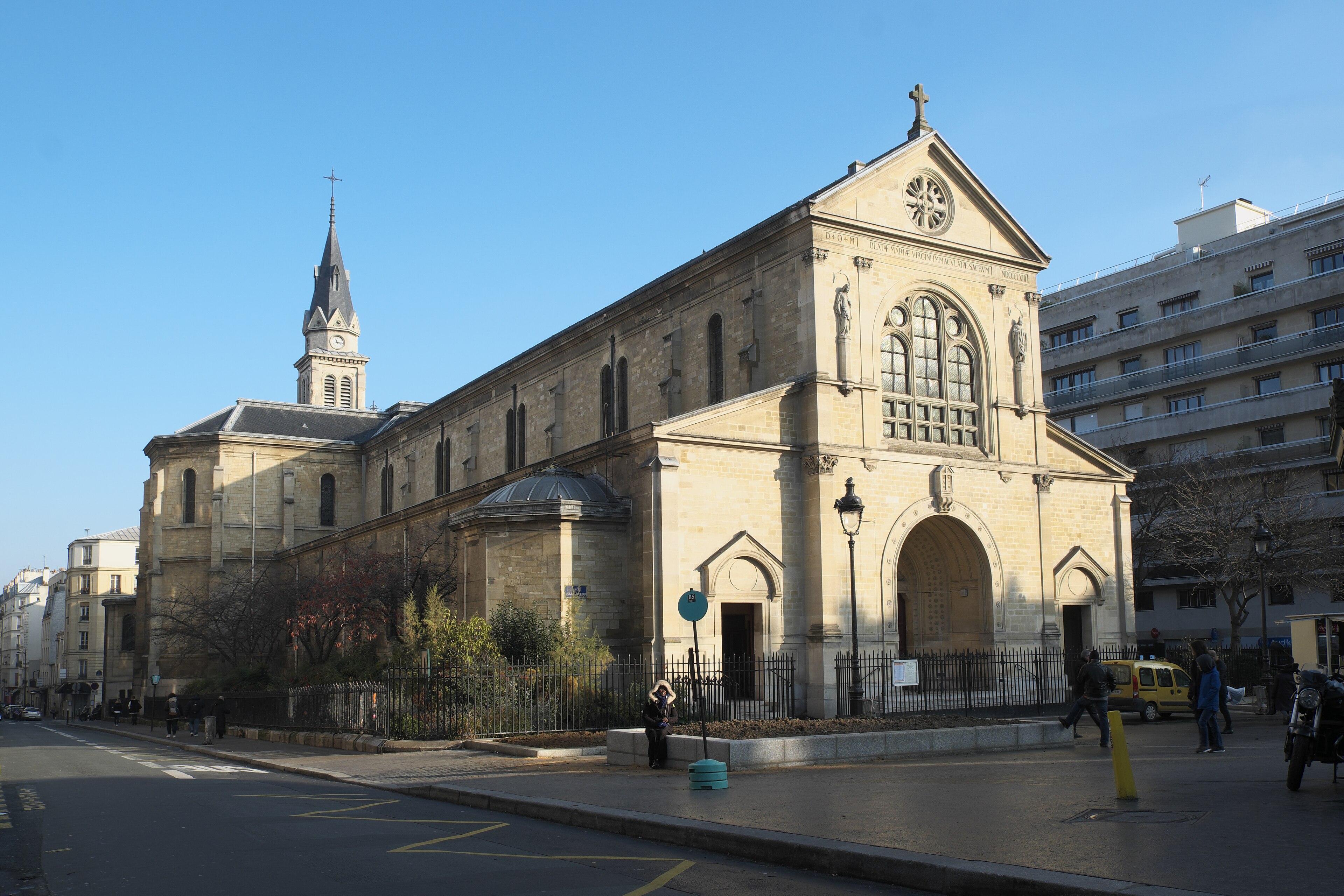
A Romanesque Revival church in Paris’s 18th arrondissement, completed in 1863 and named after the former village of Clignancourt.
At a glance
Notre-Dame de Clignancourt stands as a statement of religious confidence in the rapidly modernizing Paris of the Second Empire. Built in the Romanesque Revival idiom, the church commemorates a landscape forever changed by urban annexation.
History
The church takes its name from Clignancourt, a small village in the commune of Montmartre that was absorbed into Paris in 1860. Its construction and completion in 1863 followed this territorial expansion, serving the spiritual needs of the newly integrated district.
What you see
The building exemplifies the Romanesque Revival style, an architectural movement that drew on medieval forms to express solidity and permanence in nineteenth-century urban contexts. Its formal language reflects the aesthetic choices of the Second Empire period.
Cultural significance
The church marks the physical and cultural integration of formerly independent settlements into the expanding metropolitan whole. It remains a landmark of the 18th arrondissement’s history and identity.
Key facts
- Country: France
- City: 18th arrondissement of Paris
- Completed: 1863
- Architectural style: Romanesque Revival
- Coordinates: 48.89305556, 2.345
Practical information & getting there
The church is located at 2 place Jules Joffrin. The nearest Metro stations are Jules Joffrin and Simplon, both within walking distance.
Sources & resources
Find it on the map
See this place and what’s around it →📷 Become a Cultural Heritage Online photographer
Share your photos of places: they stay published under your name as the author. The more they're seen, the more you get noticed — and soon a contest will reward the most appreciated photos.
Log in or sign up free to add a photoIs this page about you?
This page is read by travellers and heritage enthusiasts who find it on Google. Tell us how you are connected to this place and we will take it from there.