
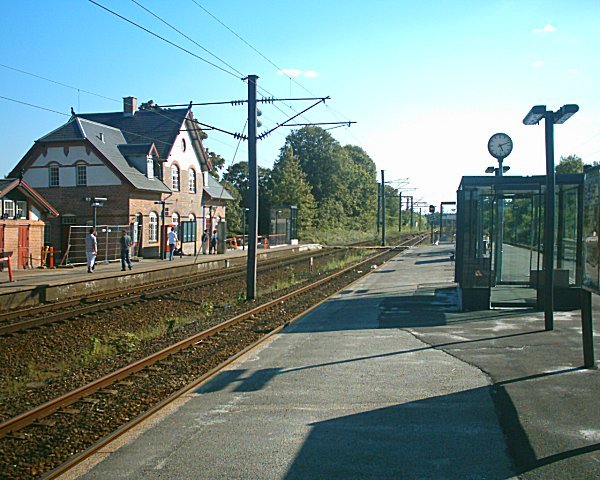
A coastal railway station north of Copenhagen, designed in the National Romantic style and now serving regional trains and visitors to a nearby art gallery.
At a glance
Nivå station sits on the Coast Line between Helsingør and Copenhagen, serving the suburb of Nivå on North Zealand’s shoreline. The station also provides access to the Nivaagaard Art Gallery. Danish State Railways (DSB) operates frequent regional services to Copenhagen Central Station.
History
The station was designed by architect Heinrich Wenck as part of a cohesive programme of railway architecture along the Coast Line. Its construction reflected Denmark’s late 19th and early 20th-century investment in suburban rail infrastructure north of the capital.
What you see
The building exemplifies the National Romantic style, a movement that characterized most stations along the Coast Line. Wenck’s design combines traditional Danish architectural forms with functional railway design, creating a distinctive landmark in the seaside community.
Cultural significance
Nivå station represents an important chapter in Danish architectural and transport history. The National Romantic aesthetic—celebrated across the Coast Line’s stations—reflects Denmark’s cultural identity during a formative period of modernization and national consciousness.
Key facts
- Country: Denmark
- Location: Fredensborg Municipality, North Zealand
- Coordinates: 55.93°N, 12.51°E
- Architect: Heinrich Wenck
- Style: National Romantic
- Operator: Danish State Railways (DSB)
Practical information & getting there
The station is served by regular regional trains to Copenhagen Central Station. You can reach Nivå by train from central Copenhagen on the Coast Line, or access nearby Nivaagaard Art Gallery from the station. Consult DSB’s website for current schedules and fares.
Sources & resources
Find it on the map
See this place and what’s around it →📷 Become a Cultural Heritage Online photographer
Share your photos of places: they stay published under your name as the author. The more they're seen, the more you get noticed — and soon a contest will reward the most appreciated photos.
Log in or sign up free to add a photoIs this page about you?
This page is read by travellers and heritage enthusiasts who find it on Google. Tell us how you are connected to this place and we will take it from there.