
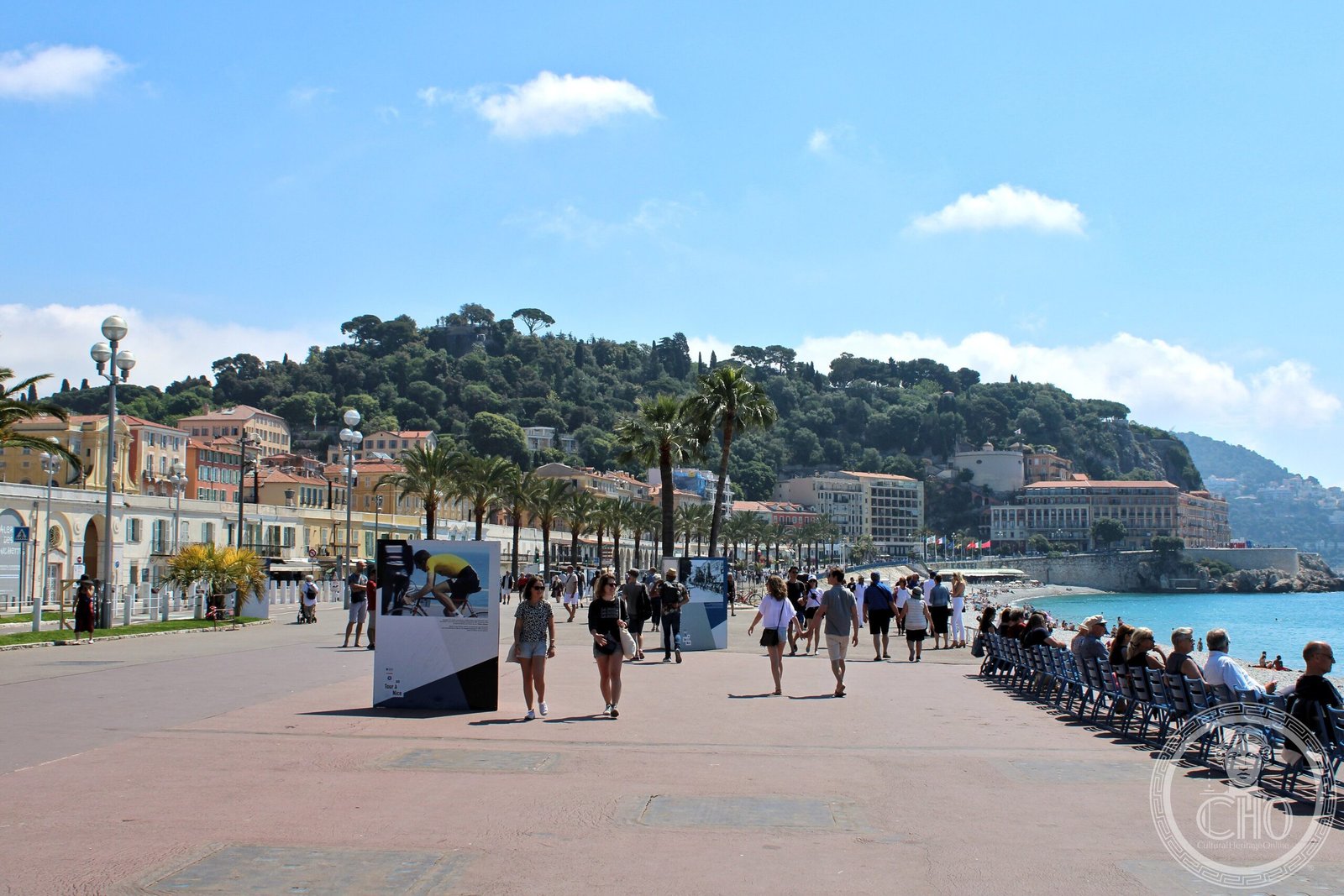
A Mediterranean city renowned for its aristocratic heritage, artistic legacy, and the elegant Promenade des Anglais, Nice has captivated European society for centuries.
At a glance
Nice is France’s second-largest Mediterranean city and a major resort on the French Riviera, located at the foot of the Alps. The metropolitan area encompasses nearly one million inhabitants across approximately 744 square kilometres. Its mild climate and strategic port have shaped its role as a cultural and commercial hub since antiquity.
History
Archaeological evidence from Terra Amata demonstrates human use of fire in the Nice region 380,000 years ago. Around 350 BC, Greeks from Marseille established a permanent settlement called Nikaia, named after Nike, the goddess of victory.
The city’s strategic location prompted repeated changes of sovereignty. From 1388 it belonged to Savoy, then became part of the French First Republic between 1792 and 1815. It returned to the Kingdom of Piedmont-Sardinia until French annexation in 1860. During the 18th century, English aristocrats discovered Nice’s agreeable winters, transforming it into Europe’s premier winter destination. The Promenade des Anglais, inaugurated in 1931 after refurbishment, commemorates these early visitors, including Queen Victoria and her son Edward VII.
What you see
The Promenade des Anglais remains Nice’s defining landmark—a magnificent waterfront avenue reflecting the city’s Belle Époque ambitions. The city’s architectural character blends Mediterranean vernacular with grand 19th-century resort hotels and civic buildings. Museums celebrate its artistic magnetism: Musée Marc Chagall, Musée Matisse, and Musée des Beaux-Arts house works by painters drawn to the region’s luminous quality.
Cultural significance
Nice’s appeal to Europe’s intellectual and creative elite shaped its enduring cultural prestige. Marc Chagall, Henri Matisse, Niki de Saint Phalle, and Arman created major works here. Friedrich Nietzsche wrote Thus Spoke Zarathustra during six consecutive winters in the city. Anton Chekhov completed Three Sisters while resident. The Russian Orthodox Cemetery and Cimetière du Château contain graves of notable figures including members of the Russian imperial family, writers, artists, and political leaders.
UNESCO designated Nice a World Heritage Site in 2021, recognising its historical importance as a winter resort for European aristocracy and the resulting cultural synthesis. Today it attracts four million visitors annually and ranks among France’s most visited cities.
Key facts
- Country: France
- Region: Alpes-Maritimes department, Provence-Alpes-Côte d’Azur
- Coordinates: 43.7034°N, 7.2663°E
- Metropolitan population: approximately one million
- UNESCO World Heritage Site: 2021
- Distance from Monaco: approximately 13 kilometres
- Distance from French–Italian border: approximately 30 kilometres
Practical information & getting there
Nice’s airport serves as the primary gateway to the French Riviera. The city benefits from excellent regional transport connections and is accessible via train and road. As France’s second-largest hotel market, Nice offers extensive accommodation across all price ranges. Spring through autumn provides optimal weather, though the mild Mediterranean climate makes winter visits comfortable for those seeking respite from northern European cold.
Sources & resources
Find it on the map
See this place and what’s around it →📷 Become a Cultural Heritage Online photographer
Share your photos of places: they stay published under your name as the author. The more they're seen, the more you get noticed — and soon a contest will reward the most appreciated photos.
Log in or sign up free to add a photo