
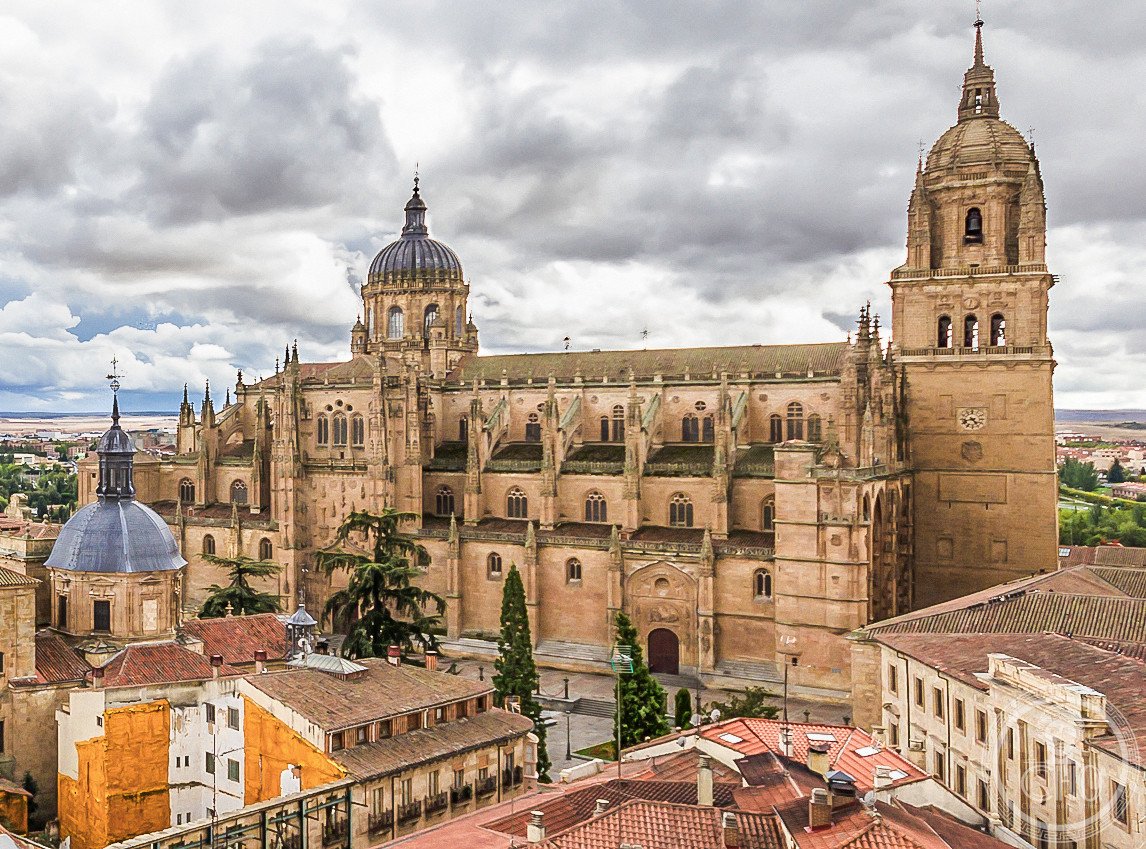
One of Spain’s largest cathedrals, the Catedral Nueva showcases two centuries of architectural evolution across late Gothic, Plateresque, and Baroque styles, its 92-meter bell tower dominating Salamanca’s skyline.
At a glance
Salamanca’s New Cathedral stands alongside the older cathedral as a seat of the diocese. Its construction spanned two centuries, beginning in 1533 under commission from Ferdinand V of Castile and concluding in 1733. The cathedral ranks among Spain’s most substantial religious buildings by volume.
History
Ferdinand V commissioned construction in 1533, initiating a project that would outlive its royal patron by centuries. The extended building period—two hundred years—allowed successive generations to shape the structure, incorporating architectural movements as they emerged across the Renaissance and into the early modern period.
What you see
The cathedral’s exterior and interior blend three distinct styles. Late Gothic forms meet Plateresque ornament—the elaborate surface decoration characteristic of Spanish Renaissance design—while Baroque elements introduce sculptural drama and dynamic spatial effects. The bell tower, rising 92 meters, ranks among Spain’s tallest ecclesiastical towers and serves as a landmark visible across the city.
Cultural significance
The cathedral embodies Salamanca’s importance as a religious and cultural center. Its scale and longevity reflect both the city’s prosperity and the evolving aesthetic priorities of Spanish Catholicism across the early modern era. The structure remains an active diocesan seat and a principal monument in the university city.
Key facts
- Country: Spain
- City: Salamanca, Castile and León
- Construction: 1533–1733
- Bell tower height: 92 meters
- Coordinates: 40.9606, -5.6658
Practical information & getting there
The New Cathedral occupies a prominent position in central Salamanca. For current visiting hours, admission details, and access information, consult local tourism resources or the cathedral’s official channels.
Sources & resources
Find it on the map
See this place and what’s around it →📷 Become a Cultural Heritage Online photographer
Share your photos of places: they stay published under your name as the author. The more they're seen, the more you get noticed — and soon a contest will reward the most appreciated photos.
Log in or sign up free to add a photoIs this page about you?
This page is read by travellers and heritage enthusiasts who find it on Google. Tell us how you are connected to this place and we will take it from there.