

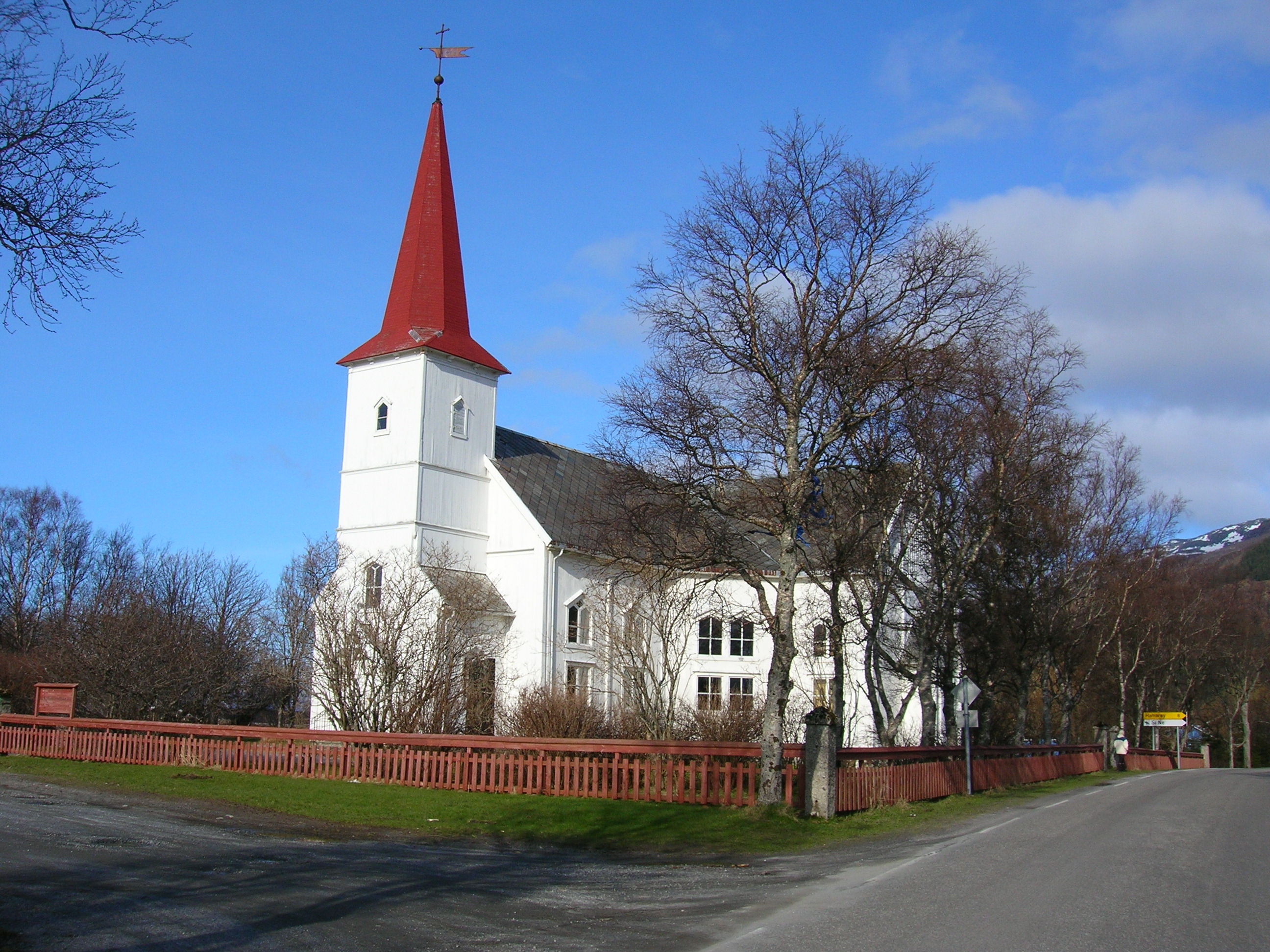
A white wooden church of octagonal cruciform design, built in 1880 to serve the parish of Nesna in Nordland county’s Nord-Helgeland deanery.
At a glance
Nesna Church is the main parish church for Nesna Municipality, a neo-gothic wooden structure designed by architect Niels Stockfleth Darre Eckhoff. The building seats approximately 480 worshippers and remains active as a Church of Norway parish church.
History
The church was constructed in 1880 following designs by architect Niels Stockfleth Darre Eckhoff. It was built to serve the growing parish of Nesna and continues to function as the primary place of worship for the local community within the Diocese of Sør-Hålogaland.
What you see
The church presents a distinctive octagonal cruciform plan rendered in white wooden construction. Its neo-gothic style reflects the architectural preferences of the late nineteenth century, combining geometric clarity with ecclesiastical tradition in timber—a common material for Norwegian rural churches of this era.
Cultural significance
Nesna Church represents an important example of nineteenth-century Norwegian ecclesiastical architecture. Its design by a notable architect of the period and its continued role as the community’s spiritual center reflect the enduring place of the Church of Norway in local life.
Key facts
- Country: Norway
- Municipality: Nesna
- Built: 1880
- Architect: Niels Stockfleth Darre Eckhoff
- Seating capacity: approximately 480
- Style: Neo-gothic, octagonal cruciform
- Material: Wood
- Diocese: Sør-Hålogaland
- Coordinates: 66.2005, 13.0256
Practical information & getting there
The church is located in the village of Nesna in Nordland county. As an active parish church, visiting hours may vary; contact the Nord-Helgeland deanery for current access information and service times.
Sources & resources
Find it on the map
See this place and what’s around it →📷 Become a Cultural Heritage Online photographer
Share your photos of places: they stay published under your name as the author. The more they're seen, the more you get noticed — and soon a contest will reward the most appreciated photos.
Log in or sign up free to add a photoIs this page about you?
This page is read by travellers and heritage enthusiasts who find it on Google. Tell us how you are connected to this place and we will take it from there.