
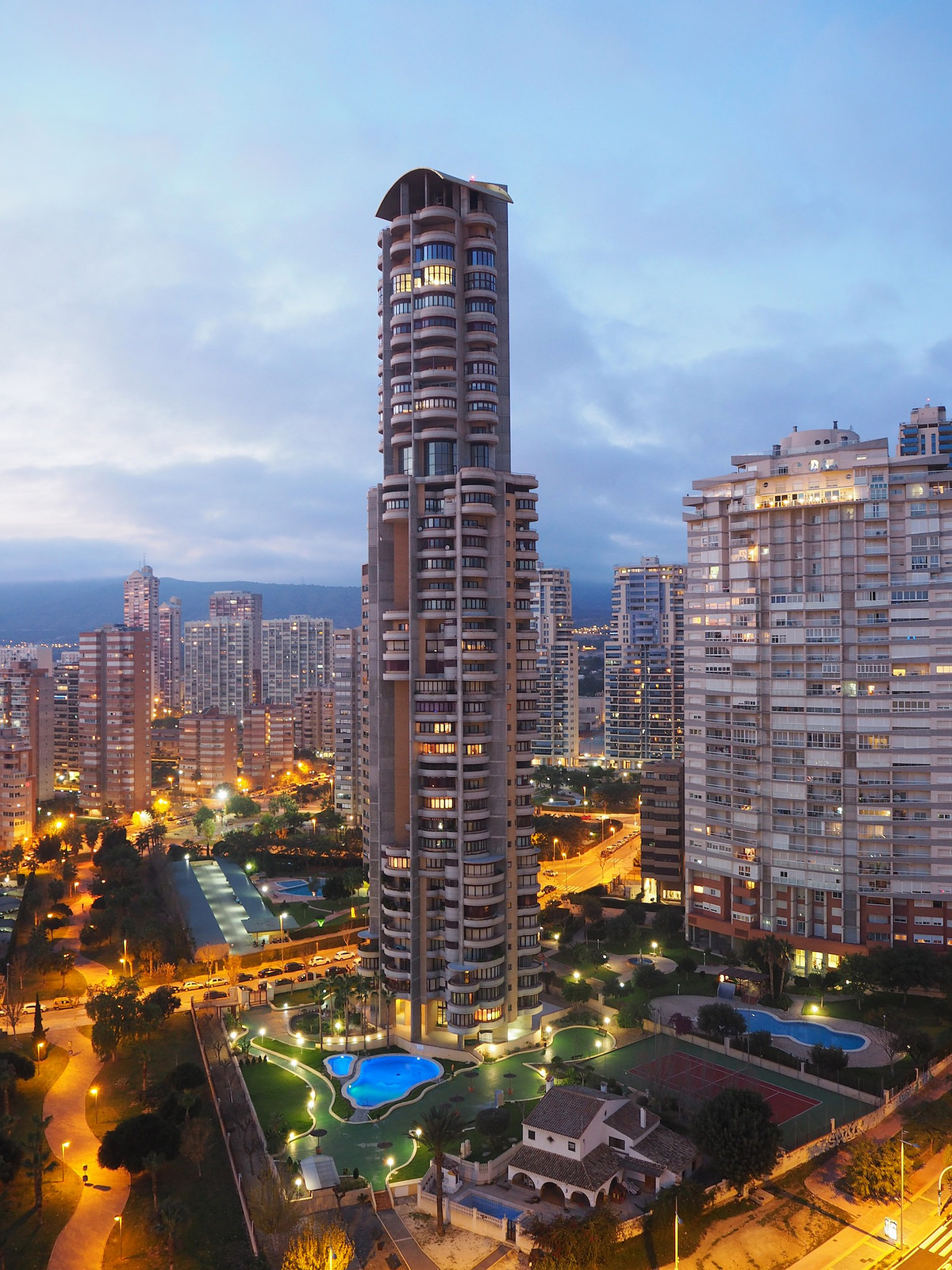
A 148-meter brutalist tower that dominated Benidorm’s skyline upon completion, named for a Basque neighborhood across the country.
At a glance
Neguri Gane is a 43-story residential skyscraper completed in 2002. At 148 meters, it ranks as Spain’s 14th tallest building and held the title of Benidorm’s highest structure until later developments surpassed it.
History
Construction began in 1998 and concluded in 2002. Upon completion, Neguri Gane claimed the distinction of Benidorm’s tallest building—a position since relinquished to Torre Lúgano, Gran Hotel Bali, and Intempo.
What you see
The building exemplifies brutalist design, characterized by bold concrete forms and geometric severity. Its 43 stories rise unadorned and commanding, a hallmark of the movement’s uncompromising aesthetic.
Cultural significance
The tower’s name honors Neguri, a neighborhood in Getxo within Spain’s Basque Country, forming an architectural link between the Mediterranean coast and the north. It stands as a marker of Benidorm’s vertical development at the turn of the millennium.
Key facts
- Height: 148 meters
- Stories: 43
- Construction: 1998–2002
- Architectural style: Brutalist
- Rank in Spain: 14th tallest building
- Coordinates: 38.5445, -0.1214
Practical information & getting there
Neguri Gane is located in Benidorm, on Spain’s Costa Blanca. The building is primarily residential and not open for public interior access. Views of the tower are best appreciated from the beachfront and surrounding urban areas.
Sources & resources
Find it on the map
See this place and what’s around it →📷 Become a Cultural Heritage Online photographer
Share your photos of places: they stay published under your name as the author. The more they're seen, the more you get noticed — and soon a contest will reward the most appreciated photos.
Log in or sign up free to add a photoIs this page about you?
This page is read by travellers and heritage enthusiasts who find it on Google. Tell us how you are connected to this place and we will take it from there.