
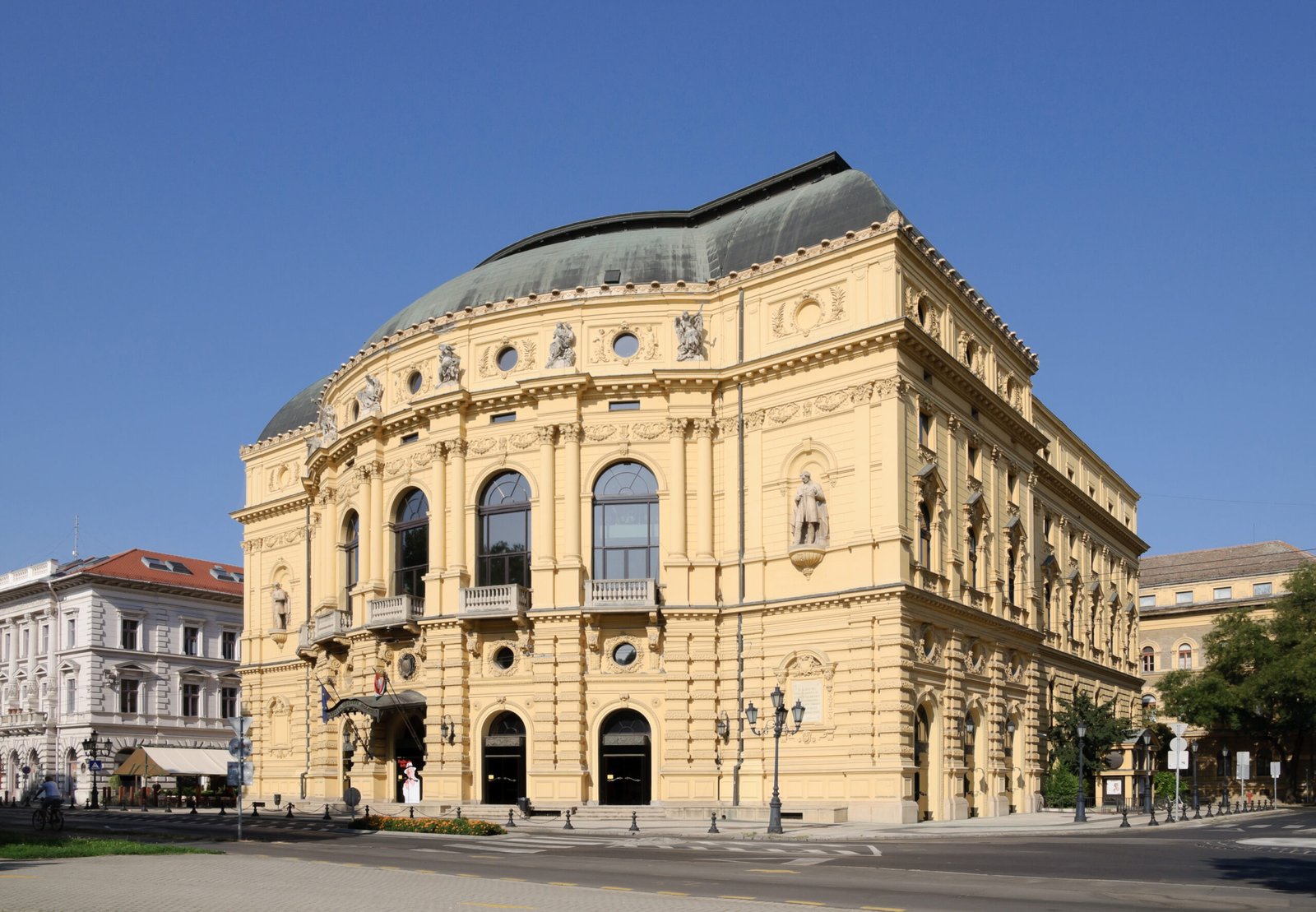
Built in 1883 by the celebrated architects Fellner and Helmer, Szeged’s principal theatre showcases Eclectic and Neo-baroque grandeur.
At a glance
The National Theatre of Szeged anchors cultural life in Hungary’s third-largest city. Its confident facade and ornate interiors reflect late 19th-century theatrical ambition and the architectural mastery of one of Europe’s most prolific theatre-designing firms.
History
The theatre was constructed in 1883 during a period of urban expansion and cultural development in Szeged. Its commission represented the city’s commitment to establishing itself as a regional cultural hub. The choice of Fellner and Helmer—architects whose practice dominated European theatre design in the late 1800s—signaled Szeged’s aspirations to world-class artistic standards.
What you see
The building combines Eclectic and Neo-baroque vocabularies, drawing on historical styles while asserting contemporary confidence. Ornamental details, tiered galleries, and gilded surfaces characterize the interior. The exterior presents the formal dignity expected of a major civic institution in the Austro-Hungarian era.
Cultural significance
As Szeged’s main theatre, it remains central to the city’s artistic identity and continues to host drama, opera, and ballet performances. The structure exemplifies how provincial cities across the Austro-Hungarian Empire invested in cultural architecture to enhance their status and identity.
Key facts
- Country: Hungary
- City: Szeged
- Built: 1883
- Architects: Ferdinand Fellner and Hermann Helmer
- Style: Eclectic and Neo-baroque
- Coordinates: 46.25357222, 20.15167222
Practical information & getting there
The theatre is located in central Szeged. Check current performance schedules and opening hours on the venue’s official website before planning your visit.
Sources & resources
Find it on the map
See this place and what’s around it →📷 Become a Cultural Heritage Online photographer
Share your photos of places: they stay published under your name as the author. The more they're seen, the more you get noticed — and soon a contest will reward the most appreciated photos.
Log in or sign up free to add a photoDo you manage this place?
This page is read by travellers and heritage enthusiasts who find it on Google. Keep it accurate — and make it work for you. Free for non-profit heritage institutions.