
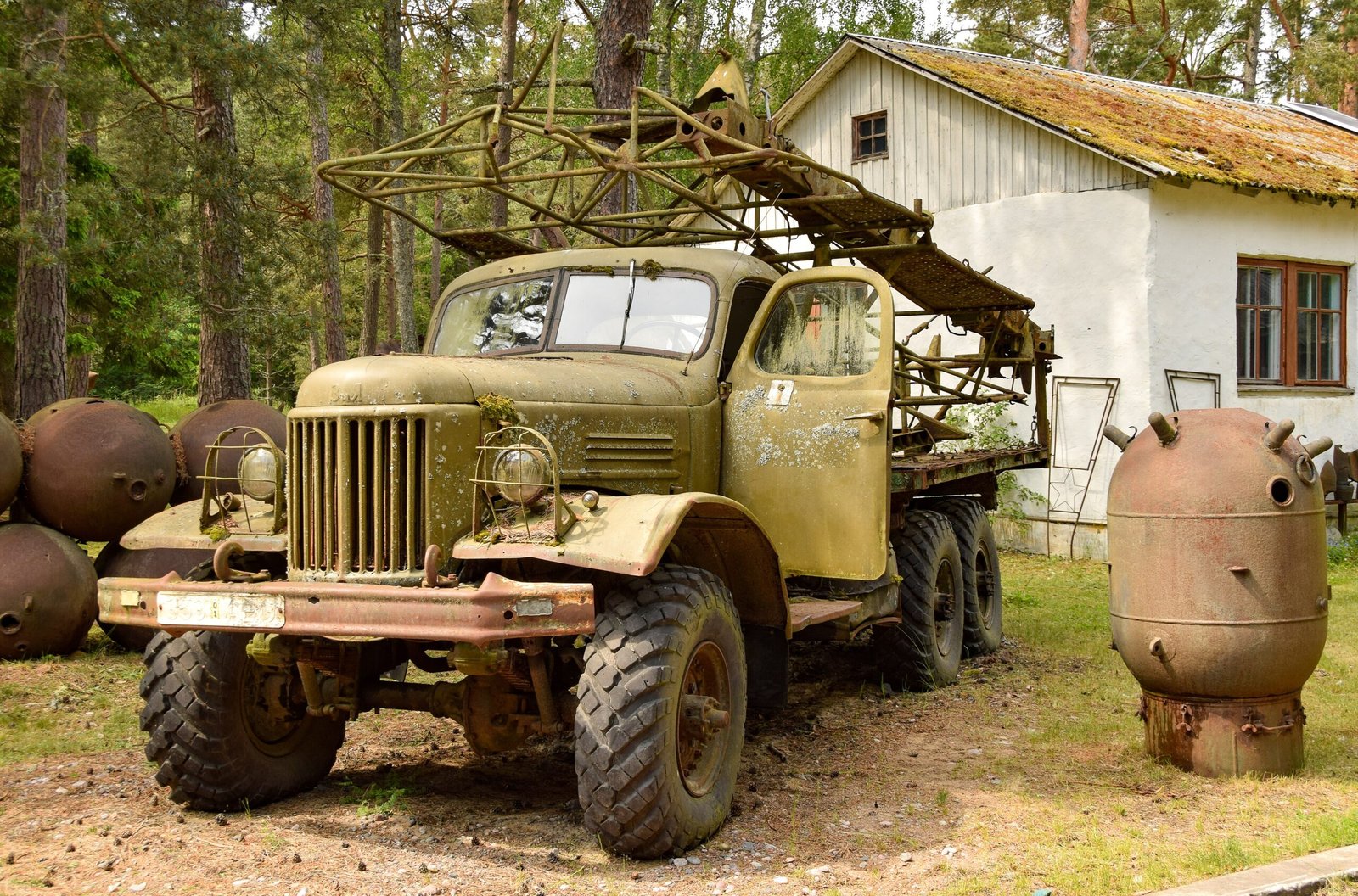
A museum devoted to the military history of Naissaar, the Estonian island that served as a fortified defence post in the Gulf of Tallinn.
At a glance
Housed in the Männiku barracks—Soviet-era military buildings that operated until the late 1980s—the Naissaar Museum documents the island’s strategic role as a closed military zone. The museum is administered as a branch of the Museum of Coastal Folk Foundation.
History
Naissaar served as a restricted military zone during the Soviet period, its strategic position in the Gulf of Tallinn making it integral to coastal defence infrastructure. The Männiku barracks housed Soviet military servicemen until the late 1980s, when the island’s status began to change. The conversion of these barracks into a museum preserves the material history of this period.
What you see
The museum occupies the Männiku barracks complex, now located within the village of Lõunaküla. The buildings retain their Soviet-era military character and serve as the physical backdrop for understanding the island’s defence history.
Cultural significance
The museum offers rare insight into a closed chapter of Estonian and Cold War history. It illuminates Naissaar’s role in the defence system of the Gulf of Tallinn and the lived experience of Soviet military occupation on Estonian soil.
Key facts
- Location: Naissaar Island, Estonia
- Coordinates: 59.54°N, 24.55°E
- Administered by: Museum of Coastal Folk Foundation
Practical information & getting there
The museum is located on Naissaar Island in the Gulf of Tallinn. Access to the island requires advance planning; consult local tourism resources for current transport options and visiting arrangements.
Sources & resources
Find it on the map
See this place and what’s around it →📷 Become a Cultural Heritage Online photographer
Share your photos of places: they stay published under your name as the author. The more they're seen, the more you get noticed — and soon a contest will reward the most appreciated photos.
Log in or sign up free to add a photoIs this page about you?
This page is read by travellers and heritage enthusiasts who find it on Google. Tell us how you are connected to this place and we will take it from there.