

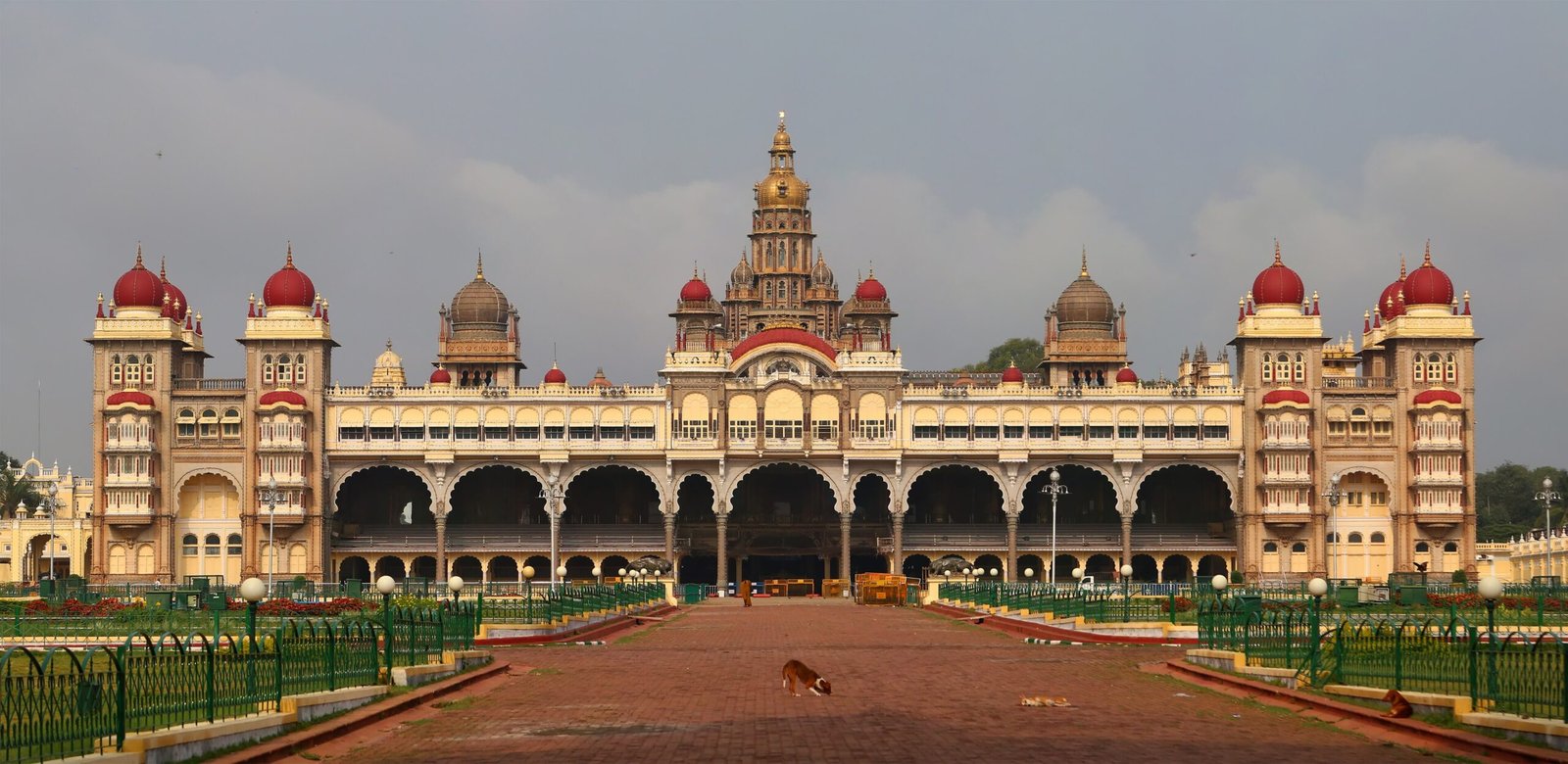
A masterwork of Indo-Saracenic design, Mysore Palace stands as the official seat of the Wadiyar dynasty and one of India’s most visited monuments, blending Islamic, Rajput, Hoysala and Gothic architectural traditions.
At a glance
Mysore Palace, also called Amba Vilas Palace, is the largest of seven palaces in Mysore and the former royal residence of the Kingdom of Mysore. Commissioned in 1897 after a fire destroyed its predecessor, the palace was designed by British architect Henry Irwin and Edwin Wolleston Fritchley, taking fifteen years to complete. Today it houses a public museum, temple complexes, gardens, and the ceremonial quarters of the Wadiyar family.
History
A fort occupied this site from the late 14th century. The first palace was constructed during the reign of Kanthirava Narasaraja I in the 17th century and endured multiple cycles of destruction and rebuilding. Following a devastating fire, Krishnaraja Wodeyar IV commissioned the current structure in August 1897. Since the early 19th century, the grounds have hosted the annual Mysore Dasara festival, culminating in an elephant procession during Vijayadashami. In 1998, the Karnataka state government enacted the Mysore Palace Acquisition Act, transferring ownership from the Wadiyar family—an action that remains subject to ongoing legal dispute.
What you see
The palace exemplifies Indo-Saracenic architecture at its finest, synthesizing Indo-Islamic, Rajput, Hoysala and Gothic design vocabularies. Henry Irwin, who earlier designed Madras High Court, shaped the palace’s aesthetic alongside Fritchley, who subsequently designed Lalitha Mahal. The complex extends beyond the main palace to encompass multiple gardens, Hindu temples predating the current structure, and remnants of the original fort walls.
Cultural significance
Mysore Palace represents a pivotal moment in Indian architectural history, when colonial and indigenous traditions merged during the late Raj. It remains the symbolic heart of the Wadiyar dynasty’s legacy and a vital venue for one of South India’s most important festivals. As of 2024, the palace attracts more than four million visitors annually, making it among India’s foremost cultural destinations.
Key facts
- Country: India
- City: Mysore, Karnataka
- Coordinates: 12.30388889°N, 76.65444444°E
- Construction dates: 1897–1912
- Architects: Henry Irwin and Edwin Wolleston Fritchley
- Annual visitors: over 4 million
Practical information & getting there
Mysore Palace is located in the heart of Mysore city in Karnataka state. The palace complex includes a public museum open to visitors. For current opening hours, admission fees and travel information, consult official tourism resources or visit the palace website.
Sources & resources
Find it on the map
See this place and what’s around it →📷 Become a Cultural Heritage Online photographer
Share your photos of places: they stay published under your name as the author. The more they're seen, the more you get noticed — and soon a contest will reward the most appreciated photos.
Log in or sign up free to add a photoIs this page about you?
This page is read by travellers and heritage enthusiasts who find it on Google. Tell us how you are connected to this place and we will take it from there.