
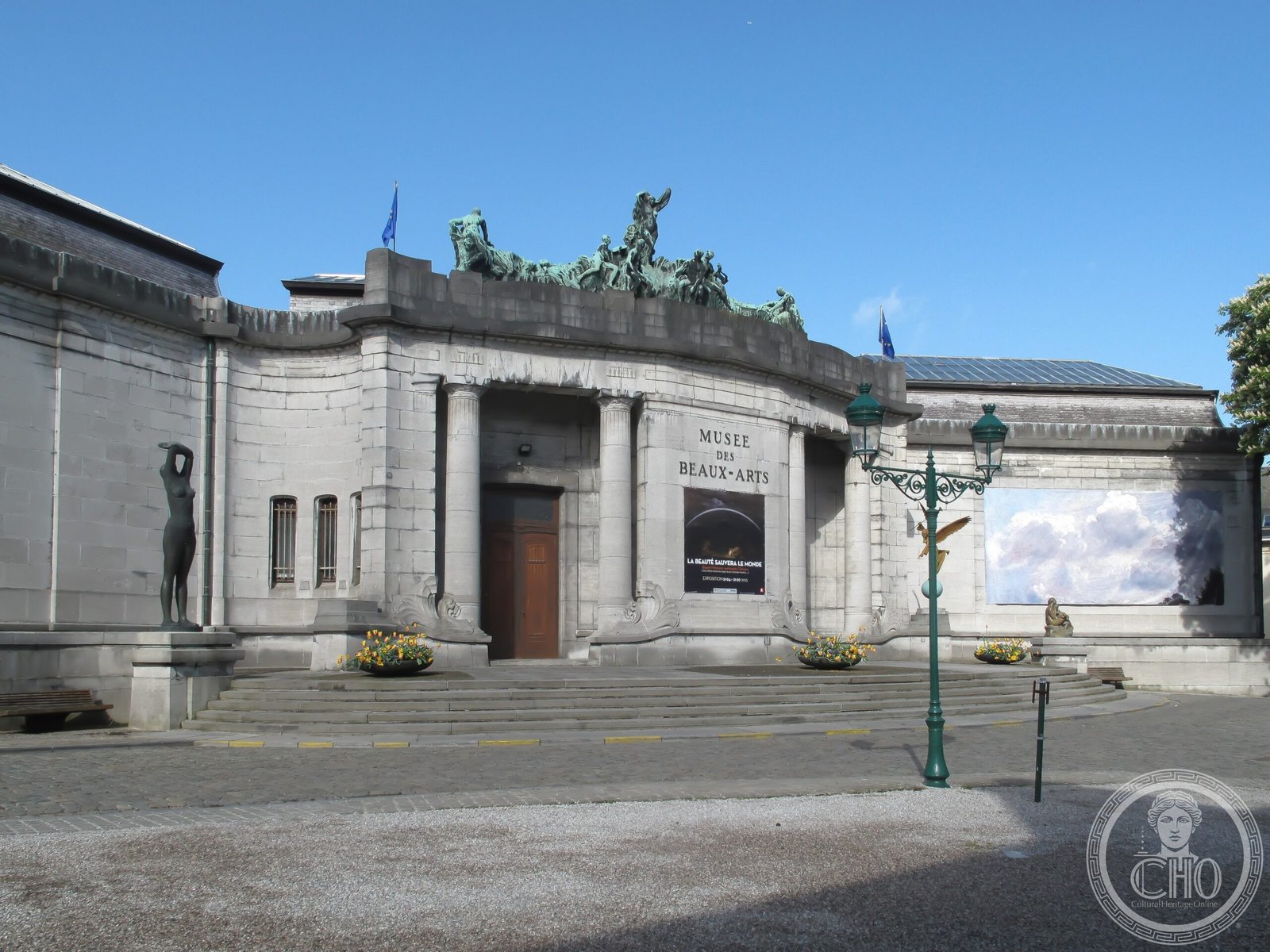
A masterwork of Art Deco design housing one of Belgium’s finest collections of 19th-century French painting.
At a glance
This art museum in Tournai opened in 1928 as a purpose-built home for the Van Cutsem collection—donated to the city in 1905—and the city’s own holdings. The building itself, designed by Belgian architect Victor Horta, exemplifies Art Deco principles through its elegant curved lines and streamlined forms.
History
In 1905, Henri Van Cutsem, a prominent Belgian collector, gifted his extraordinary art collection to Tournai. The donation sparked plans for a dedicated museum to house these treasures alongside works already owned by the city. Victor Horta, the celebrated architect of Belgian Art Nouveau, began drafting designs in his signature style, but the First World War halted progress. By the time construction resumed, Horta had reconsidered his approach, abandoning Art Nouveau’s organic forms for the geometric language of Art Deco. The building was completed and opened to the public in 1928.
What you see
Horta’s design distinguishes itself through gracefully curved volumes that soften the typically austere linearity of Art Deco. This softened modernism recalls his later work at Brussels Central Station. Clean lines, geometric proportions, and the interplay of light define the interior spaces—a refined setting for the collection’s masterpieces by Manet, Monet, Seurat, and other major 19th-century French painters.
Cultural significance
The museum represents a pivotal moment in Horta’s career, showcasing his evolution from pioneering Art Nouveau to embracing modernist principles. The Van Cutsem collection elevates Tournai’s cultural standing, offering provincial Belgium access to works by France’s most influential painters. The building itself is a landmark of early Belgian modernism.
Key facts
- Country: Belgium
- City: Tournai
- Opened: 1928
- Architect: Victor Horta
- Coordinates: 50.6028°N, 3.3856°E
Practical information & getting there
Tournai lies in southwestern Belgium, accessible by train and road from Brussels and other major cities. The museum is located in the city centre. For opening hours, admission fees, and current exhibitions, consult the museum’s official channels or local tourism information.
Sources & resources
Find it on the map
See this place and what’s around it →📷 Become a Cultural Heritage Online photographer
Share your photos of places: they stay published under your name as the author. The more they're seen, the more you get noticed — and soon a contest will reward the most appreciated photos.
Log in or sign up free to add a photoIs this page about you?
This page is read by travellers and heritage enthusiasts who find it on Google. Tell us how you are connected to this place and we will take it from there.