
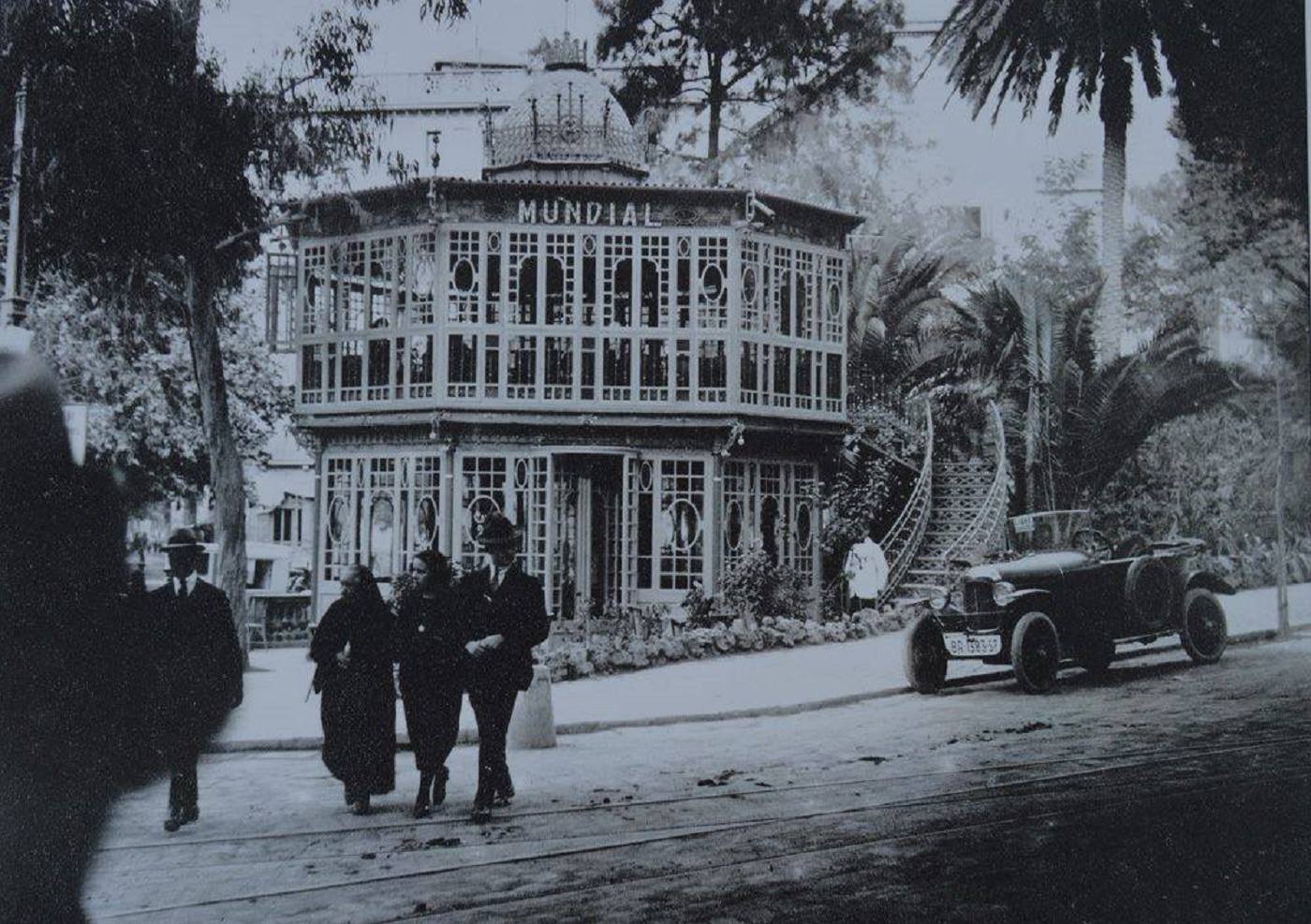
A celebrated Art Nouveau kiosk that graced Palma de Mallorca’s Plaça de la Reina before its demolition in 1949, the Mundial exemplified the artistic refinement of early modernist café culture in the Balearic Islands.
At a glance
The Mundial Kiosk was a small but architecturally distinguished structure in the Joan Alcover Gardens. Built in phases between 1900 and 1924, it served as a popular gathering place and chiringuito—a casual outdoor refreshment stand—in one of Palma’s central public squares.
History
Construction began at the opening of the 20th century. The kiosk underwent expansion in 1914 and received its definitive form in 1924, reflecting evolving tastes and the city’s growing urban vitality. Despite its cultural importance, the structure was demolished in 1949, removing a tangible record of Palma’s modernist heritage.
What you see
The Mundial exemplified Art Nouveau aesthetics, the style that dominated European design in the early 1900s. Its architectural character—combining ornamental elegance with functional design—made it a notable landmark in the Plaça de la Reina, though today it exists only in historical records and photographs.
Cultural significance
The kiosk represented the cosmopolitan aspirations of Palma during the early modernist period. As a public café and social hub, it embodied the city’s engagement with contemporary European design movements and the rituals of urban café society that defined Mediterranean towns in this era.
Key facts
- Location: Joan Alcover Gardens, Plaça de la Reina, Palma
- Country: Spain
- Coordinates: 39.5688, 2.6466
- Construction phases: Early 20th century, expanded 1914, completed 1924
- Demolished: 1949
Practical information & getting there
The site of the Mundial Kiosk is now part of the Joan Alcover Gardens in central Palma. While the original structure no longer stands, the location remains accessible as a public space. For architectural history and preservation efforts, consult local heritage resources in Palma de Mallorca.
Sources & resources
- Mundial Kiosk – Wikipedia
- Cultural Heritage Online
Find it on the map
See this place and what’s around it →📷 Become a Cultural Heritage Online photographer
Share your photos of places: they stay published under your name as the author. The more they're seen, the more you get noticed — and soon a contest will reward the most appreciated photos.
Log in or sign up free to add a photoIs this page about you?
This page is read by travellers and heritage enthusiasts who find it on Google. Tell us how you are connected to this place and we will take it from there.