

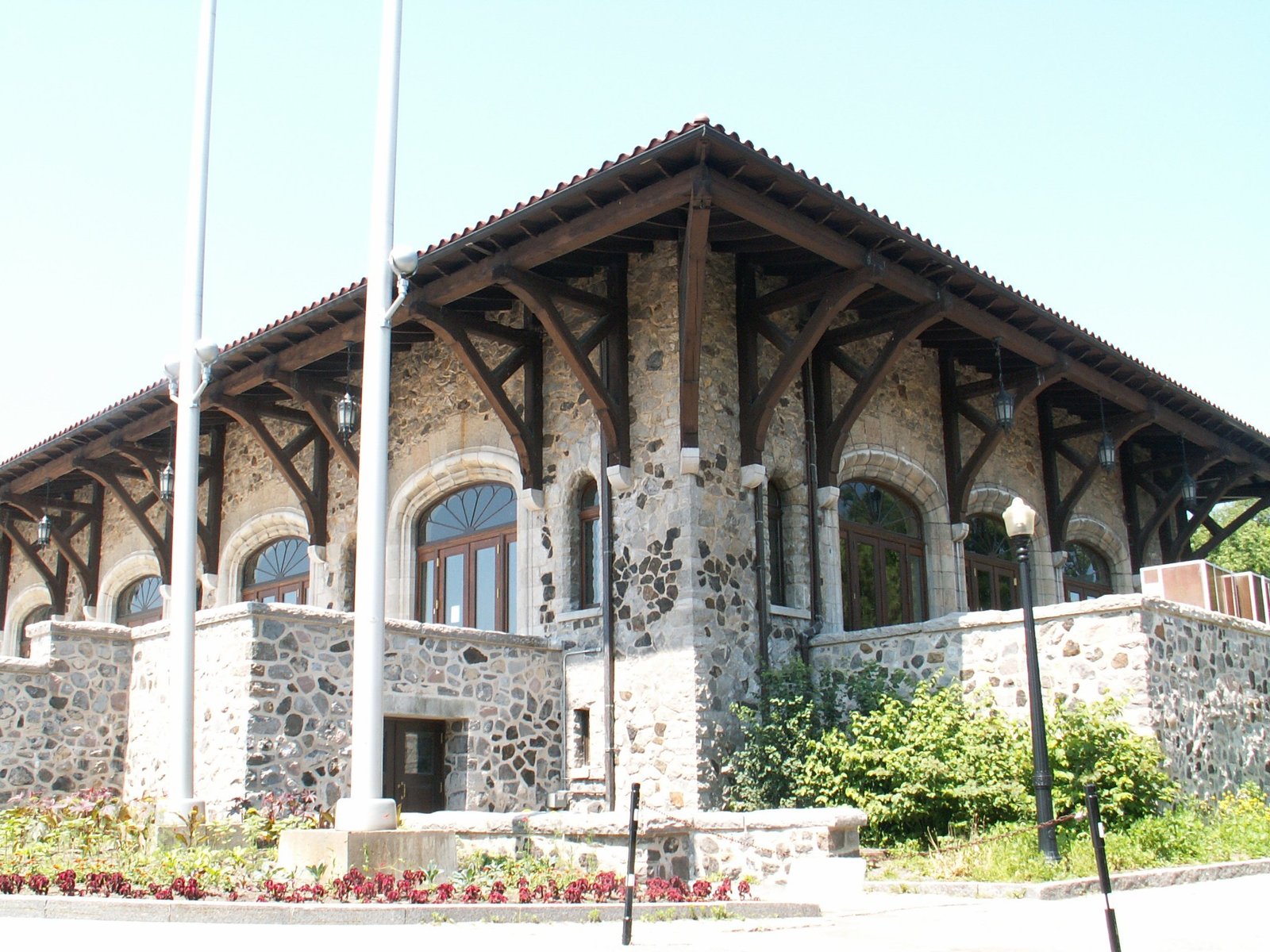
A French Beaux Arts pavilion built as Depression-era relief, commanding views of Montreal’s downtown from the city’s most iconic peak.
At a glance
Mount Royal Chalet is a public event venue perched near the summit of Mount Royal. The French Beaux Arts structure accommodates 300 to 700 patrons and serves as both a cultural gathering space and vantage point over the urban landscape.
History
The chalet was constructed in 1932 under Montreal mayor Camillien Houde as a make-work project during the Great Depression. Architect Aristide Beaugrand-Champagne (1876–1950) designed the structure, bringing refined Beaux Arts principles to the mountainside site.
What you see
The building exhibits the formal symmetry and decorative restrain characteristic of French Beaux Arts design. A bricked courtyard and lookout occupy the southern façade, framing unobstructed views across Montreal’s skyline and the St. Lawrence valley below.
Cultural significance
The chalet embodies Montreal’s commitment to public space and architectural heritage during economic hardship. It remains a gathering point for civic celebrations and a symbol of the city’s cultural identity, visible to residents and visitors across the metropolis.
Key facts
- Location: Near summit of Mount Royal, Montreal, Quebec, Canada
- Coordinates: 45.5039°N, 73.5876°W
- Completed: 1932
- Architect: Aristide Beaugrand-Champagne
- Style: French Beaux Arts
- Capacity: 300–700 patrons
Practical information & getting there
Mount Royal Chalet is accessible via the network of paths and steps leading to the summit of Mount Royal Park. The site welcomes visitors year-round; event scheduling and visiting hours can be confirmed through the City of Montreal Parks and Recreation department.
Sources & resources
Find it on the map
See this place and what’s around it →📷 Become a Cultural Heritage Online photographer
Share your photos of places: they stay published under your name as the author. The more they're seen, the more you get noticed — and soon a contest will reward the most appreciated photos.
Log in or sign up free to add a photoIs this page about you?
This page is read by travellers and heritage enthusiasts who find it on Google. Tell us how you are connected to this place and we will take it from there.