

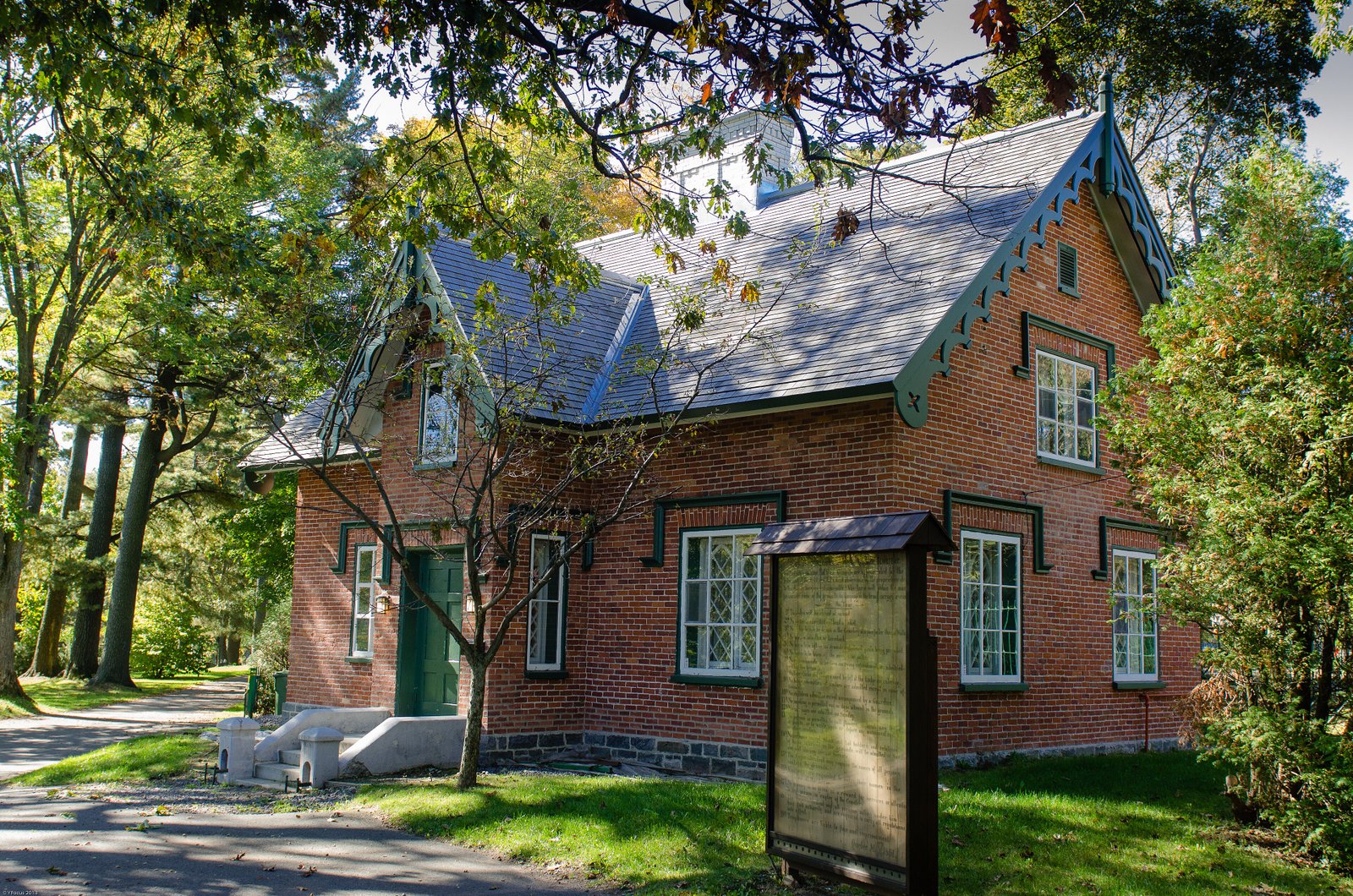
Canada’s first garden cemetery, Mount Hermon overlooks the Saint Lawrence River with memorials spanning two centuries of history, from shipwreck victims to immigrant communities.
At a glance
Mount Hermon Cemetery is an 11-hectare garden cemetery designated as a National Historic Site of Canada in 2007. Located in the Sillery district of Quebec City, it holds more than 17,000 burials and contains multiple community sections, historic memorials, and landscape features spanning nearly two centuries.
History
Established in the mid-1800s, Mount Hermon Cemetery was created to serve Quebec City’s English-speaking Protestant community, who lacked a dedicated burial ground. Drawing inspiration from Paris’s Père-Lachaise cemetery, it became the first garden cemetery established in Canada.
The cemetery gained additional significance following the 1914 sinking of the passenger ship Empress of Ireland. Both Mount Hermon and the neighbouring Saint-Patrick’s Cemetery absorbed a major portion of the victims. A memorial dedicated to these losses remains on the grounds.
The Treggett Bell, presented in 1865–2014 timeframe, honours the Treggett family, whose members served as superintendents across four generations.
What you see
The cemetery spans 0.042 square miles at the corner of Saint-Louis Road and côte de Sillery, positioned to overlook the Saint Lawrence River to the southeast. Its landscaped grounds feature paved roads (fully implemented by 2023) and designated sections for different communities and faiths.
Multiple memorials punctuate the landscape, most notably honouring the Empress of Ireland casualties. Dedicated sections serve Greek Orthodox, Chinese, and Cambodian communities, reflecting the cemetery’s evolution as a civic burial ground.
Cultural significance
Mount Hermon Cemetery represents a watershed moment in North American cemetery design. As Canada’s first garden cemetery, it introduced the romantic, landscaped burial ground model that departed from earlier urban churchyard traditions.
The cemetery documents major historical events—particularly the Empress of Ireland disaster—and reflects the multicultural composition of Quebec City through its dedicated community sections. Its recognition as a National Historic Site underscores its importance to Canadian heritage.
Key facts
- Location: Sillery district, Quebec City, Canada
- Size: 11 hectares (26 acres)
- Burials: More than 17,000
- Designated: National Historic Site of Canada, 2007
- Coordinates: 46.77851, −71.24657
- Notable memorials: Empress of Ireland victims (1914); Treggett Bell (1865–2014)
Practical information & getting there
The main entrance is at 1801 Saint-Louis Road at the cemetery’s northern end. A pedestrian entrance is located at the southwestern portion, accessed via the northern terminus of avenue des Voiliers, one block east of côte de Sillery.
The cemetery grounds are accessible via paved roads throughout, with one unpaved access to the Québec Promontory. Contact ahead for visiting hours and any restrictions on photography or specific sections.
Sources & resources
Find it on the map
See this place and what’s around it →📷 Become a Cultural Heritage Online photographer
Share your photos of places: they stay published under your name as the author. The more they're seen, the more you get noticed — and soon a contest will reward the most appreciated photos.
Log in or sign up free to add a photoIs this page about you?
This page is read by travellers and heritage enthusiasts who find it on Google. Tell us how you are connected to this place and we will take it from there.