
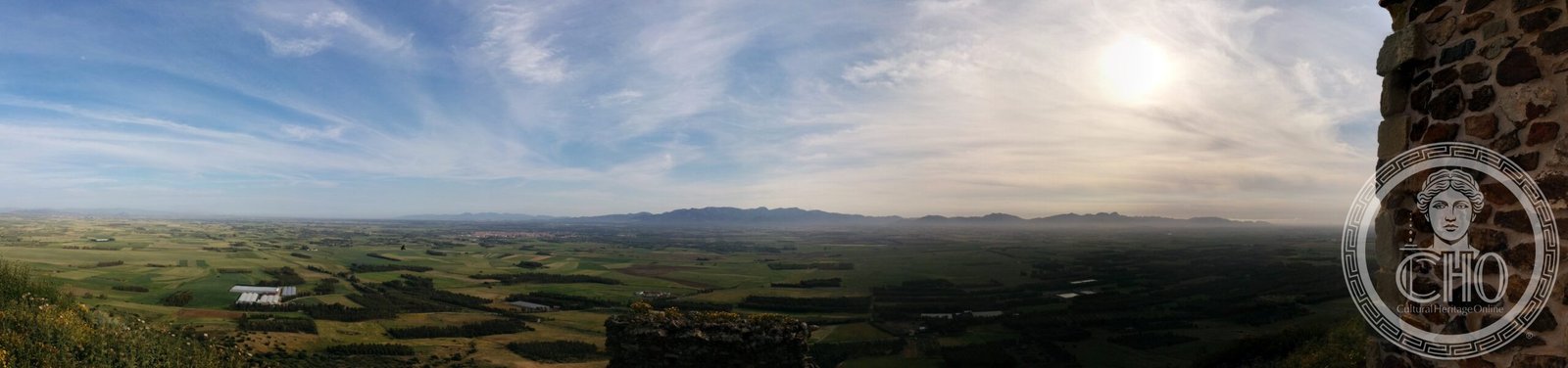
Monreale Castle is a medieval fortification situated near Sardara, in the Province of Medio Campidano in southern Sardinia. Perched on a hilltop overlooking the surrounding plains, the castle is one of several Sardinian strongholds that bear witness to the island’s layered history of Giudicato rule, Aragonese conquest, and feudal administration. Its strategic position made it a key point of control over the Campidano lowlands.
At a glance
- Type
- Medieval castle and fortification
- Period
- Medieval; associated with the Giudicato of Arborea and later Aragonese rule
- Style
- Medieval military architecture
- Location
- Near Sardara, Province of Medio Campidano, Sardinia, Italy
- Coordinates
- 39.5949° N, 8.7931° E
Overview
Monreale Castle stands on an elevated ridge near the town of Sardara, commanding broad views across the Campidano plain, the largest agricultural lowland of Sardinia. The site has been associated with settlement and fortification since the early medieval period, when Sardinia was divided among four independent Giudicati kingdoms. The castle’s name — Monreale, meaning “royal mountain” — reflects its administrative and symbolic importance to successive powers that controlled the island.
History
The castle’s origins are tied to the Giudicato period, during which Sardinia’s indigenous rulers built a network of fortifications to administer territory and resist external threats. Following the Aragonese consolidation of Sardinia in the 14th century, Monreale passed into feudal hands and was integrated into the new administrative order. Like many Sardinian castles, it was gradually abandoned as military technology and governance patterns shifted during the early modern period. The surviving ruins today represent centuries of layered occupation and strategic use of the elevated terrain.
What you see
Visitors to the site encounter the remnants of perimeter walls and towers that once formed the castle’s defensive circuit. The stonework reflects the vernacular military traditions of medieval Sardinia, using locally quarried material fitted without mortar in some sections. The hilltop location provides panoramic views of the Campidano valley below, giving a clear sense of why this spot was chosen for fortification. Vegetation has partially reclaimed sections of the ruins, adding to the site’s atmospheric quality.
Cultural significance
Monreale Castle is part of the dense network of medieval fortifications that define the historical landscape of the Campidano region. Its ruins contribute to the understanding of Sardinia’s pre-Aragonese and Aragonese-era political geography, representing the transition from Giudicato autonomy to mainland feudal control. The site is valued locally as a marker of Sardinian medieval identity and landscape heritage.
Practical information
- Address
- Near Sardara, Province of Medio Campidano, Sardinia
- Access
- Outdoor ruins; check local signage for access paths
Getting there
Sardara is accessible by car from Cagliari via the SS131 highway (approximately 50 km northwest). Local roads connect Sardara to the castle site on the hilltop above the town. There is no direct public transport to the ruins; visitors should drive and follow local signage from the town centre of Sardara.
Sources & resources
See the place
Find it on the map
See this place and what’s around it →📷 Become a Cultural Heritage Online photographer
Share your photos of places: they stay published under your name as the author. The more they're seen, the more you get noticed — and soon a contest will reward the most appreciated photos.
Log in or sign up free to add a photoIs this page about you?
This page is read by travellers and heritage enthusiasts who find it on Google. Tell us how you are connected to this place and we will take it from there.