
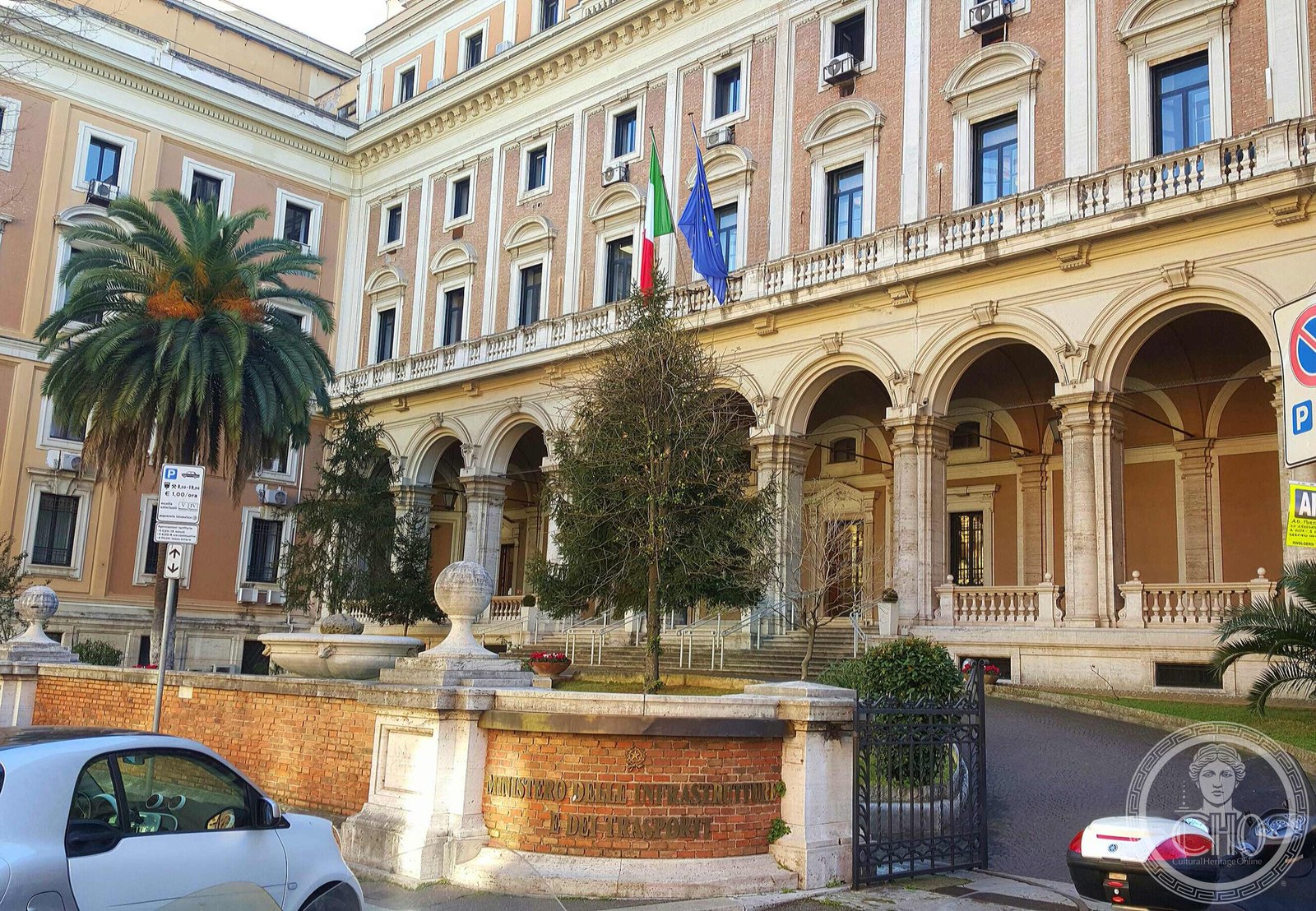
A twentieth-century administrative building completed in Rome during the Fascist era, the Ministry of Infrastructure and Transport stands as a functional civic structure on Via Nomentana.
At a glance
The Ministry of Infrastructure and Transport is a government office building constructed in 1925. Designed by an architect whose name remains unrecorded, it represents the administrative architecture of interwar Rome.
History
Completed in 1925, the building was erected during a period of significant institutional expansion in Rome. The ministry’s construction reflects the infrastructure and governance priorities of early twentieth-century Italy.
What you see
The structure embodies the functional design principles typical of Italian administrative buildings from this period. Its location on Via Nomentana positions it within Rome’s broader urban planning framework of the era.
Cultural significance
As a government building from 1925, the Ministry of Infrastructure and Transport documents the architectural conventions of its time. It contributes to Rome’s layered urban fabric, spanning republican, imperial, medieval, renaissance, and modern periods.
Key facts
- Built: 1925
- Address: Via Nomentana, 2, Roma
- Coordinates: 41.9097455, 12.5029713
- Phone: +39 06 44121
- Website: http://wwwmit.gov.it
Practical information
Access and visiting hours depend on official government protocols. Contact the ministry directly or consult their official website for current operational details.
Getting there
The building is located on Via Nomentana in the north-central portion of Rome. Public transport and taxi services serve this area; consult local transit maps for routes to the ministry.
See the place
Sources & resources
Find it on the map
See this place and what’s around it →📷 Become a Cultural Heritage Online photographer
Share your photos of places: they stay published under your name as the author. The more they're seen, the more you get noticed — and soon a contest will reward the most appreciated photos.
Log in or sign up free to add a photoIs this page about you?
This page is read by travellers and heritage enthusiasts who find it on Google. Tell us how you are connected to this place and we will take it from there.