
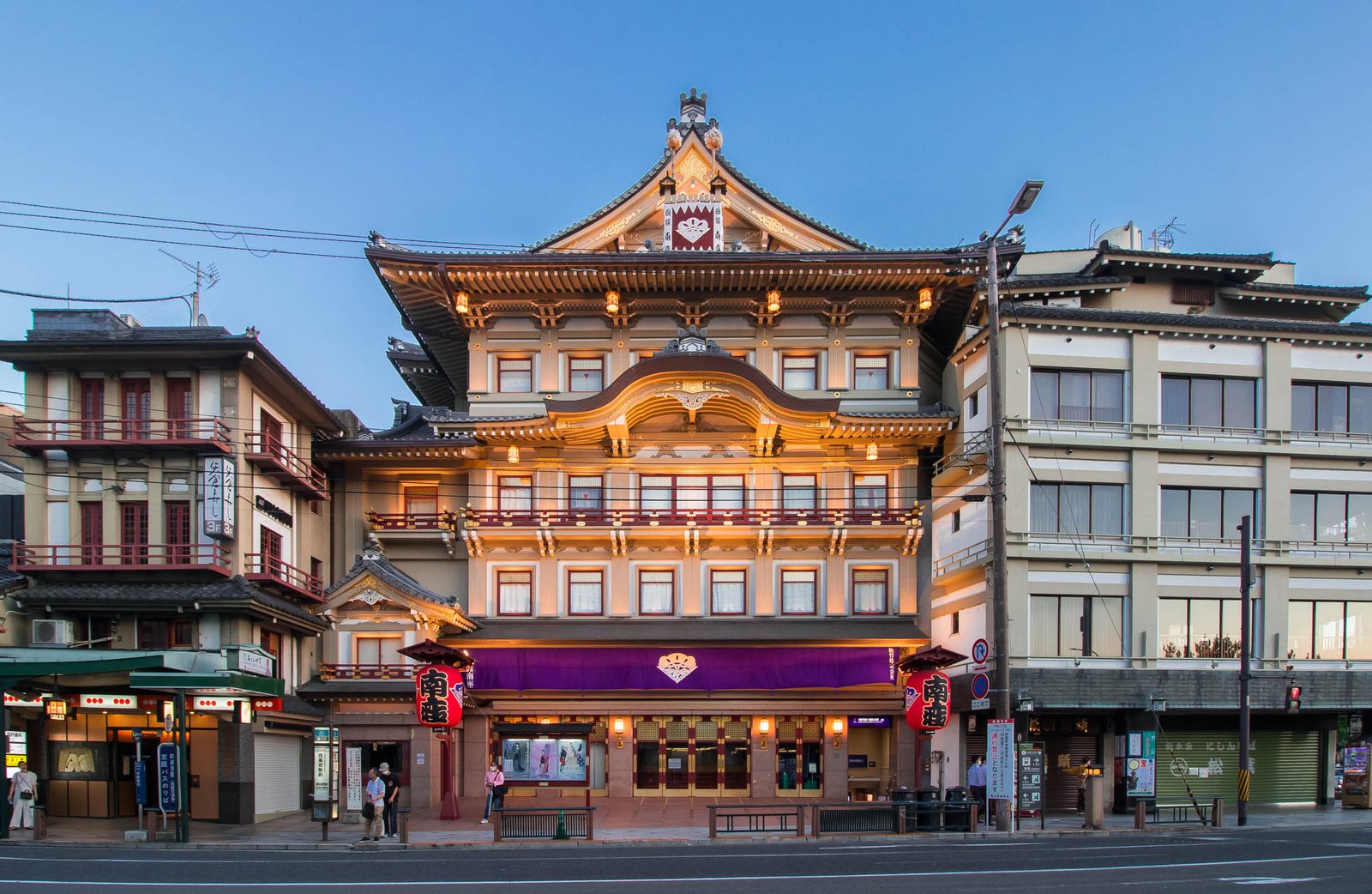
Kyoto’s principal kabuki theatre, where four centuries of performance tradition converge in an early modernist auditorium.
At a glance
Minami-za is Japan’s oldest continuously operating kabuki theatre. The current structure dates to 1929 and seats 1,086 patrons in an intimate setting designed for the refined aesthetics of classical Japanese drama.
History
Founded in 1610 as Shijō Minami-za, the theatre emerged during the golden age of kabuki’s development. It has remained Kyoto’s primary venue for the art form across four centuries. The present building replaced earlier structures, anchoring the theatre’s continuity through architectural renewal in 1929.
What you see
The 1929 building represents an early twentieth-century approach to theatre design, marrying functional modernism with the spatial requirements of kabuki performance. Its 1,086-seat capacity balances accessibility with the intimate scale essential to this demanding art form, where actors’ expressions and movement—not amplification—carry meaning across the auditorium.
Cultural significance
Minami-za embodies Kyoto’s role as Japan’s cultural heart. Kabuki itself—with its elaborate costumes, stylized movement, and all-male casts—represents centuries of refinement in Japanese theatrical tradition. The theatre’s longevity testifies to kabuki’s enduring resonance in Japanese cultural life.
Key facts
- Country: Japan
- City: Kyoto
- Founded: 1610
- Current building: 1929
- Seating capacity: 1,086
- Coordinates: 35.003518, 135.772305
Practical information & getting there
Minami-za is located in Kyoto’s theatre district along the Kamogawa River. For current performance schedules, ticket information, and access details, consult the theatre directly or official Kyoto tourism resources.
Sources & resources
Find it on the map
See this place and what’s around it →📷 Become a Cultural Heritage Online photographer
Share your photos of places: they stay published under your name as the author. The more they're seen, the more you get noticed — and soon a contest will reward the most appreciated photos.
Log in or sign up free to add a photoIs this page about you?
This page is read by travellers and heritage enthusiasts who find it on Google. Tell us how you are connected to this place and we will take it from there.