
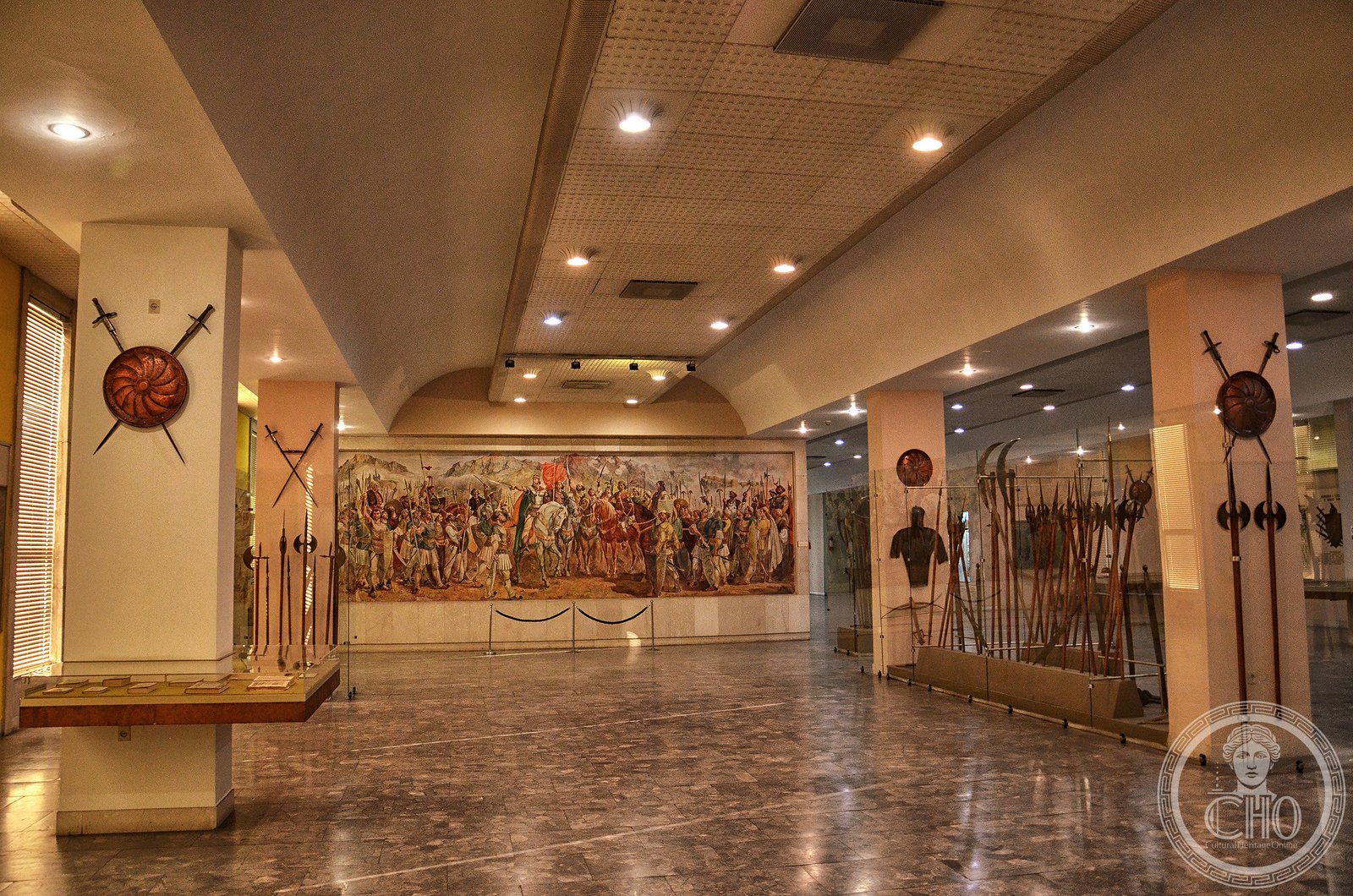
The National History Museum of Albania (Albanian: Muzeu Historik Kombëtar, MHK) is the largest museum in Albania and one of the most important cultural institutions in the Western Balkans. Situated on Skanderbeg Square in central Tirana, it was inaugurated on 28 October 1981, the fortieth anniversary of the founding of the Albanian Party of Labour, and covers 27,000 square metres of which 18,000 square metres are dedicated to permanent and temporary exhibitions. The museum’s facade is dominated by a large socialist-realist mosaic depicting Albanian national heroes from antiquity to the communist era.
At a glance
- Type
- National history museum
- Period
- Opened 28 October 1981; collections span Palaeolithic to 20th century
- Style
- Socialist modernism; notable facade mosaic
- Location
- Sheshi Skënderbej (Skanderbeg Square), Tirana, Albania
- Coordinates
- 41.3294° N, 19.8152° E
Overview
The National History Museum is the custodian of Albania’s official historical narrative, holding the country’s most comprehensive collections of archaeological, medieval, ethnographic and 20th-century material culture. Its eight permanent pavilions lead visitors from Palaeolithic prehistory through the Illyrian kingdoms, Roman occupation, Byzantine and Ottoman periods, the Albanian national renaissance (Rilindja) of the 19th century, independence in 1912, World War II resistance, and the communist period. The museum is also the main venue for significant temporary exhibitions on Albanian and regional Balkan heritage.
History
Albania’s first national museum was established in Korçë in 1934. The institution was relocated and reorganised several times during the communist period under Enver Hoxha, with the purpose-built Tirana headquarters inaugurated in 1981 as a flagship cultural project of the regime’s fortieth anniversary celebrations. The facade mosaic, covering approximately 1,200 square metres, was created collectively by Albanian artists under state commission and depicts scenes from Albanian history culminating in communist liberation — making it one of the largest surviving examples of socialist-realist public art in the region. After the fall of communism in 1991–1992, the museum underwent gradual reinterpretation of its collections and narratives.
What you see
The permanent collection is organised across eight thematic pavilions. The archaeology halls display Illyrian gold jewellery, Greek colonial pottery from Apollonia and Butrint, Roman-period inscriptions and mosaics. The medieval pavilion covers the Arbër principalities and the resistance of George Castriot Skanderbeg against the Ottoman advance in the 15th century, with original armour, manuscripts and ecclesiastical silver. Ethnographic rooms hold traditional regional costumes, domestic utensils and folk art from across the Albanian-speaking world. The 20th-century pavilion addresses independence, the two world wars and the communist decades, though the treatment of the latter has been progressively revised since 1991. The facade mosaic itself is visible from Skanderbeg Square and is a major photographic landmark.
Cultural significance
For Albanians, the MHK functions as a secular temple of national identity, institutionalising a continuous historical narrative from Illyrian antiquity to the present. For international visitors, it offers an essential entry point into a history often marginalised in Western European cultural discourse. The building’s socialist-realist mosaic facade has itself become an object of heritage interest, representing one of the last major surviving ensembles of this publicly commissioned art form in the Balkans.
Practical information
- Address
- Sheshi Skënderbej, Tirana, Albania
- Opening hours
- Tuesday–Sunday, typically 09:00–17:00; closed Monday — check official website for current hours
- Admission
- Check official website for current rates; reduced admission for students and children
Getting there
The museum is on Skanderbeg Square in central Tirana, within easy walking distance of all major hotels in the city centre. Tirana’s urban bus network serves the square; the museum is approximately 30 minutes by taxi from Tirana International Airport Nënë Tereza. No dedicated car park is on site; limited street parking is available on adjacent streets. The square itself is pedestrianised and accessible to all visitors.
Sources & resources
See the place
Find it on the map
See this place and what’s around it →📷 Become a Cultural Heritage Online photographer
Share your photos of places: they stay published under your name as the author. The more they're seen, the more you get noticed — and soon a contest will reward the most appreciated photos.
Log in or sign up free to add a photo