

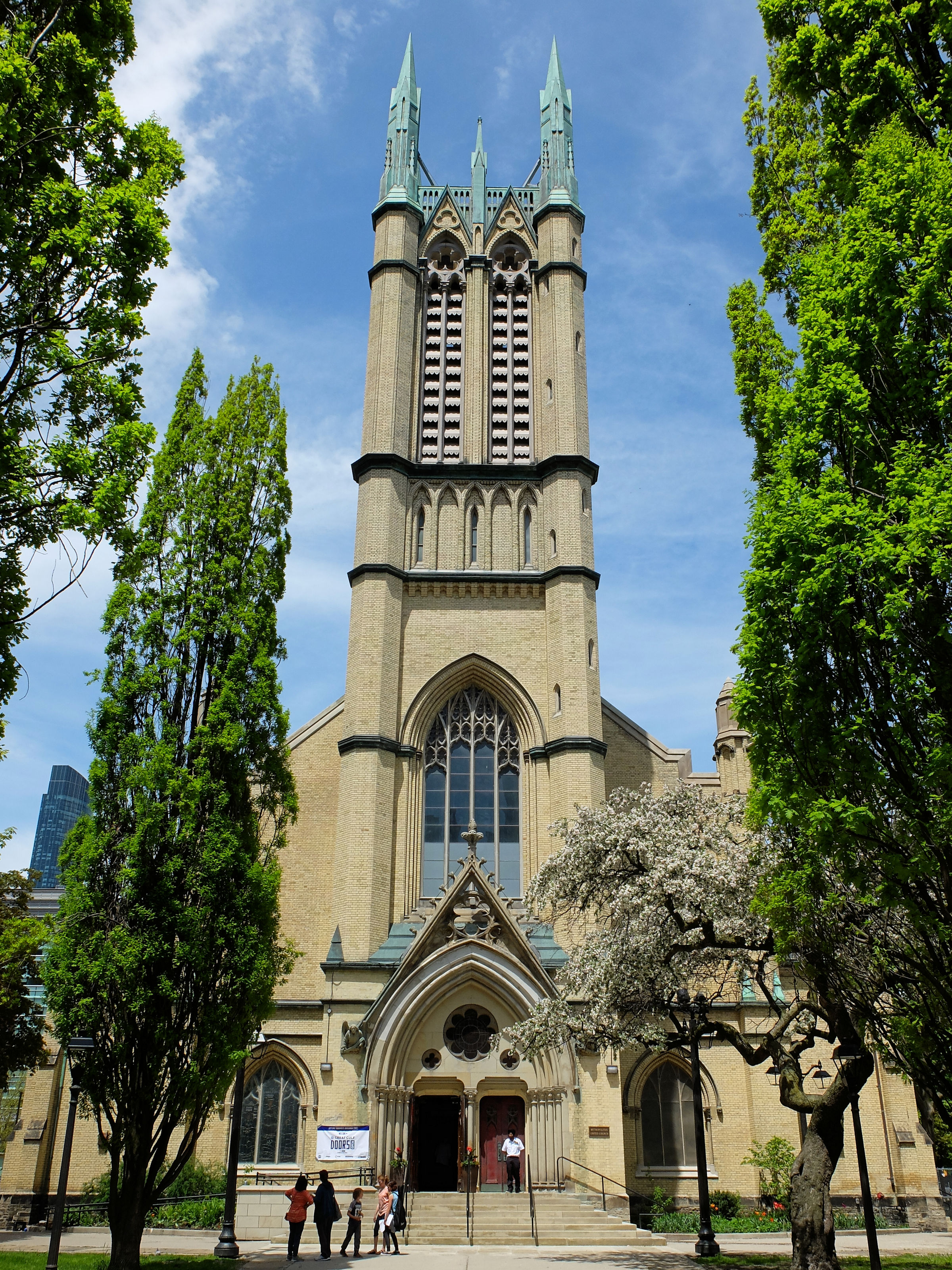
A landmark Neo-Gothic church anchoring Toronto’s downtown core, Metropolitan United Church stands as one of Canada’s most significant religious buildings and a defining monument to 19th-century urban faith.
At a glance
Metropolitan United Church dominates its corner of Queen Street East in Toronto’s Garden District. The structure exemplifies Neo-Gothic architecture and serves as one of the largest and most prominent churches of the United Church of Canada. Its scale and prominence reflect both architectural ambition and deep community roots.
History
The church emerged from Toronto’s 19th-century religious and civic life. It became a focal point for the Methodist and later United Church communities. The building’s enduring presence in downtown Toronto speaks to the city’s evolving spiritual landscape and the permanence these institutions sought to establish.
What you see
The church displays confident Neo-Gothic design. Characteristic pointed arches, vertical emphasis, and ornamental detailing define its exterior. Its substantial massing and prominent location between Bond and Church streets make it a navigational landmark as well as an architectural statement on the urban streetscape.
Cultural significance
Metropolitan United Church represents institutional Christianity’s central role in Canadian urban development. As one of the country’s largest United Church buildings, it embodies the denomination’s growth and influence. The church remains an active spiritual center and architectural testament to Toronto’s 19th-century character.
Key facts
- Location: 56 Queen Street East, Toronto, Ontario, Canada
- Coordinates: 43.654, -79.3767
- Architectural style: Neo-Gothic
- Denomination: United Church of Canada
Practical information & getting there
The church sits in downtown Toronto’s Garden District, easily accessible by public transit and foot. Its Queen Street East location places it within Toronto’s historic core. Consult the church’s official website or contact them directly for visiting hours, services, and any tour availability.
A fire in 1928 destroyed most of the building; the bell tower survived only because it stood free of the church itself.
Sources & resources
Find it on the map
See this place and what’s around it →📷 Become a Cultural Heritage Online photographer
Share your photos of places: they stay published under your name as the author. The more they're seen, the more you get noticed — and soon a contest will reward the most appreciated photos.
Log in or sign up free to add a photoIs this page about you?
This page is read by travellers and heritage enthusiasts who find it on Google. Tell us how you are connected to this place and we will take it from there.
This entry stays online and free either way — and a free account lets you add to it yourself.