
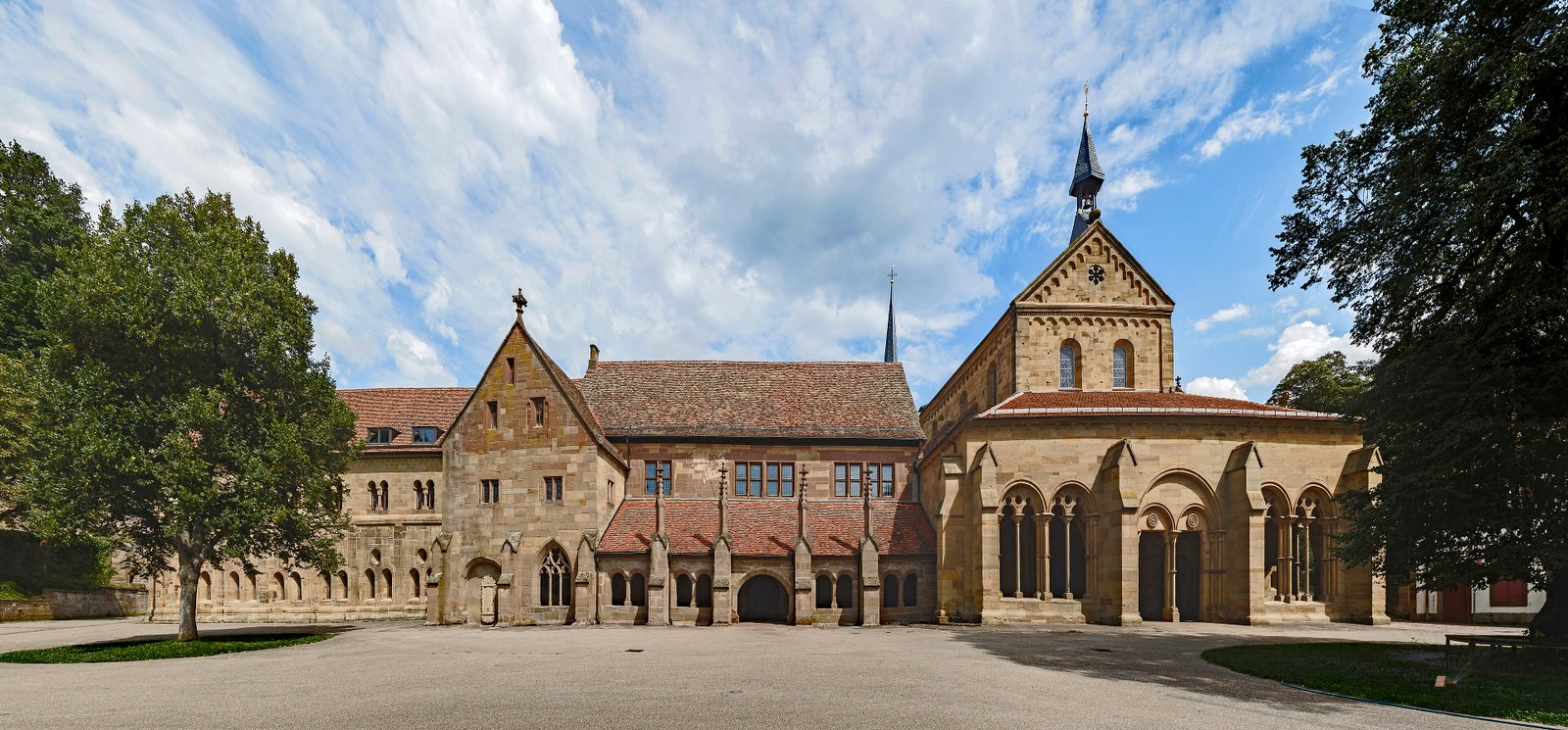
One of Europe’s finest preserved monastic complexes, this former Cistercian abbey evolved from spiritual centre to administrative stronghold, and now houses a seminary and boarding school within its medieval walls.
At a glance
Maulbronn Monastery stands as a remarkable survivor of medieval religious architecture in Baden-Württemberg. Its walled complex, complete with turreted fortifications and a tower gate, represents the transition from monastic to civic life across five centuries.
History
Founded in 1147, the monastery flourished during the 12th century as a centre of Cistercian discipline and economic enterprise. The late 13th and 14th centuries brought hardship, but recovery came in the 15th century—a prosperity sustained until 1504, when the Duchy of Württemberg annexed the abbey.
The Reformation transformed Maulbronn’s purpose. Over the 16th century the Cistercian community dissolved, replaced by a Protestant seminary. The complex became an administrative seat for the Duchy and later the Kingdom of Württemberg, blending spiritual and secular functions within its medieval envelope.
What you see
The monastery complex retains its defensive medieval character—turreted walls and a fortified tower gate frame the entire ensemble. The architecture embodies Cistercian principles of austere functionality, yet the structures adapted over centuries to accommodate both monastic life and administrative governance.
Cultural significance
Maulbronn exemplifies the pivotal role monastic institutions played in European spiritual, economic and political life. Its preservation illustrates how sacred spaces evolved to serve reformed faiths and secular authority, while maintaining architectural continuity across radical historical change.
Key facts
- Country: Germany
- Region: Baden-Württemberg
- Founded: 1147
- Coordinates: 49.0011, 8.8128
- UNESCO World Heritage Site: yes (inscribed 1993)
Practical information & getting there
Today the monastery complex houses Maulbronn’s town hall and administrative offices, a police station, an Evangelical seminary and a boarding school. The site remains an active institutional centre while welcoming cultural visitors to experience its architectural heritage.
Sources & resources
Find it on the map
See this place and what’s around it →📷 Become a Cultural Heritage Online photographer
Share your photos of places: they stay published under your name as the author. The more they're seen, the more you get noticed — and soon a contest will reward the most appreciated photos.
Log in or sign up free to add a photoIs this page about you?
This page is read by travellers and heritage enthusiasts who find it on Google. Tell us how you are connected to this place and we will take it from there.