
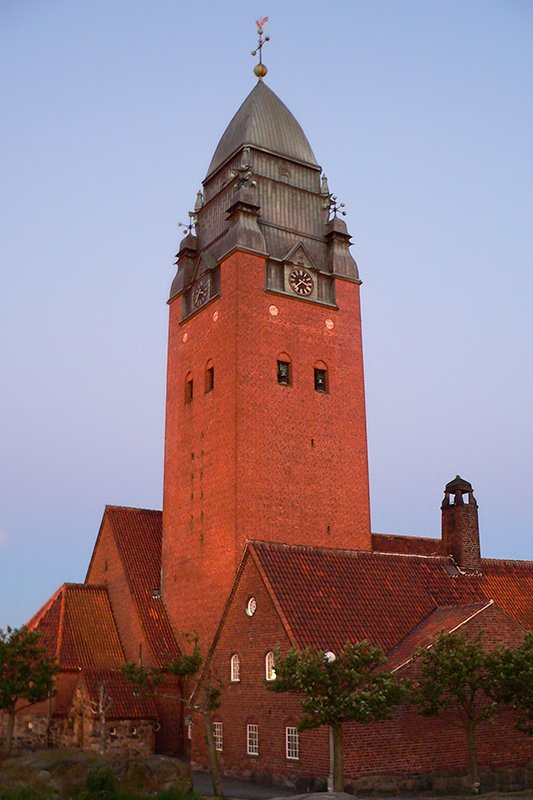
Crowning a high hill above Gothenburg’s Göta älv, this National Romantic landmark rises 60 metres and has become an iconic symbol of the city.
At a glance
Masthugg Church commands attention from across Gothenburg. Perched on Masthugget, a prominent elevation near the river, its tower dominates the skyline. Built in 1914, it exemplifies Nordic National Romanticism—a style that drew on regional character and historical forms to forge modern identity.
History
Completed in 1914, Masthugg Church emerged during a period of architectural confidence in Sweden. The design reflected ambitions to create distinctly Nordic monuments, moving beyond historicism toward a more expressive modernism rooted in Scandinavian tradition and landscape.
What you see
Architect Sigfrid Ericson designed a structure that exploits its dramatic site. The church tower, 60 metres high, serves both spiritual and civic purposes—a vertical accent visible from the harbour and across the city. The building’s massing and detailing embody National Romantic principles: honest materials, vertical emphasis, and integration with the natural topography.
Cultural significance
Masthugg Church transcends its religious function to stand as a civic monument. Its tower is inseparable from Gothenburg’s identity, appearing in countless photographs and navigational landmarks. The building demonstrates how early-twentieth-century Scandinavian architects used ecclesiastical commissions to advance a modern yet culturally rooted aesthetic.
Key facts
- Country: Sweden
- City: Gothenburg Municipality
- Completed: 1914
- Architect: Sigfrid Ericson
- Tower height: 60 metres (200 feet)
- Style: National Romantic
- Coordinates: 57.6972, 11.9375
Practical information & getting there
The church is readily accessible by public transport within Gothenburg. Its elevated position makes it visible from many parts of the city; the climb to the site rewards visitors with panoramic views across the harbour and surrounding neighbourhoods.
Sources & resources
Find it on the map
See this place and what’s around it →📷 Become a Cultural Heritage Online photographer
Share your photos of places: they stay published under your name as the author. The more they're seen, the more you get noticed — and soon a contest will reward the most appreciated photos.
Log in or sign up free to add a photoIs this page about you?
This page is read by travellers and heritage enthusiasts who find it on Google. Tell us how you are connected to this place and we will take it from there.