
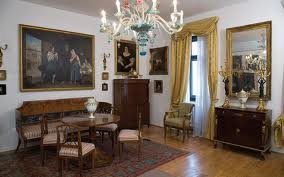
Croatia’s first private museum, housing a distinguished collection of 18th and 19th century European applied art assembled by its founder Veljko Marton.
At a glance
The Marton Museum stands as a pioneering institution in Croatian cultural life—the nation’s first privately established museum. Its carefully curated holdings span two centuries of European decorative arts, offering insight into the refined taste and aesthetic sensibilities of the period.
History
The museum was founded by Veljko Marton, whose personal collection forms the foundation of the institution. This private initiative marked a significant moment in Croatia’s museum landscape, establishing a model for collecting and preservation outside state institutions.
What you see
The museum’s interior preserves a domestic setting appropriate to its origins as a private collection. The arrangement of objects reflects both scholarly curatorial practice and the intimate context of the collector’s own environment.
Cultural significance
As Croatia’s first private museum, the Marton Museum represents an important precedent in the country’s cultural heritage infrastructure. Its focus on European applied arts—furniture, decorative objects, and functional beauty—demonstrates how taste and craftsmanship circulated across the continent during the 18th and 19th centuries, revealing connections between Zagreb and broader European artistic traditions.
Key facts
- Country: Croatia
- Location: Zagreb
- Coordinates: 45.8002264, 15.709505
- Distinction: Croatia’s first private museum
- Focus: 18th and 19th century European applied art
- Founder: Veljko Marton
Practical information & getting there
For current visiting hours, admission fees, and guided tour availability, consult the museum’s official channels or contact Zagreb’s tourism office. The museum is centrally located in Zagreb’s historic core.
Sources & resources
- Marton Museum – Wikipedia
- Cultural Heritage Online
Find it on the map
See this place and what’s around it →📷 Become a Cultural Heritage Online photographer
Share your photos of places: they stay published under your name as the author. The more they're seen, the more you get noticed — and soon a contest will reward the most appreciated photos.
Log in or sign up free to add a photoIs this page about you?
This page is read by travellers and heritage enthusiasts who find it on Google. Tell us how you are connected to this place and we will take it from there.