
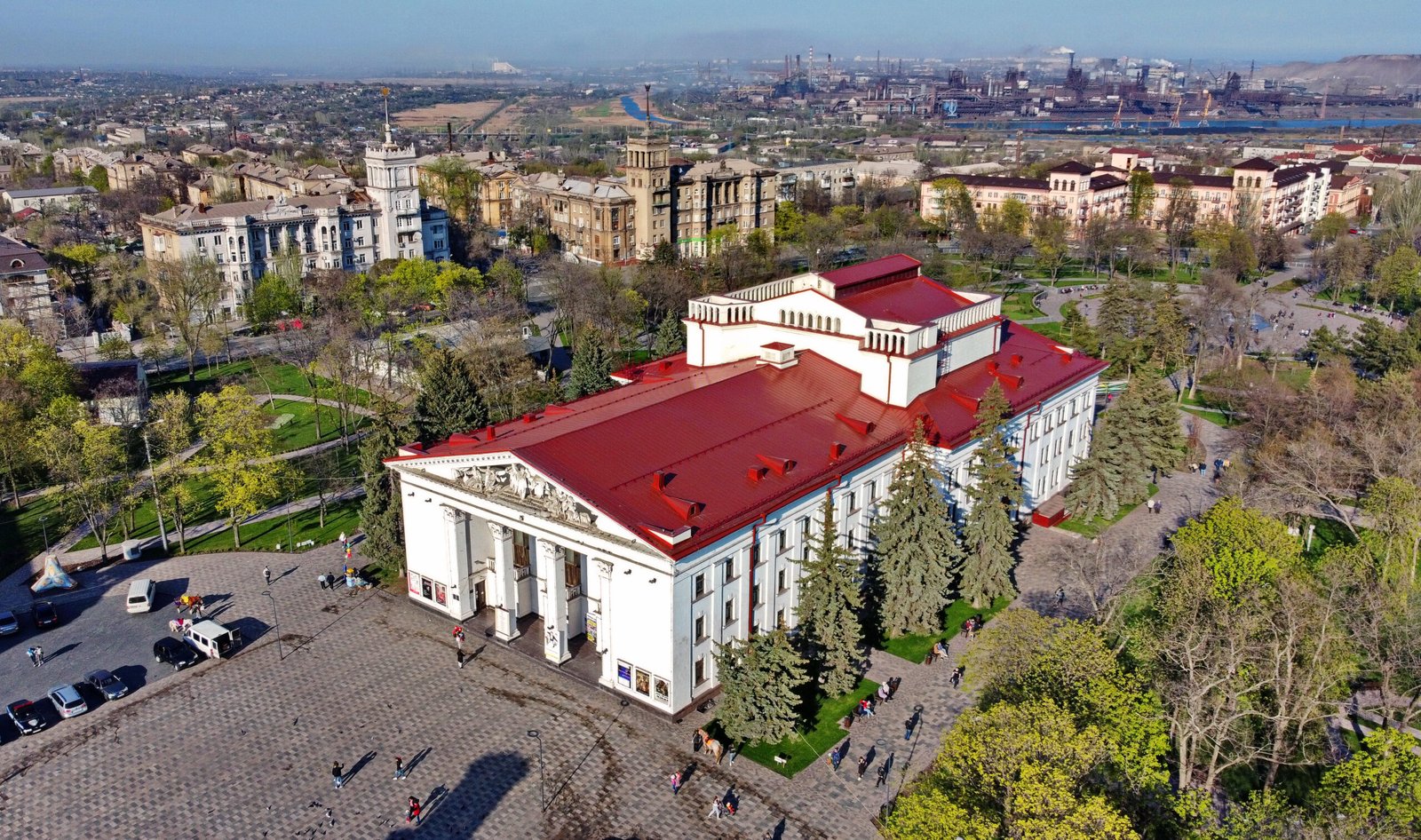
A modernist theatre built on the site of a demolished 19th-century church, severely damaged in 2022 and controversially restored under occupation.
At a glance
Mariupol Drama Theatre stands in southern Ukraine as both a cultural monument and a contested symbol of recent conflict. Originally constructed in 1960, it occupies the approximate location of the former Church of Mary Magdalene. The building received academic status in November 2007, elevating its institutional standing.
History
The theatre was built during the Soviet era in 1960, replacing a religious structure. For decades it served as a regional cultural institution until it became an academic theatre in 2007. On 16 March 2022, during the Russian invasion of Ukraine, the building sustained catastrophic damage from military airstrikes. The attack killed at least a dozen to over 600 people and was widely characterized as a war crime.
Restoration commenced in 2023 while Mariupol remained under Russian occupation. Work concluded in November 2025, followed by a December reopening. The reconstruction process attracted criticism from Ukrainian municipal authorities and former theatre performers.
What you see
The theatre represents Soviet-era modernist design from the 1960s. Limited architectural details from the source prevent fuller description of its original design features and interior spaces.
Cultural significance
The theatre remains a focal point of Mariupol’s cultural identity and a powerful symbol of the city’s experience during the 2022 Russian invasion. Its reconstruction under occupation and subsequent reopening have made it a contested site—representing both resilience and the complexities of restoration during ongoing conflict.
Key facts
- Location: Mariupol, Ukraine (47.0961°N, 37.5486°E)
- Built: 1960
- Granted academic status: November 2007
- Severely damaged: 16 March 2022
- Restoration completed: November 2025
Practical information & getting there
Mariupol is located in the Donetsk region of southeastern Ukraine. The theatre’s current operational status and visiting conditions should be verified locally, given the ongoing situation in the region.
Sources & resources
Find it on the map
See this place and what’s around it →📷 Become a Cultural Heritage Online photographer
Share your photos of places: they stay published under your name as the author. The more they're seen, the more you get noticed — and soon a contest will reward the most appreciated photos.
Log in or sign up free to add a photoIs this page about you?
This page is read by travellers and heritage enthusiasts who find it on Google. Tell us how you are connected to this place and we will take it from there.