
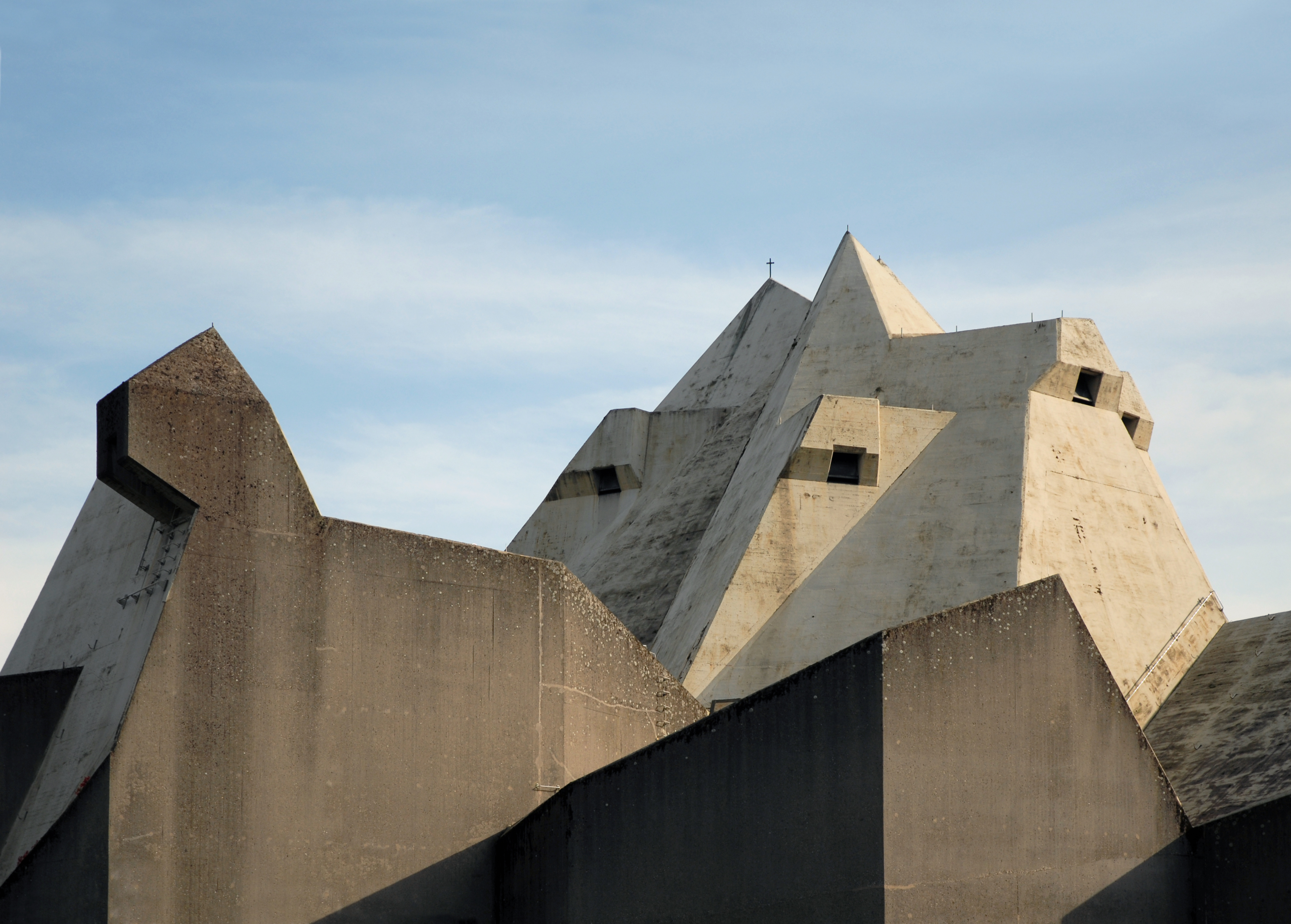
A pilgrimage church in brutalist concrete, designed by Gottfried Böhm and consecrated in 1968, stands as one of the most significant ecclesiastical structures of 20th-century Europe.
At a glance
Maria, Königin des Friedens—Mary, Queen of Peace—is the second largest church in the Diocese of Cologne and the second largest church north of the Alps. Its striking brutalist design, conceived as a radically modern response to Vatican II reform, has made it an architectural landmark and pilgrimage destination for over five decades.
History
The pilgrimage tradition at Neviges dates to 1676. A Franciscan monastery, established nearby in 1675, supported the growing devotion to Mary. By the 18th century, a church dedicated to the Immaculate Conception (completed in 1728) served the faithful, but it soon proved inadequate as pilgrim numbers surged in the 20th century.
Cardinal Josef Frings of Cologne, inspired by the Second Vatican Council’s spirit of renewal, embraced the opportunity for architectural innovation. He commissioned Gottfried Böhm, whose design in brutalist concrete won immediate approval. The new structure was consecrated in 1968, fundamentally transforming the pilgrimage site.
What you see
Böhm’s design defies conventional church architecture. An irregular, dramatic roof and fortress-like concrete envelope give the exterior its distinctive presence. The interior, conceived as a vast forum rather than a traditional nave, creates an unprecedented sense of communal space and light.
The brutalist vocabulary—massive poured concrete, bold geometric forms, and sculptural massing—became Böhm’s signature. This building exemplifies his visionary approach to sacred space in the modern era.
Cultural significance
Maria, Königin des Friedens represents a pivotal moment in post-conciliar Catholic architecture. Rather than imitate historical styles, Böhm created an entirely contemporary language for pilgrimage worship. The church is now recognised as one of the foremost “spatial creations” in 20th-century architecture, influencing generations of ecclesiastical design. It validates concrete and brutalism as materials worthy of the sacred.
Key facts
- Country: Germany
- City: Velbert, North Rhine-Westphalia
- Coordinates: 51.31277778, 7.0875
- Architect: Gottfried Böhm
- Consecrated: 1968
- Pilgrimage tradition: since 1676
- UNESCO status: Not listed
Practical information & getting there
The church remains an active pilgrimage site and parish. It is located in Neviges, part of Velbert in the Ruhr region. For visiting hours, liturgical schedules, and access information, contact the parish directly or consult local tourism resources for Velbert.
Sources & resources
Find it on the map
See this place and what’s around it →📷 Become a Cultural Heritage Online photographer
Share your photos of places: they stay published under your name as the author. The more they're seen, the more you get noticed — and soon a contest will reward the most appreciated photos.
Log in or sign up free to add a photoIs this page about you?
This page is read by travellers and heritage enthusiasts who find it on Google. Tell us how you are connected to this place and we will take it from there.