
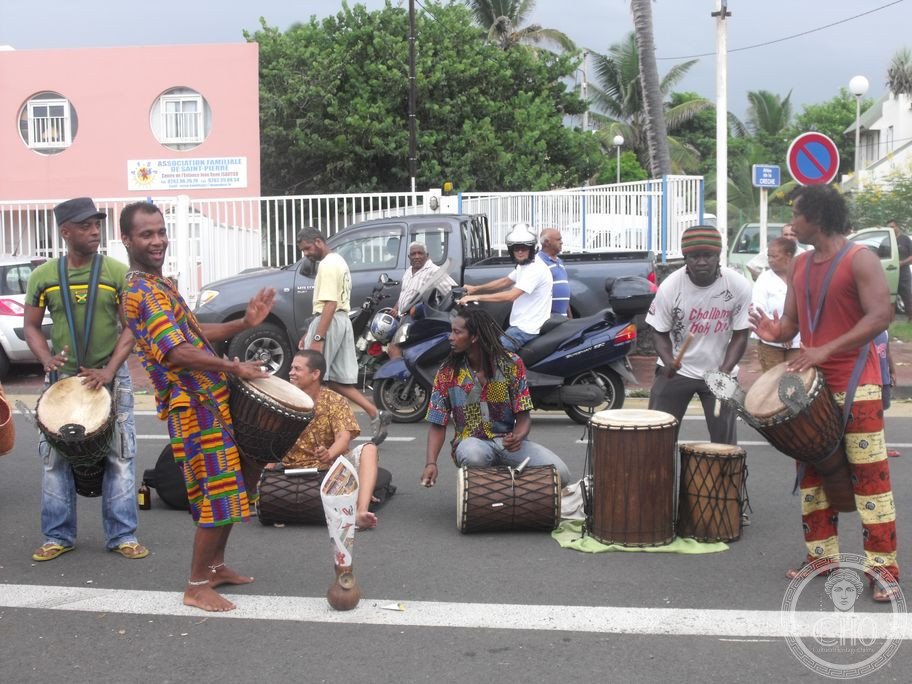
Born from the convergence of African, Malagasy, and Indian voices on a colonial island, maloya is a defiant music of memory and resilience—sung in Réunion Creole and rooted in the rhythms of percussion and the musical bow.
At a glance
Maloya is one of Réunion’s two major music genres, traditionally performed with percussion instruments and a musical bow. The repertoire is sung exclusively in Réunion Creole, the island’s vernacular language, making it a living archive of local identity and history.
Origins and history
Maloya emerged from the cultural encounter between three enslaved and displaced populations: Africans, Malagasy people, and Indian indentured workers brought to the island under French colonial rule. The music carries forward their ancestral musical idioms, fused into a new form distinct from both its sources.
The genre’s power as an expression of collective memory made it dangerous to French state authority. Maloya was banned during the 1970s—a suppression that paradoxically secured its status as a symbol of Réunion Creole identity and resistance.
The tradition today
Maloya continues as a vital contemporary practice, performed at cultural events, festivals, and gatherings across Réunion. Though sometimes compared by world music journalists to the American blues, the two traditions have little substantive common ground—the comparison reflects outside perception rather than musical or historical reality.
The music remains tied to its original instrumentation: traditional percussion and the musical bow, instruments that ground maloya in its multicultural, working-class origins.
Cultural significance
Maloya is far more than entertainment. It is a vehicle for collective memory, bearing witness to centuries of exploitation and cultural survival on a French colonial island. The prohibition against it underscores how deeply music can threaten established power—and how communities use expressive culture to assert their existence and dignity.
Recognition as UNESCO Intangible Cultural Heritage affirms maloya’s status as a living tradition of global significance, worthy of protection and transmission to future generations.
Key facts
- Country: France (Overseas Department of Réunion)
- Anchor community: Saint-Denis and greater Réunion
- Language: Réunion Creole
- Primary instruments: Percussion and musical bow
- UNESCO listing: Intangible Cultural Heritage (Representative List)
- Historical period: Emerged from colonial-era encounter between African, Malagasy, and Indian populations
Where to experience it
Maloya thrives at cultural festivals and music venues throughout Réunion, particularly in Saint-Denis and other cities. You can encounter the tradition at local celebrations, concert halls, and community gatherings dedicated to Réunion Creole culture. Contact local cultural organizations in Saint-Denis for current performances and events.
Sources & resources
- Maloya on Wikipedia
- Cultural Heritage Online
- UNESCO Intangible Cultural Heritage database
Find it on the map
See this place and what’s around it →📷 Become a Cultural Heritage Online photographer
Share your photos of places: they stay published under your name as the author. The more they're seen, the more you get noticed — and soon a contest will reward the most appreciated photos.
Log in or sign up free to add a photo