

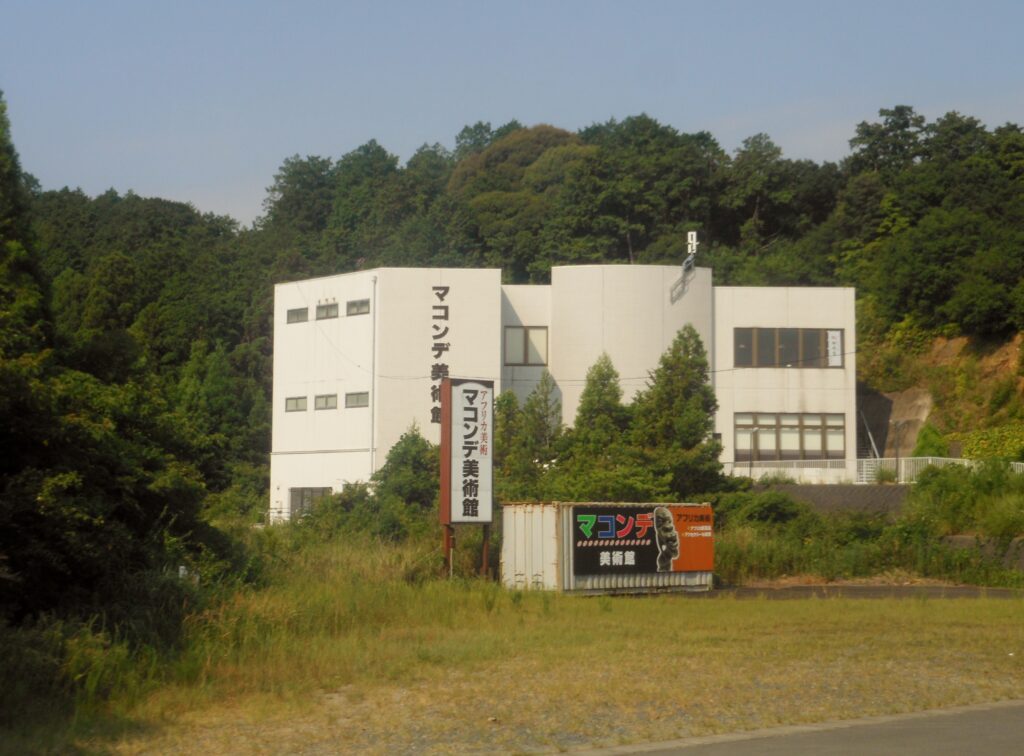
A private museum dedicated to the art and material culture of the Makonde people, with works spanning sculpture, painting, textiles, and traditional instruments.
At a glance
The Makonde Art Museum holds one of Japan’s most significant collections of East African art and craft. Its holdings reflect the diverse creative traditions of the Makonde, an ethnic group primarily from Tanzania and Mozambique.
History
The museum opened as a private institution in 1984. Following its initial establishment, the museum relocated and reopened at its present site in Ise in 1991, where it has remained dedicated to preserving and presenting Makonde cultural heritage.
What you see
Visitors encounter a broad spectrum of artistic forms. The collection features carved wooden sculptures, paintings from the Tingatinga school—a contemporary East African painting movement—hand-dyed batik textiles, and traditional musical instruments. Ethnographic objects and folk materials provide context for understanding Makonde daily life and artistic practices.
Cultural significance
As a rare institution outside Africa focused exclusively on Makonde art, the museum serves an important role in international cultural exchange. Its collection documents both historical and contemporary expressions of Makonde creativity, from ancient carving traditions to modern painting movements.
Key facts
- Location: Ise, Japan
- Opened: 1984; relocated to current site 1991
- Type: Private museum
- Coordinates: 34.490747, 136.811616
Practical information & getting there
For current visiting hours, admission details, and directions, consult the museum directly or contact the Ise visitor information office. The museum is located in Ise, accessible by train and local transport.
The museum grew out of a collection begun by Mizuno Tsuneo, its first director, after he came upon a Makonde figure in a Nagoya craft shop in 1971; it opened in 1984, moved to Ise in 1991, and now shows more than 600 pieces on a height above Ise Bay.
Sources & resources
Find it on the map
See this place and what’s around it →📷 Become a Cultural Heritage Online photographer
Share your photos of places: they stay published under your name as the author. The more they're seen, the more you get noticed — and soon a contest will reward the most appreciated photos.
Log in or sign up free to add a photoIs this page about you?
This page is read by travellers and heritage enthusiasts who find it on Google. Tell us how you are connected to this place and we will take it from there.
This entry stays online and free either way — and a free account lets you add to it yourself.