
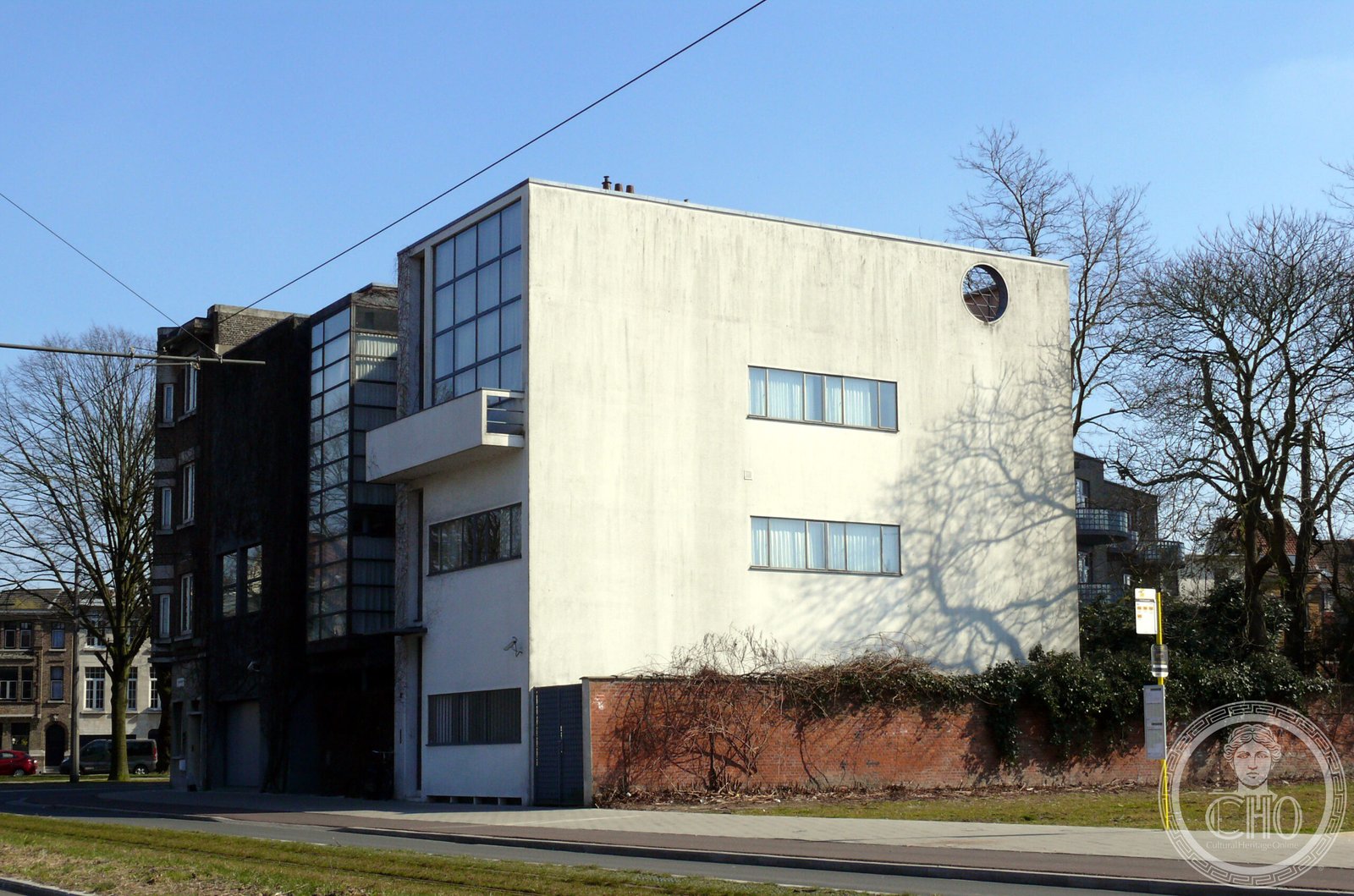
Le Corbusier’s understated masterwork in Antwerp, a compact house that crystallised the International Style and inspired its original inhabitant for life.
At a glance
Maison Guiette—also known as Les Peupliers—stands as a lesser-known but significant work by Franco-Swiss architect Le Corbusier. Built in 1927, the house functioned as both studio and residence for painter and art critic René Guiette, whose artistic practice remained shaped by its spaces for decades.
History
Guiette commissioned Le Corbusier in 1926 to design a house modelled on the 1925 Pavilion de l’Esprit Nouveau, that year’s showcase of modernist domestic ideals. Construction followed in 1927. The residence became a creative crucible: Guiette drew lifelong inspiration from his home, working in gouache and experimental photography throughout the decades that followed. In July 2016, Maison Guiette joined several other Le Corbusier works as a UNESCO World Heritage Site.
What you see
The house embodies early International Style principles—clean lines, functional clarity, and a vocabulary of modern materials. Its design distils Le Corbusier’s principles into intimate domestic scale, creating spaces that dissolve the boundary between living and making.
Cultural significance
Though overshadowed by Le Corbusier’s more celebrated projects, Maison Guiette represents a pivotal moment when modernist architecture entered private practice. Its influence on Guiette’s artistic output across multiple media—painting, drawing, photography—demonstrates how dwelling shapes creative vision. The 2016 UNESCO designation recognised it as part of the architect’s transformative legacy.
Key facts
- Country: Belgium
- City: Antwerp
- Designed: 1926; built: 1927
- Architect: Le Corbusier
- Coordinates: 51.1837, 4.39325
- UNESCO World Heritage Site (inscribed July 2016)
Practical information & getting there
Contact ahead to arrange a visit. Antwerp is served by major rail connections across Belgium and Western Europe. The house is located in the city’s residential districts; local transport links to the coordinates above.
Sources & resources
Find it on the map
See this place and what’s around it →📷 Become a Cultural Heritage Online photographer
Share your photos of places: they stay published under your name as the author. The more they're seen, the more you get noticed — and soon a contest will reward the most appreciated photos.
Log in or sign up free to add a photoIs this page about you?
This page is read by travellers and heritage enthusiasts who find it on Google. Tell us how you are connected to this place and we will take it from there.