
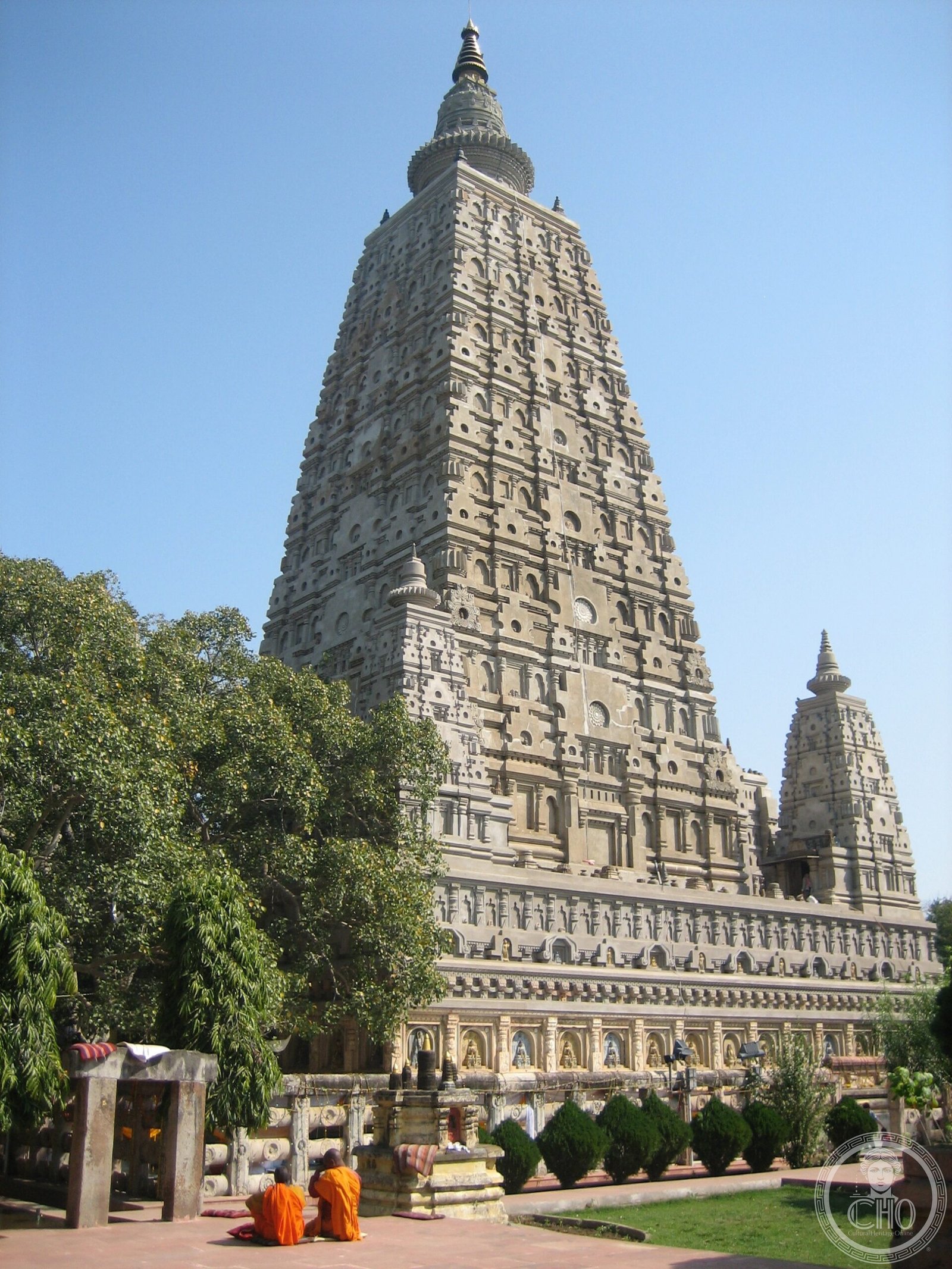
The holiest Buddhist pilgrimage site on Earth, this restored brick temple marks where the Buddha attained enlightenment beneath the Bodhi Tree over two thousand years ago.
At a glance
Mahabodhi—”Great Awakening Temple”—stands in Bodh Gaya, Bihar, commemorating Buddhism’s most sacred moment. The site has drawn pilgrims for millennia. A UNESCO World Heritage Site, the temple complex features two towering shikhara spires, the tallest exceeding 55 metres, their architectural language echoed in Hindu temples and Buddhist pagodas across Asia.
History
Veneration at this location dates to at least the Mauryan period under Ashoka (died c. 232 BCE). The visible temple structure originates from the 6th century CE, though it likely incorporates substantial earlier work from the 2nd or 3rd century CE. The Vajrasana—a stone platform within the temple—has been dated to the 3rd century BCE.
Major restorations have occurred since the 19th century. The temple’s remarkable survival owes much to repeated restoration, given that it was constructed primarily of brick covered with stucco, far more vulnerable than stone.
What you see
The complex showcases two large straight-sided shikhara towers, with the main spire rising over 55 metres high. This distinctive vertical form influenced Hindu and Jain temple design through the centuries and shaped Buddhist architectural traditions abroad.
Many original sculptural elements have been relocated to an on-site museum, while replicas now occupy positions like the carved stone railing surrounding the main structure. Very little of the original sculptural ornamentation survives.
Cultural significance
The Mahabodhi Temple remains the supreme pilgrimage destination for Buddhists worldwide. The site’s Bodhi Tree is believed to descend from the original tree under which Siddhartha attained enlightenment, making this temple the physical anchor of Buddhism’s founding moment. Its architectural innovations shaped religious building traditions across Asia for centuries.
Key facts
- Location: Bodh Gaya, Bihar, India (24.696°N, 84.9913°E)
- Primary period: 6th century CE with earlier and later restorations
- UNESCO World Heritage Site: Yes
- Main spire height: Over 55 metres (180 feet)
Practical information & getting there
The temple complex remains an active pilgrimage destination. An on-site museum houses many of the oldest sculptural finds. For visiting hours, entry fees, and current access information, consult local tourism resources or the temple directly.
Sources & resources
Find it on the map
See this place and what’s around it →📷 Become a Cultural Heritage Online photographer
Share your photos of places: they stay published under your name as the author. The more they're seen, the more you get noticed — and soon a contest will reward the most appreciated photos.
Log in or sign up free to add a photoIs this page about you?
This page is read by travellers and heritage enthusiasts who find it on Google. Tell us how you are connected to this place and we will take it from there.