
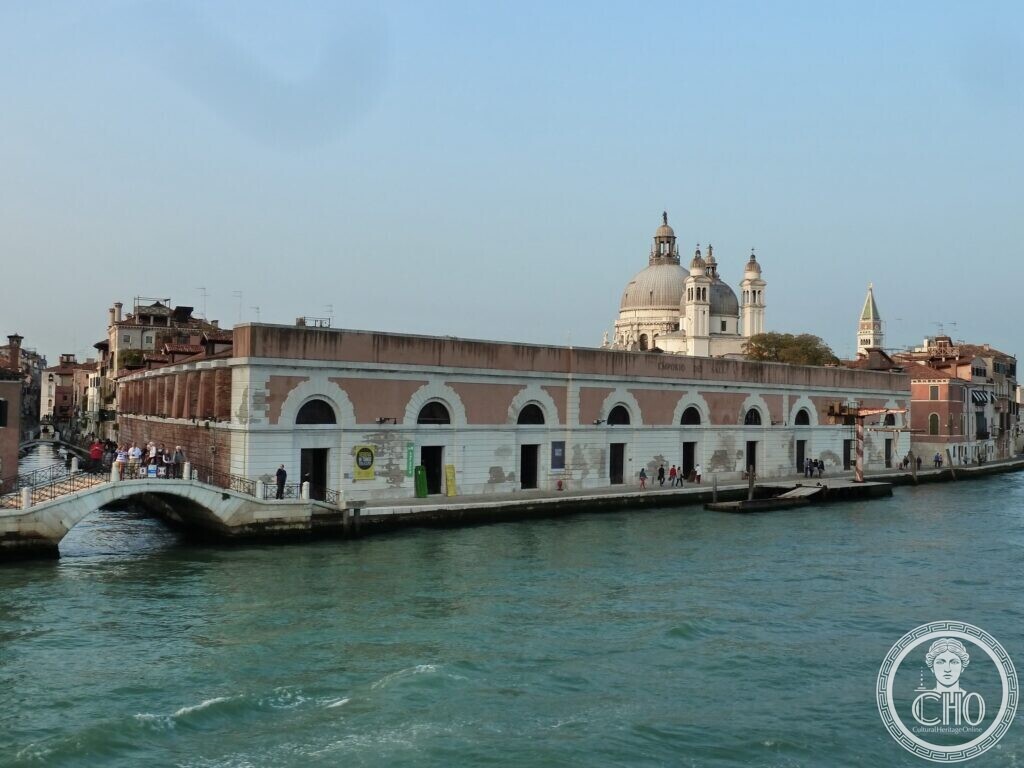
Salt paid for a good part of Venice. On the Zattere, where the barges unloaded, the Republic stored it in nine long halls that still stand, now full of rowing boats and art.
At a glance
The Magazzini del Sale are the salt warehouses of the Venetian Republic, a single long complex on the Fondamenta delle Zattere, in Dorsoduro, facing the Giudecca Canal. They were built at the beginning of the fifteenth century at one of the main landing places for goods coming into the city. Jacopo de’ Barbari’s great bird’s-eye view of Venice, of 1500, already shows all nine of them. The front that faces the water today is the one given to them around 1830 by Alvise Pigazzi.
Key facts
- Built: early 15th century
- Size: nine storage halls in one continuous complex
- Rebuilt front: around 1830, by Alvise Pigazzi, a pupil of Giannantonio Selva
- On the front: the inscription Emporio dei Sali above the central openings
- Today: the Reale Società Canottieri Bucintoro, the Fondazione Emilio e Annabianca Vedova (hall by Renzo Piano, opened 2009), exhibitions
- GPS: 45.42894, 12.33340 · Open in Google Maps
History
Salt was one of the Republic’s great monopolies, and the warehouses on the Zattere were where it was kept once it reached the city. The site was chosen for the water: along this fondamenta the barges and rafts that brought goods to Venice tied up and unloaded.
Around 1830, under Austrian rule, the halls were set in order by Alvise Pigazzi, who gave them the front towards the Giudecca that we see now. In 1852 more salt warehouses were ordered nearby, but the trade was already declining and they were never finished. The halls were closed in the early twentieth century; in the 1970s the city agreed to their use as a sports facility, and two of them now house the boats of the Bucintoro rowing club.
In 2009 one of the nine was reopened by the Fondazione Emilio e Annabianca Vedova, in a project that the painter’s old friend Renzo Piano designed for the foundation. Other halls are used from time to time for exhibitions and for events of the Biennale.
What you see
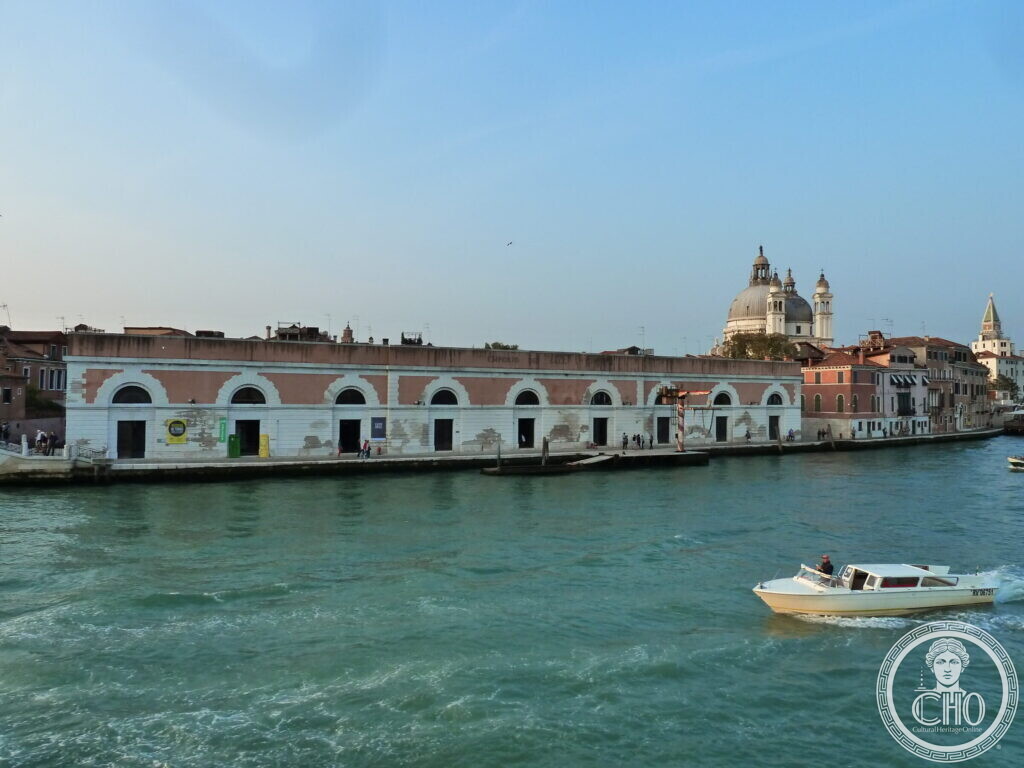
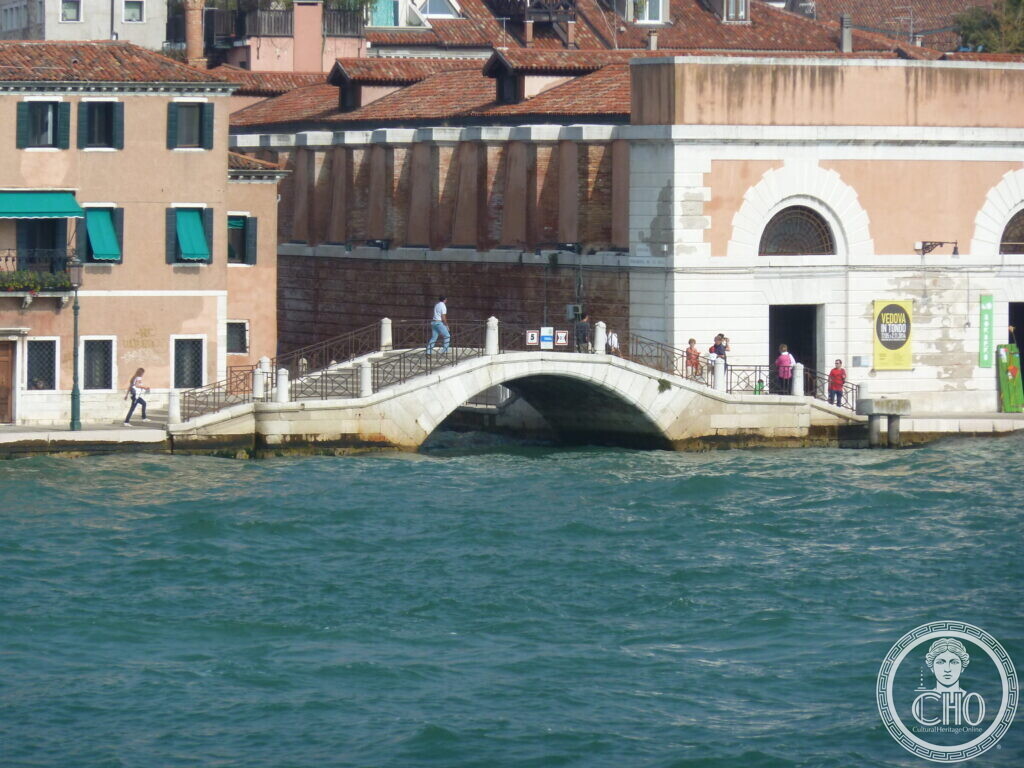
From the water, a long, low front of a single storey, rendered in two tones, with a regular row of large round-headed openings framed in white. Above the central ones runs the inscription Emporio dei Sali. At the western end the small stone Ponte de Ca’ Balà crosses the canal beside the warehouses; behind them rises the dome of Santa Maria della Salute.
Nearby
- Punta della Dogana — the sea customs house at the tip of Dorsoduro, a short walk east
Gallery
Sources
- Conoscere Venezia — Agenzia Sali, raffinazione e depositi del sale, Fondamenta Zattere ai Saloni: Pigazzi’s work around 1830, the warehouses ordered in 1852, the closure, the Bucintoro club and the Biennale
- Fondazione Emilio e Annabianca Vedova — Magazzino del Sale: the nine halls in Jacopo de’ Barbari’s view of 1500 and Renzo Piano’s project
- Magazzini del sale (Venezia), Italian Wikipedia: early 15th-century date, the inscription, Pigazzi as a pupil of Selva, the 2009 opening
Find it on the map
See this place and what’s around it →📷 Become a Cultural Heritage Online photographer
Share your photos of places: they stay published under your name as the author. The more they're seen, the more you get noticed — and soon a contest will reward the most appreciated photos.
Log in or sign up free to add a photoIs this page about you?
This page is read by travellers and heritage enthusiasts who find it on Google. Tell us how you are connected to this place and we will take it from there.