

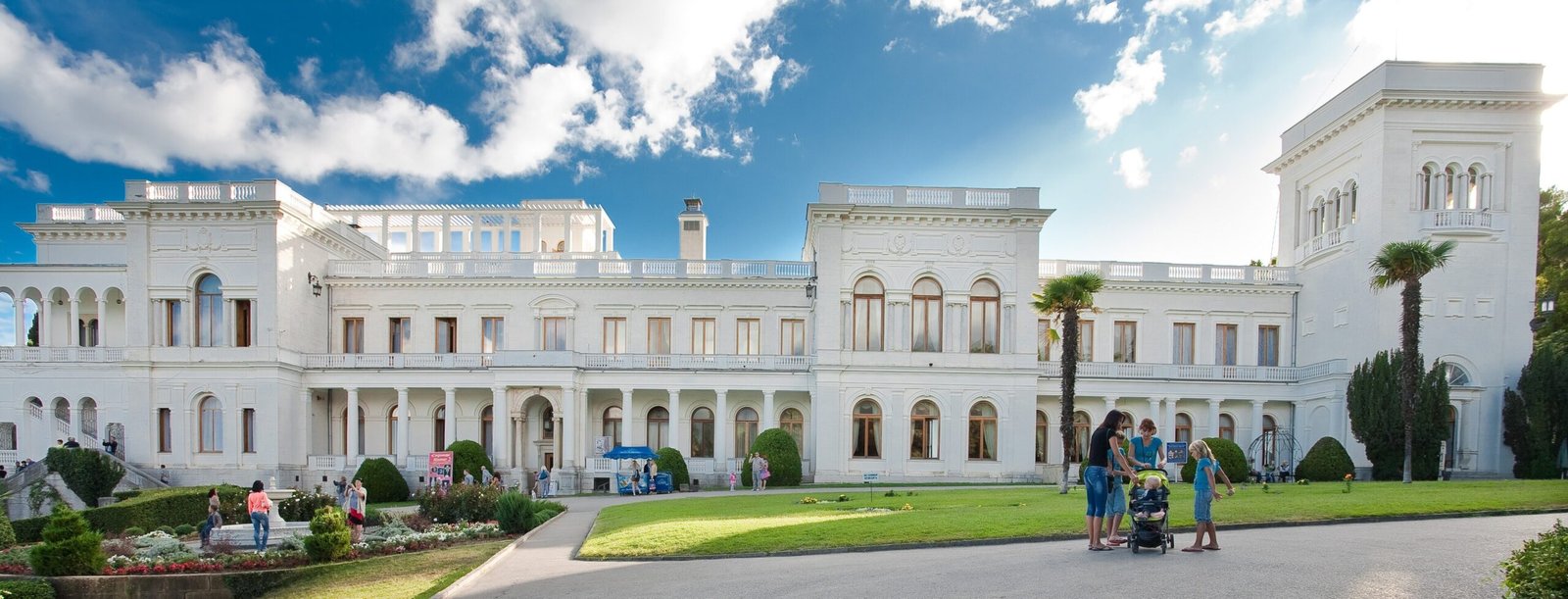
A former summer residence of Tsar Nicholas II, this Crimean palace gained international prominence when it hosted the Yalta Conference in 1945, one of the pivotal post-war negotiations of the twentieth century.
At a glance
Livadia Palace served as the private retreat of Russia’s last imperial family before the Revolution. Today it functions as a museum and occasional venue for international diplomatic summits, preserving its role as a site of historic consequence.
History
Built as a summer escape for Tsar Nicholas II and his family, the palace embodied imperial luxury before the Russian Revolution fundamentally altered its destiny. Its greatest historical moment came in February 1945, when Allied leaders met there to shape the post-war world. Franklin Delano Roosevelt and the American delegation occupied the palace itself, while the Soviet delegation stayed at the nearby Yusupov Palace and the British at Vorontsov Palace, approximately eight kilometers away. This conference proved pivotal in determining the course of the Cold War and the geopolitical order that would follow.
What you see
The palace reflects the architectural ambitions of late imperial Russia, designed as a summer retreat befitting the tsar’s status and wealth. Its rooms and gardens speak to both royal grandeur and the intimate domestic life of the imperial family.
Cultural significance
Livadia Palace embodies two distinct historical narratives. It represents the final days of Russian imperial power and the personal world of a doomed dynasty. Simultaneously, it stands as a monument to Cold War diplomacy—the place where Roosevelt, Stalin, and Churchill negotiated the division of Europe and the structure of the United Nations. The palace thus bridges monarchical Russia and the modern geopolitical era.
Key facts
- Location: Livadiya, Ukraine
- Coordinates: 44.46777778, 34.14333333
- Former residence of Tsar Nicholas II and family
- Hosted the Yalta Conference, 1945
- Now operates as a museum and diplomatic venue
Practical information & getting there
The palace operates as a public museum. For current visiting hours, admission details, and information on diplomatic or cultural events, consult the museum directly or the local tourism authority in Crimea.
Sources & resources
Find it on the map
See this place and what’s around it →📷 Become a Cultural Heritage Online photographer
Share your photos of places: they stay published under your name as the author. The more they're seen, the more you get noticed — and soon a contest will reward the most appreciated photos.
Log in or sign up free to add a photoIs this page about you?
This page is read by travellers and heritage enthusiasts who find it on Google. Tell us how you are connected to this place and we will take it from there.