
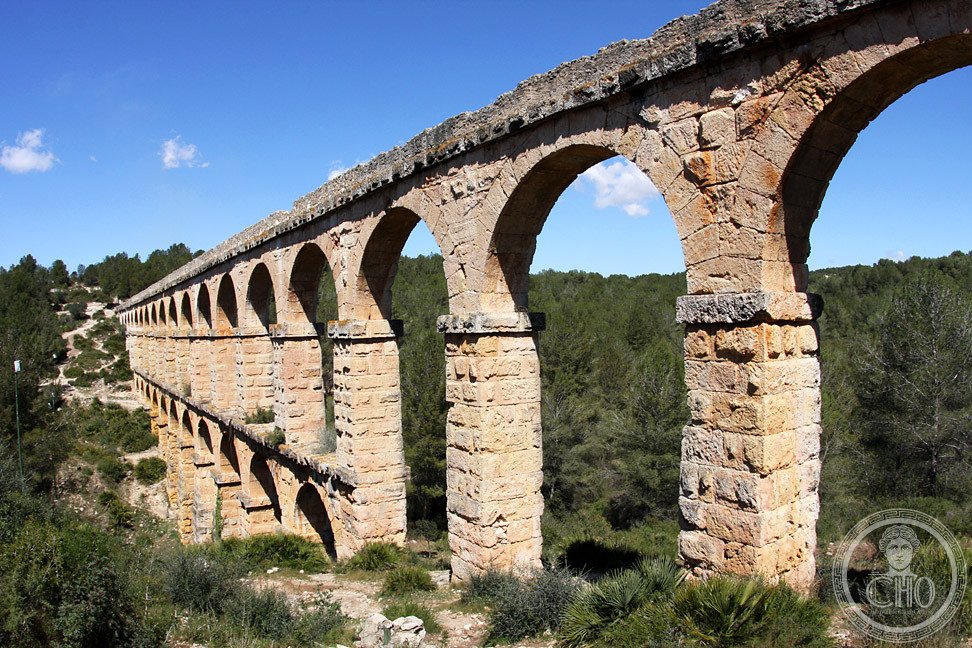
A monumental Roman bridge that once carried water across the landscape toward ancient Tarraco, now standing as a testament to imperial engineering prowess on the Catalan coast.
At a glance
The Ferreres Aqueduct, locally called the Pont del Diable (Devil’s Bridge), is a surviving section of one of the Roman aqueducts that supplied water to Tarragona when it was the flourishing city of Tarraco. Located 4 kilometers north of the modern city, it remains largely intact and is integral to the Archaeological Ensemble of Tarraco.
History
Built during the Roman period to meet the water demands of Tarraco, this aqueduct was part of the city’s essential infrastructure. The local name “Devil’s Bridge” reflects folk legend rather than historical fact, a common feature of medieval and early modern interpretations of ambitious Roman structures.
What you see
The aqueduct is a bridge structure designed to carry water across a valley, using the principles of gravity flow that characterized Roman water management. Its robust stone construction and rhythmic arching demonstrate the technical sophistication of Roman engineering, adapted to the specific terrain and topography of the Tarragona region.
Cultural significance
As part of the UNESCO-listed Archaeological Ensemble of Tarraco (designated in 2000), the aqueduct represents the broader Roman legacy in Hispania. It exemplifies the scale and ambition of imperial infrastructure projects and remains a valuable resource for understanding ancient urban planning, hydraulic engineering, and daily life in a major Roman port city.
Key facts
- Country: Spain
- City: Tarragona (ancient Tarraco)
- Coordinates: 41.14666667, 1.24361111
- UNESCO World Heritage Site: Archaeological Ensemble of Tarraco (inscribed 2000)
- Distance from city center: 4 km north
Practical information & getting there
The aqueduct is accessible to visitors year-round as an open-air archaeological monument. Its location on the outskirts of Tarragona makes it convenient to reach by local transport or car. Check with Tarragona’s tourism office for current access conditions and guided tour availability.
Sources & resources
Find it on the map
See this place and what’s around it →📷 Become a Cultural Heritage Online photographer
Share your photos of places: they stay published under your name as the author. The more they're seen, the more you get noticed — and soon a contest will reward the most appreciated photos.
Log in or sign up free to add a photo