
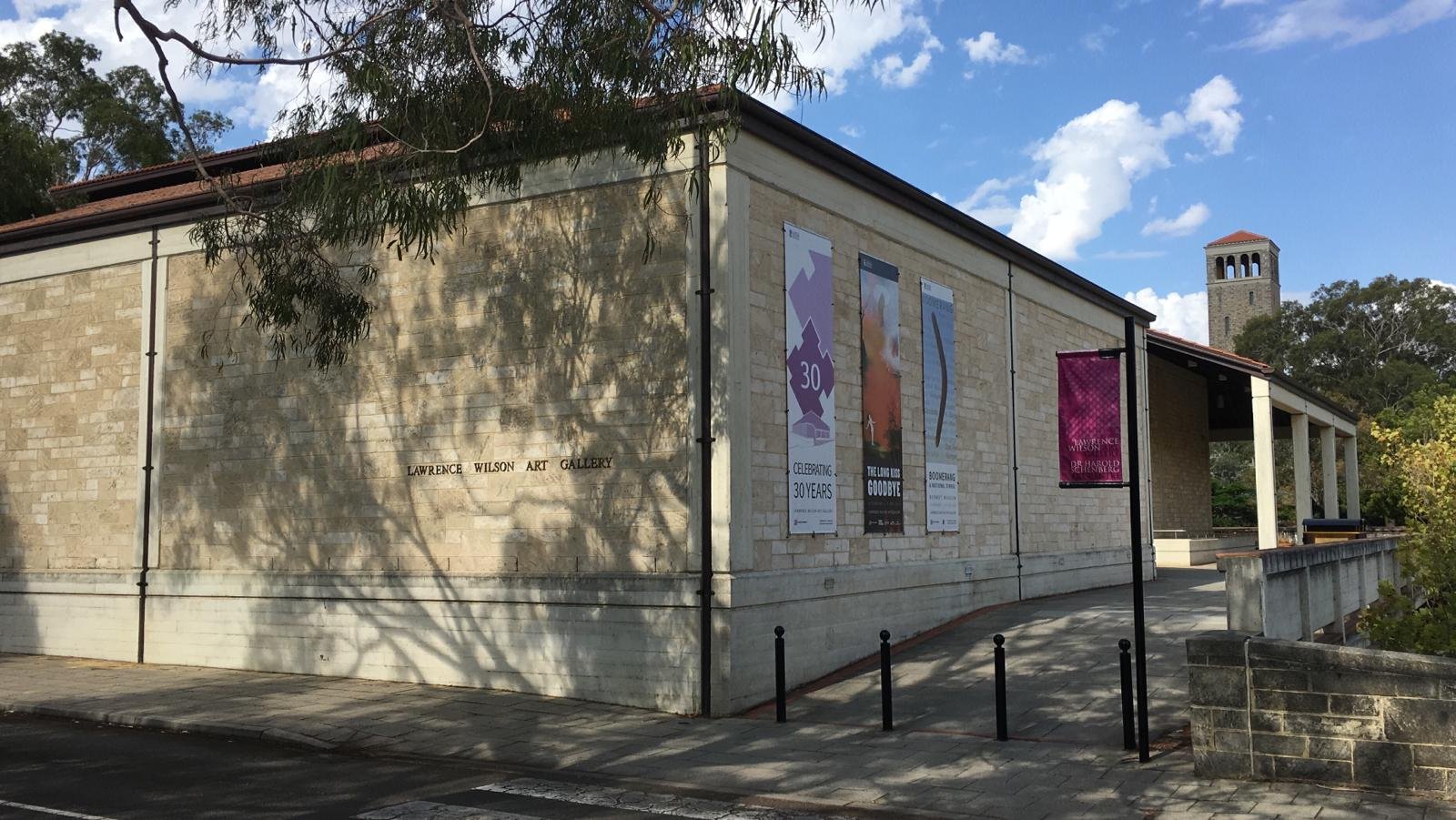
Australia’s first purpose-built university art museum, opened in 1990 on the campus of the University of Western Australia.
At a glance
An on-campus gallery housing three major collections spanning fine art, women’s art, and anthropology. Designed by Western Australian architect Gus Ferguson and supported by a dedicated friends organisation.
History
The University of Western Australia began fundraising for an art gallery in the 1980s. The gallery opened in July 1990, marking a significant milestone as Australia’s first purpose-built university art museum.
What you see
Gus Ferguson’s design creates a purpose-built home for three major collections. The space brings together the University of Western Australia Art Collection, the Cruthers Collection of Women’s Art, and the Berndt Museum of Anthropology under one architectural vision.
Cultural significance
As Australia’s first purpose-built university art museum, the Lawrence Wilson Art Gallery represents an institutional commitment to making art accessible to students and the broader public. Its three collections span diverse traditions and perspectives, reflecting the university’s scholarly mission.
Key facts
- Country: Australia
- City: Crawley
- Coordinates: -31.9769, 115.8161
- Opened: July 1990
- Architect: Gus Ferguson
- Status: First purpose-built university art museum in Australia
Practical information & getting there
The gallery is located on the University of Western Australia campus in Crawley. For current hours, admission details, and visiting information, consult the university’s website or contact the gallery directly.
Sources & resources
Find it on the map
See this place and what’s around it →📷 Become a Cultural Heritage Online photographer
Share your photos of places: they stay published under your name as the author. The more they're seen, the more you get noticed — and soon a contest will reward the most appreciated photos.
Log in or sign up free to add a photoIs this page about you?
This page is read by travellers and heritage enthusiasts who find it on Google. Tell us how you are connected to this place and we will take it from there.