
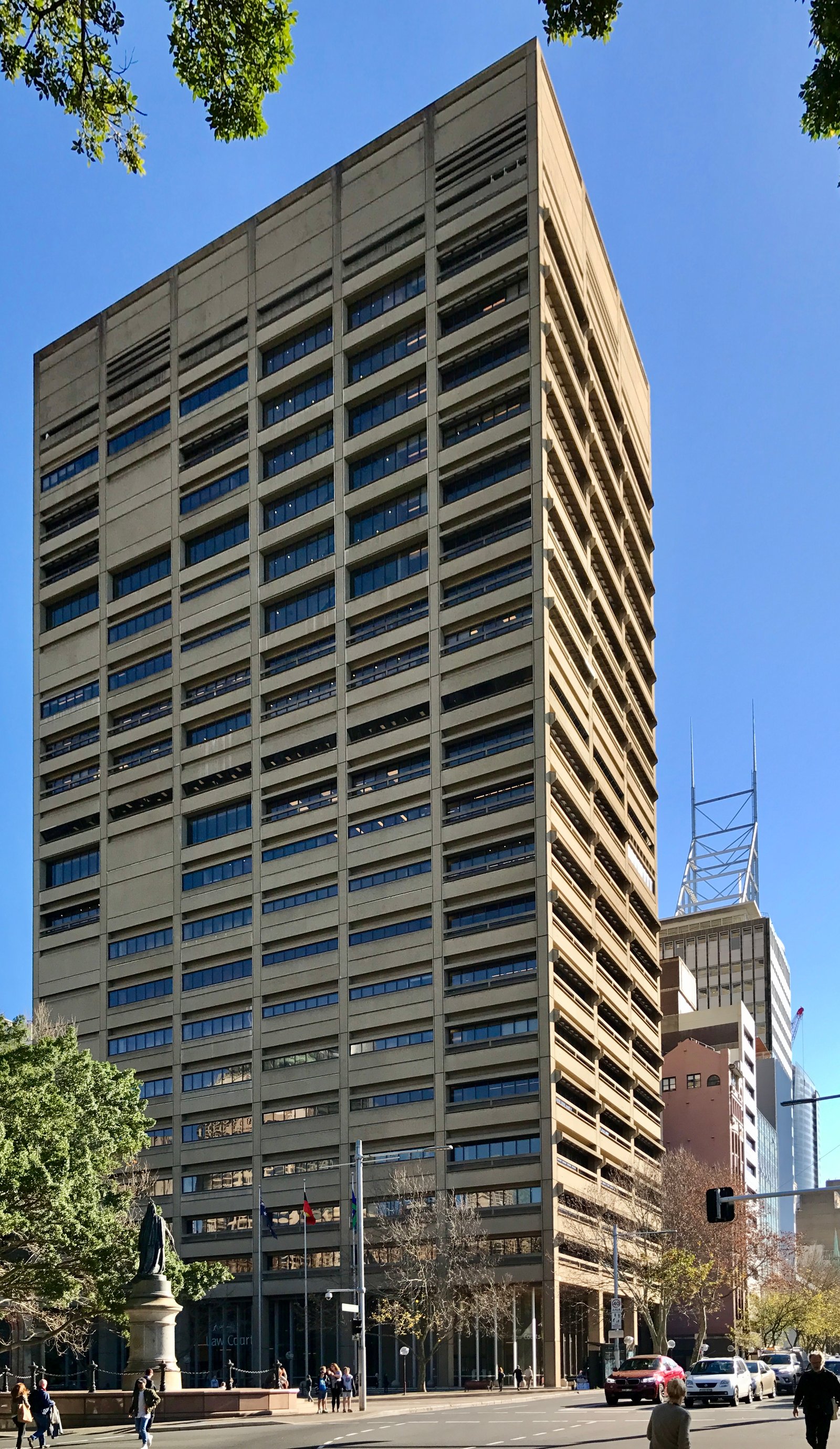
A monumental Brutalist courthouse completed in 1977, the Law Courts Building anchors Queens Square as the primary seat of New South Wales’s highest judicial authority.
At a glance
Dominating Queens Square, this Twentieth Century Brutalist structure serves as the main home of the Supreme Court of New South Wales. The building also houses chambers for the Federal Court of Australia and the High Court of Australia, making it a critical hub of Australian jurisprudence.
History
The Law Courts Building was completed in 1977, representing a decisive moment in Sydney’s architectural modernization. Its construction coincided with a broader shift toward bold, functional design in civic institutions across Australia.
What you see
The building exemplifies Twentieth Century Brutalism, characterized by massive concrete forms and geometric precision. Its austere aesthetic reinforces the authority and permanence expected of a supreme court, while the material vocabulary reflects the era’s confidence in modernist principles applied to public institutions.
Cultural significance
As the seat of the Supreme Court of New South Wales, the Law Courts Building is fundamental to Australia’s judicial system and constitutional governance. Its architectural statement—bold, rational, and unapologetically modern—has become emblematic of late-twentieth-century Australian public architecture.
Key facts
- Country: Australia
- City: City of Sydney
- Completed: 1977
- Architectural style: Twentieth Century Brutalism
- Primary function: Supreme Court of New South Wales
- Coordinates: -33.869°, 151.2115°
Practical information & getting there
The Law Courts Building sits prominently on Queens Square in central Sydney. Opening hours and visitor access policies vary; check the NSW Supreme Court website for current conditions and any restrictions on public areas.
Sources & resources
Find it on the map
See this place and what’s around it →📷 Become a Cultural Heritage Online photographer
Share your photos of places: they stay published under your name as the author. The more they're seen, the more you get noticed — and soon a contest will reward the most appreciated photos.
Log in or sign up free to add a photoIs this page about you?
This page is read by travellers and heritage enthusiasts who find it on Google. Tell us how you are connected to this place and we will take it from there.