

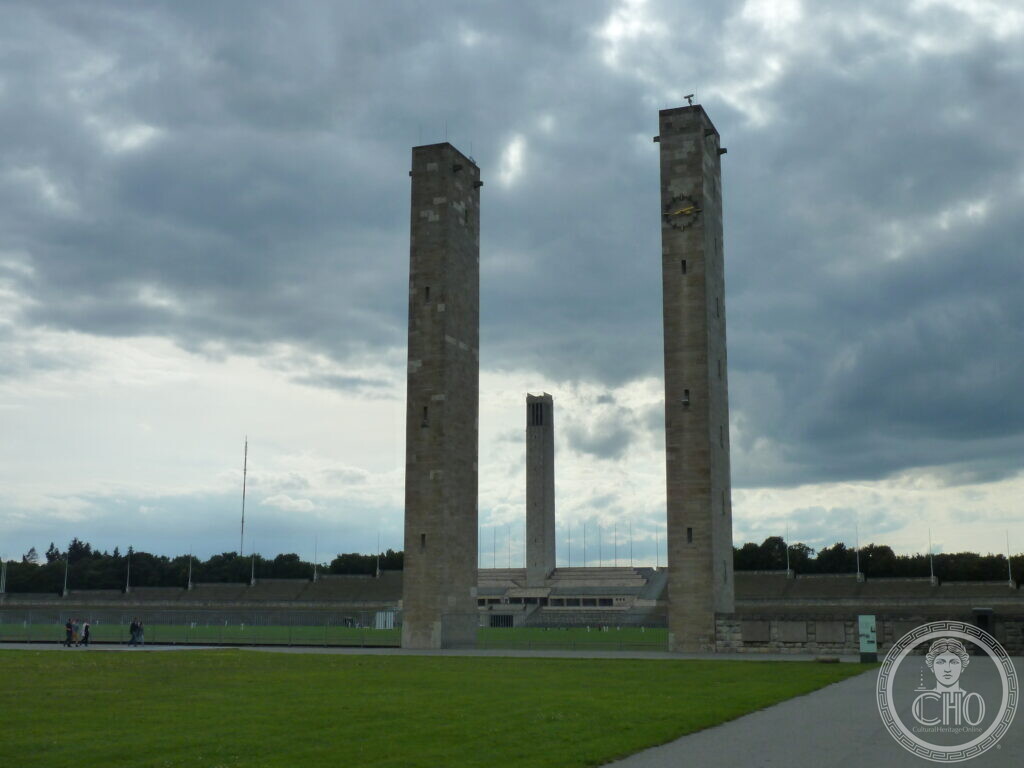
A memorial space beneath the Bell Tower on the western edge of Berlin’s Olympic grounds, created for the 1936 Games and dedicated to German soldiers who fell near Langemarck in 1914.
At a glance
The hall sits at the base of the Glockenturm, closing the long axis that runs from the Olympic Platz through the stadium and the Maifeld. Sources describe it as a memorial structure within the Reichssportfeld, designed by Werner March and later rebuilt under his direction.
Key facts
- Where: Am Glockenturm, 14053 Berlin
- What: Monument
- When: 1930
- GPS: 52.5140, 13.2317 · Open in Google Maps
History
Werner March designed the hall as part of the sports complex built for the 1936 Olympic Games. It honoured soldiers who had fallen near Langemarck in Belgium during the First World War, an episode later turned into a myth of heroic sacrifice that the Nazi regime exploited. Near the end of the Second World War the building was damaged by fire, and British engineers demolished it shortly after the conflict. March then directed the rebuilding work from 1960 to 1962, when the metal pointed shields naming the German units from the original battle were put back in place. In 2006 the hall was renovated and housed an exhibition about the history of the Olympiagelände, prepared with the German Historical Museum.
What you see
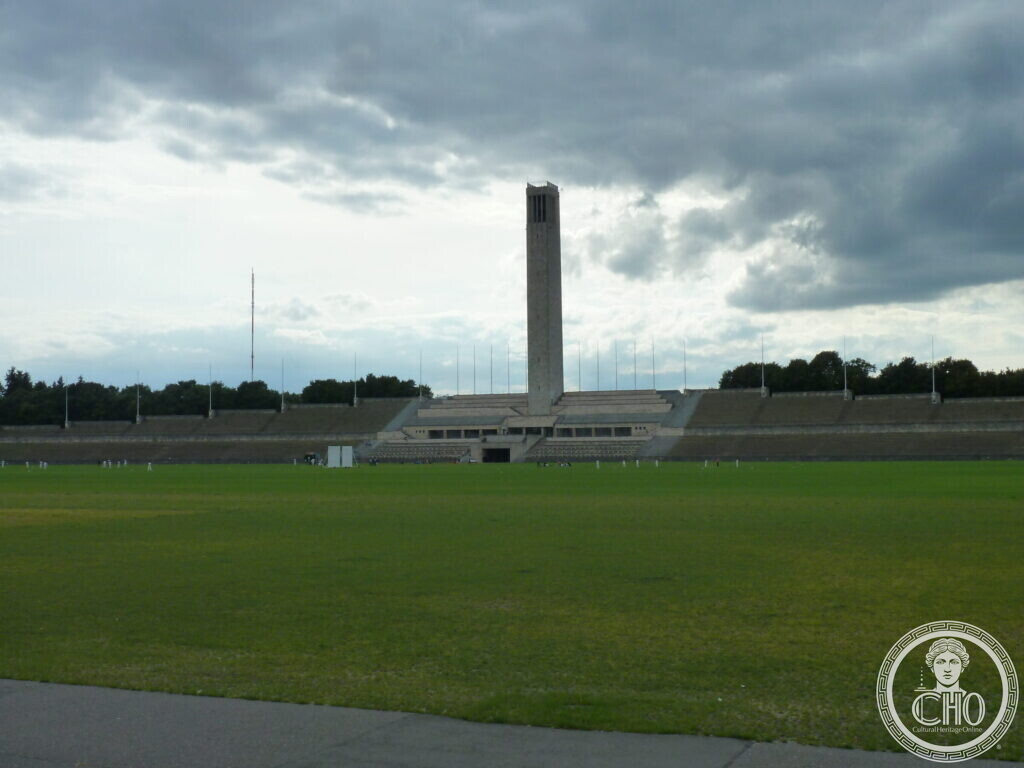
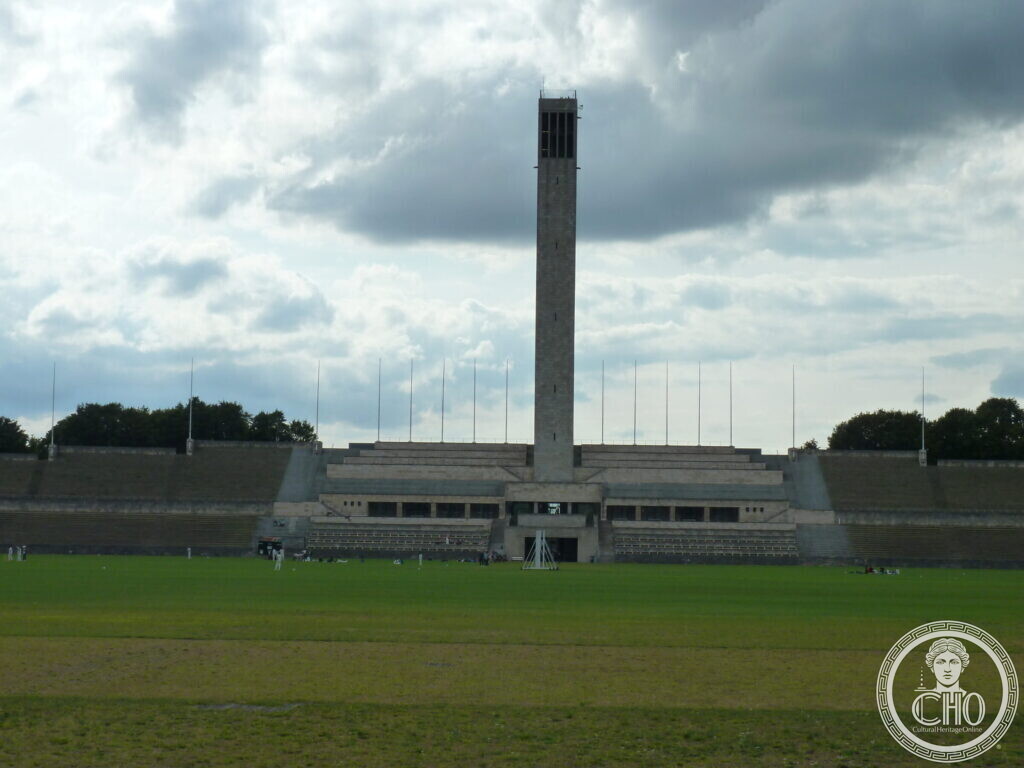
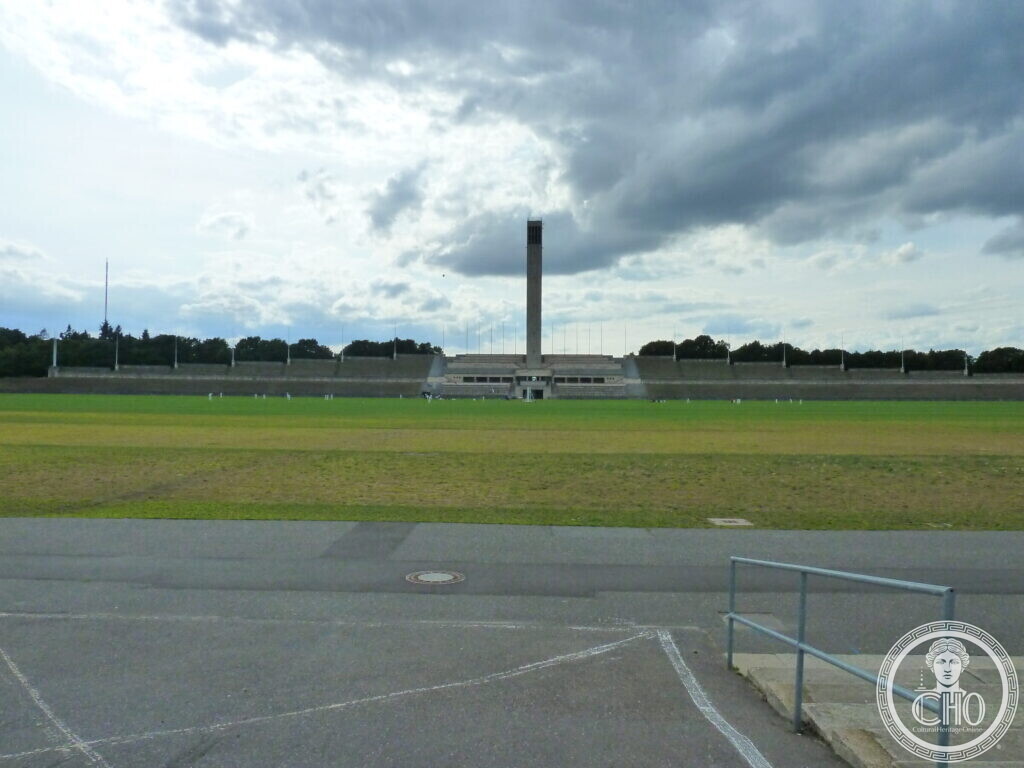
The photographs show the hall’s setting at the base of the Bell Tower, framed by two square stone towers in the foreground. The broad grass field of the Maifeld leads the eye toward the tall central tower and the empty tiered stands. The building originally contained devotional objects such as flags and soil described as blood-soaked, as well as a viewing stand for Adolf Hitler facing the Maifeld; the post-war rebuilding kept the metal shields naming the reserve divisions that fought at Langemarck.
Do you know more about this place?
If you know a date, a name, a document, a plaque or a photograph that tells its story, write to Sofia through the contact page. What arrives with a source goes into this page, with your name as the contributor.
Nearby
- None yet.
Gallery
Sources
- arktur, Langemarckhalle, Berlin: dates, architect, construction and reconstruction details
- Dead Emperors’ Society, The Langemarckhalle – Hitler’s link between soldiers dying in WWI trenches and the 1936 Olympic Games: location on the Maifeld axis, association with the Glockenturm, propaganda context
- AroundUs, Langemarckhalle – Military memorial in Westend, Germany: construction date 1930, location beneath the Bell Tower
- Alamy, The Maifeld (Mayfield), Langemarck Hall, Bell Tower and tiered seating: reconstruction of the Bell Tower in 1962 by Werner March
- Berlin Experiences, Berlin Olympic Stadium: Visiting the 1936 Olympiastadion: number of German soldiers commemorated, date of the battle
- Stefano Vigolo, photographs and notes to the editorial staff (2026): identification of the subject and the photographs. Not a published source
Find it on the map
See this place and what’s around it →📷 Become a Cultural Heritage Online photographer
Share your photos of places: they stay published under your name as the author. The more they're seen, the more you get noticed — and soon a contest will reward the most appreciated photos.
Log in or sign up free to add a photoIs this page about you?
This page is read by travellers and heritage enthusiasts who find it on Google. Tell us how you are connected to this place and we will take it from there.
This entry stays online and free either way — and a free account lets you add to it yourself.