
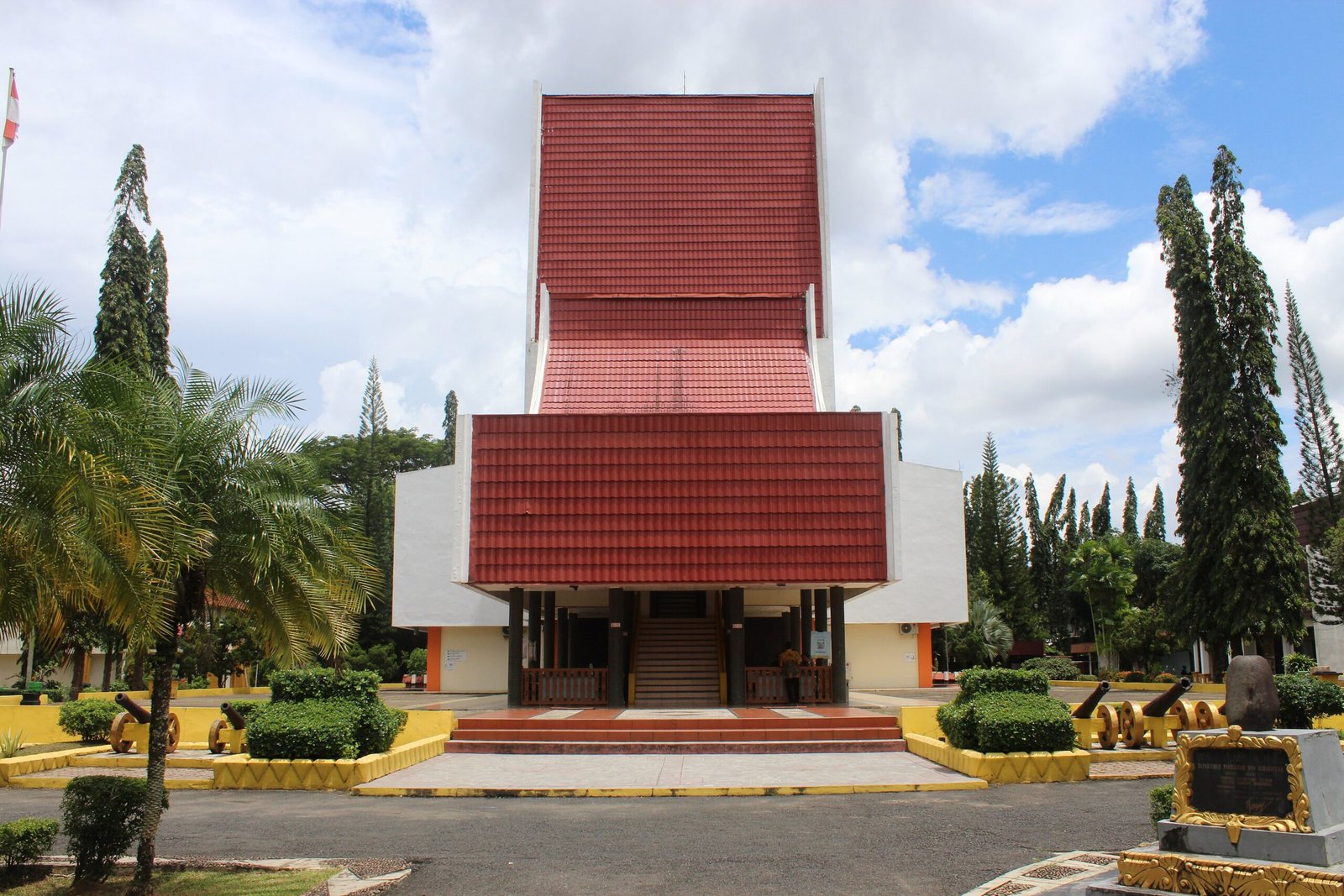
A repository of Kalimantan’s material heritage, this museum preserves the artistic and spiritual traditions of the Banjar and Dayak peoples through archaeological finds and ancient religious objects.
At a glance
Lambung Mangkurat Museum houses one of South Kalimantan’s most significant collections of regional artifacts. The holdings emphasize the interconnected histories of indigenous Dayak communities and the Banjar sultanate, spanning both secular and sacred material culture.
History
The museum’s collections derive largely from archaeological excavations conducted throughout Kalimantan. This systematic gathering of artifacts has allowed curators to document the region’s long settlement patterns and cultural exchanges across the island.
What you see
The collection encompasses everyday objects, ritual items, and decorative pieces recovered from archaeological sites across Kalimantan. Ancient Hindu objects indicate the religious and cultural influences that shaped the archipelago’s pre-Islamic and early Islamic periods. Banjar and Dayak artifacts reflect distinct artistic traditions and social practices developed over centuries.
Cultural significance
The museum serves as a cultural anchor for South Kalimantan, offering visitors insight into the region’s indigenous heritage and the layered histories of its peoples. By presenting Banjar and Dayak material culture alongside Hindu-era objects, it documents how multiple traditions coexisted and influenced one another across the island.
Key facts
- Location: Banjarbaru, South Kalimantan, Indonesia
- Coordinates: -3.4421177, 114.8381567
- Primary focus: Banjar and Dayak peoples; archaeological artifacts; ancient Hindu objects
Practical information & getting there
Lambung Mangkurat Museum is located in Banjarbaru. For current opening hours, admission fees, and visitor information, consult local tourism resources or contact the museum directly.
Sources & resources
Find it on the map
See this place and what’s around it →📷 Become a Cultural Heritage Online photographer
Share your photos of places: they stay published under your name as the author. The more they're seen, the more you get noticed — and soon a contest will reward the most appreciated photos.
Log in or sign up free to add a photoIs this page about you?
This page is read by travellers and heritage enthusiasts who find it on Google. Tell us how you are connected to this place and we will take it from there.