
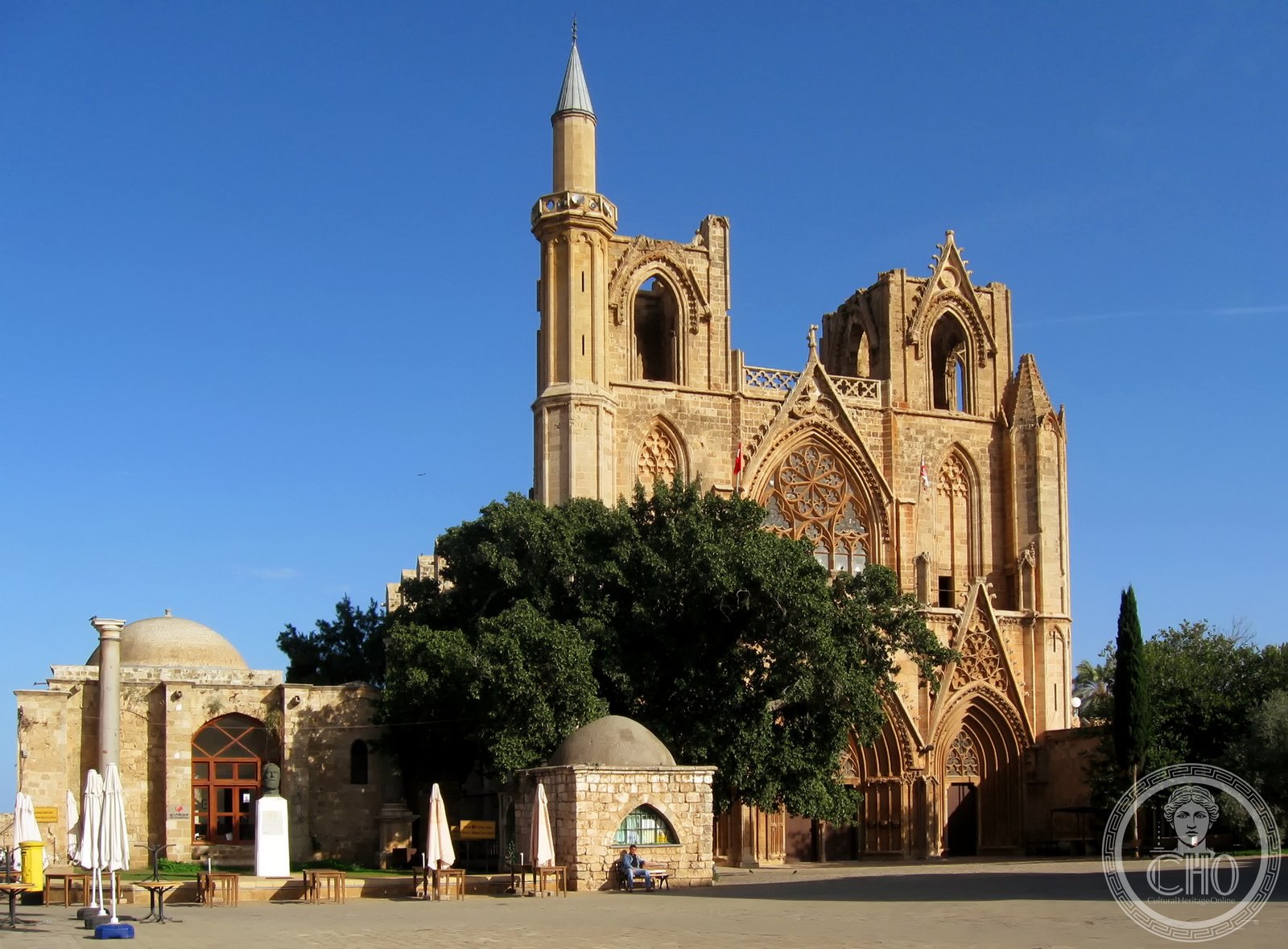
Originally a Gothic cathedral, this monumental structure became a mosque after Ottoman conquest and remains one of Famagusta’s most imposing medieval buildings.
At a glance
The Lala Mustafa Pasha Mosque is the largest medieval building in Famagusta. Built over more than a century, it was first consecrated as a Catholic cathedral in 1328, then converted to Islamic use following the Ottoman capture of the city in 1571.
History
Construction began in 1298 and continued until approximately 1400. The cathedral was consecrated in 1328, serving the Catholic population through the Venetian period. When Ottoman forces conquered Famagusta in 1571, the building was transformed into a mosque—a conversion that proved permanent. Since 1954, the mosque has borne the name of Lala Mustafa Pasha, the Ottoman grand vizier from Sokolovići in Bosnia who served under Murat III and commanded Ottoman operations against Venetian forces in Cyprus.
What you see
The mosque represents the largest surviving medieval structure in Famagusta. Its Gothic origins are evident in the architectural vocabulary and scale, though the interior and fixtures were modified following its conversion to Islamic worship.
Cultural significance
The building embodies centuries of Cypriot history—from Catholic Venetian rule through Ottoman governance. Its dual religious and political identity reflects the island’s complex cultural transitions and remains an important symbol of Famagusta’s medieval heritage.
Key facts
- Country: Cyprus
- City: Famagusta
- Coordinates: 35.1249°N, 33.9427°E
- Construction period: 1298–c. 1400
- Cathedral consecration: 1328
- Converted to mosque: 1571
Practical information & getting there
The mosque is located in Famagusta’s walled old town. For current visiting hours, access restrictions, and worship times, check locally before your visit.
Sources & resources
Find it on the map
See this place and what’s around it →📷 Become a Cultural Heritage Online photographer
Share your photos of places: they stay published under your name as the author. The more they're seen, the more you get noticed — and soon a contest will reward the most appreciated photos.
Log in or sign up free to add a photoIs this page about you?
This page is read by travellers and heritage enthusiasts who find it on Google. Tell us how you are connected to this place and we will take it from there.