

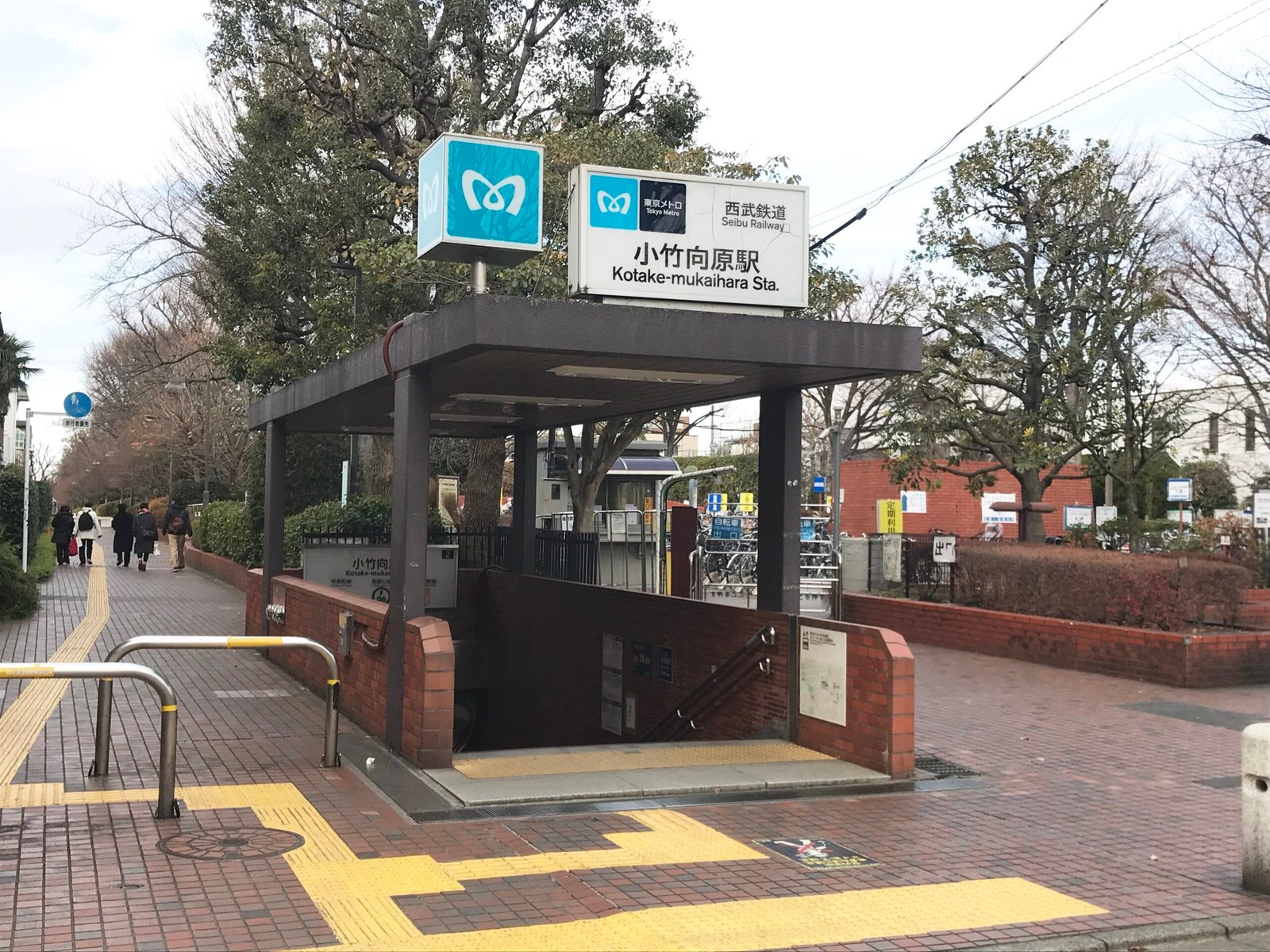
A modern subway interchange in Tokyo’s Nerima ward, serving three rapid transit lines and connecting commuters across the metropolitan rail network.
At a glance
Kotake-mukaihara Station is a working transit hub operated by Tokyo Metro in the Nerima district. The station serves passengers on three separate lines, making it an important junction for local and regional travel. It remains a functional node in Tokyo’s extensive underground rail system.
History
This station functions as part of Tokyo’s modern metropolitan railway infrastructure. No additional historical details are available from the source material.
What you see
The station represents contemporary Japanese transit design, integrating multiple line platforms within a single facility. The architectural character reflects the practical modernism typical of Tokyo Metro stations.
Cultural significance
As a modern infrastructure landmark, Kotake-mukaihara Station exemplifies Tokyo’s role as a global city with sophisticated urban transit systems. The station demonstrates Japan’s commitment to efficient metropolitan connectivity.
Key facts
- Location: Nerima, Tokyo, Japan
- Coordinates: 35.743808, 139.678566
- Operator: Tokyo Metro
- Lines served: Tokyo Metro Yurakucho Line (Y-06), Tokyo Metro Fukutoshin Line (F-06), Seibu Yūrakuchō Line (SI37)
Practical information & getting there
You can access Kotake-mukaihara Station via the Yurakucho, Fukutoshin, or Seibu Yūrakuchō Lines. The station is located in Nerima ward at coordinates 35.743808, 139.678566. Consult Tokyo Metro or Seibu Railway websites for current schedules and fares.
Sources & resources
Find it on the map
See this place and what’s around it →📷 Become a Cultural Heritage Online photographer
Share your photos of places: they stay published under your name as the author. The more they're seen, the more you get noticed — and soon a contest will reward the most appreciated photos.
Log in or sign up free to add a photoIs this page about you?
This page is read by travellers and heritage enthusiasts who find it on Google. Tell us how you are connected to this place and we will take it from there.