
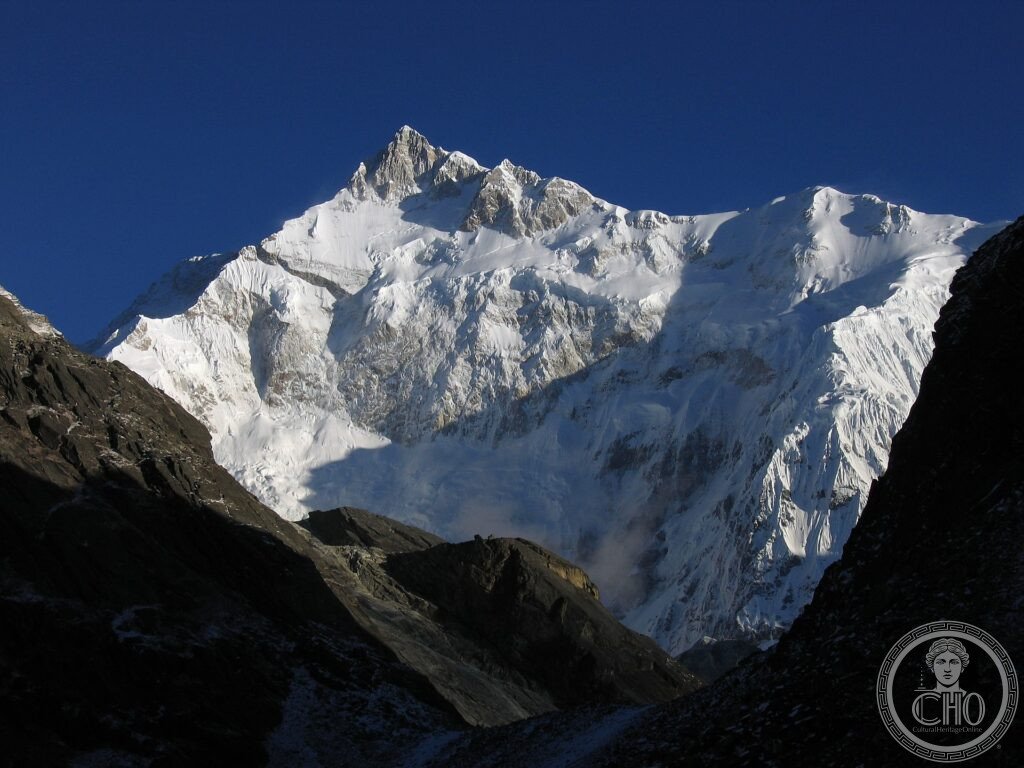
It dominates Sikkim with its 8,586 metres: Kangchenjunga, the third highest mountain on Earth, venerated as the dwelling of a protecting deity. Around its mass of ice stretches a park of glaciers, forests and villages, where Himalayan nature and Buddhist spirituality are interwoven.
At a glance
Khangchendzonga National Park, in the Indian state of Sikkim, is centred on Kangchenjunga, at 8,586 m the third-highest mountain in the world, worshipped as the abode of a guardian deity. Around its glaciers and snows the park spreads across a vast range of altitudes — from subtropical forest to high alpine desert — rich in wildlife and woven through with the sacred geography, monasteries and myths of the Sikkimese peoples. This mixed cultural and natural site was inscribed by UNESCO in 2016.
Key facts
- UNESCO: World Heritage since 2016, a mixed cultural and natural site
- Kangchenjunga: at 8,586 m, the third-highest mountain on Earth
- Sacred mountain: revered as the abode of a guardian deity of Sikkim
- Glaciers and forests: habitats from subtropical to high alpine
- Wildlife: snow leopard, red panda, Himalayan tahr and blue sheep
- Living culture: Buddhist monasteries and sacred sites within the park
History
For the Lepcha, Bhutia and other peoples of Sikkim, Kangchenjunga is not merely a mountain but a sacred presence, the seat of the territory’s guardian deity, surrounded by hidden valleys, holy lakes and caves of Buddhist legend. Monasteries and pilgrimage routes lace the landscape, and the mountain’s name and rituals are central to Sikkimese identity.
The same landscape is a treasury of Himalayan nature: glaciers feeding great rivers, forests climbing from the warm foothills to the snow line, and rare animals such as the snow leopard and red panda. UNESCO recognised this rare combination of sacred culture and outstanding nature in 2016, the first mixed World Heritage site in India.
What you see
Trekking routes climb from forested valleys, past Buddhist monasteries, prayer flags and villages, toward viewpoints of the great snow wall of Kangchenjunga and its glaciers. Rhododendron forests, alpine meadows and high lakes mark the ascent, with the chance of sighting rare Himalayan wildlife.
The vision of the sacred peak, especially at dawn, presiding over the wild Sikkim landscape, is the heart of the experience.
Practical information
- Park: trekking permits required; routes such as the Goecha La trail
- Best time: spring and autumn for clear mountain views
- Time needed: several days for a trek
- Note: high altitude; acclimatise and go with registered guides
Getting there
The park is in western Sikkim, north-eastern India. The nearest town is Yuksom; the region is reached by road from Gangtok and from Bagdogra airport / New Jalpaiguri station. GPS: 27.70° N, 88.20° E.
Nearby
- Yuksom — the historic first capital of Sikkim and trek trailhead
- Pelling — a hill town with views of Kangchenjunga
- Gangtok — the Sikkim capital, to the east
Sources
- UNESCO World Heritage Centre — “Khangchendzonga National Park” (ref. 1513)
- Sikkim Forest & Environment Department — official body
- Encyclopaedia Britannica — Kanchenjunga
Find it on the map
See this place and what’s around it →📷 Become a Cultural Heritage Online photographer
Share your photos of places: they stay published under your name as the author. The more they're seen, the more you get noticed — and soon a contest will reward the most appreciated photos.
Log in or sign up free to add a photo